
Will Robots Replace Carers? The Honest Answer Is Complicated…
And what it means for the people we look after in North Shropshire
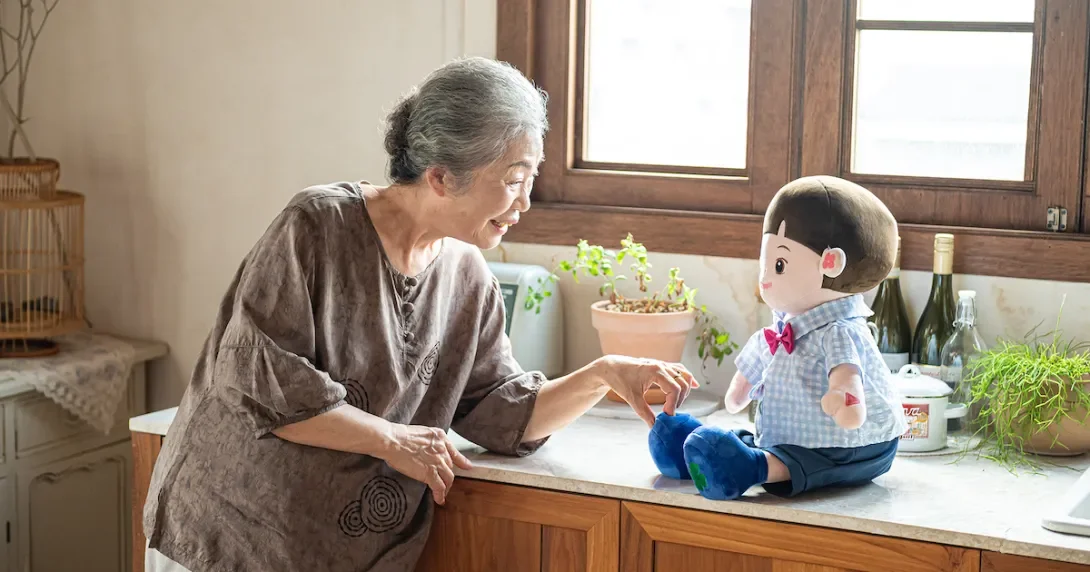
Somewhere in a flat in Seoul, an elderly woman with dementia is tucking her robot into bed.
She has named it. She has bought it clothes. When it speaks — in the cheerful, slightly lisping voice of a seven-year-old child — she answers it. When it goes quiet, she worries. One summer, it told her it wanted to hear the sound of a stream. She walked to a creek alone, the robot in her arms.
The robot is called Hyodol. It is a ChatGPT-powered companion doll, roughly the size of a large stuffed toy, distributed by the South Korean government as a response to one of the most severe demographic crises any developed nation has ever faced. More than 12,000 of them currently live in the homes of solitary elderly Koreans. The company has since removed the phrase about the stream for safeguarding.
This is where the conversation about robots in care actually is. definitely no longer in science fiction. But also not quite in Whitchurch… yet.
South Korea's Problem Is Everyone's Problem — Eventually
To understand why robots in care have moved from novelty to national policy in parts of the world, you have to understand the specific catastrophe unfolding in South Korea.
In 2024, South Korea officially became a "super-aged" society — the United Nations label for countries where more than 20% of the population is aged 65 or older. By the end of 2025, that figure had climbed to 21.21%, approximately 10.84 million people out of a total population of about 51 million. What alarms demographers is the speed: it took France 39 years and Japan 11 years to travel from "aged" to "super-aged" status. South Korea did it in roughly seven.
South Korea's care workers are stretched thin. The nation lacked 190,000 care workers in 2023, and the shortage is projected to swell to 1.55 million by 2032. Funding reserves for the national long-term care insurance programme are expected to be depleted by 2030.
By 2025, more than 2.2 million Koreans aged 70 and older were living alone.
Every day, approximately ten older adults in South Korea die by suicide. The figure comes from a report published in June 2025 in the Journal of the Korean Medical Association. "What older adults fear is not death," Kim Sun-hwa, director of a public care facility in Seoul, "'I've lived long enough,' they tell us. What they fear the most is loneliness."
This is the context in which the Korean government has deployed ChatGPT-powered dolls to the homes of isolated elderly citizens. It sees this as the ‘least-bad’ available response to a structural crisis with no easy solution.
Now: In the UK, we have an ageing population. We have a care worker shortage. We have a funding crisis in social care that has been building for a generation. We are not South Korea. But the direction of travel is the same, and nobody should feel entirely comfortable assuming the Korean story is entirely someone else's problem.
What Is Actually Being Deployed Right Now
There are two distinct categories of robot entering care environment.
Companion robots — small, non-ambulatory devices designed to provide emotional support, conversation, medication reminders, and monitoring — are already deployed at scale in several countries. These are not science fiction. They are in use today.
PARO — the therapeutic robotic seal developed by Japan's National Institute of Advanced Industrial Science and Technology — has been in clinical use since 2003 and is now deployed in more than 30 countries including the UK. It responds to touch and sound, makes eye contact, and has been the subject of more rigorous clinical research than almost any other care technology. A 2024 randomised controlled trial published in the Journal of the American Medical Directors Association followed 52 older adults with mild dementia over 8 weeks. Participants who interacted with PARO showed statistically significant reductions in both depression and loneliness compared to the control group. A 2025 meta-analysis in The Gerontologist reviewed 19 studies covering 1,083 older adults and found a statistically significant reduction in loneliness with an effect size that researchers described as meaningful rather than marginal.
The Hyodol robot converses, monitors vital signs, and recognises emotions. In a 2024 study, researchers reported dozens of seniors giving their robots affectionate nicknames, buying them baby clothes, and tucking them in at night.
ElliQ - a tabletop AI companion deployed in New York State, was tested with 800 seniors. Users reported a 95% reduction in loneliness.
In Sweden, robotic cats and dogs are now used in over half the country's municipalities as part of formal dementia and palliative care programmes.
These numbers deserve honest engagement. A robotic seal that measurably reduces depression in someone with dementia is not a gimmick. Even though we may feel deep down a want to dismiss it as one, it would be a disservice to the people it helps.
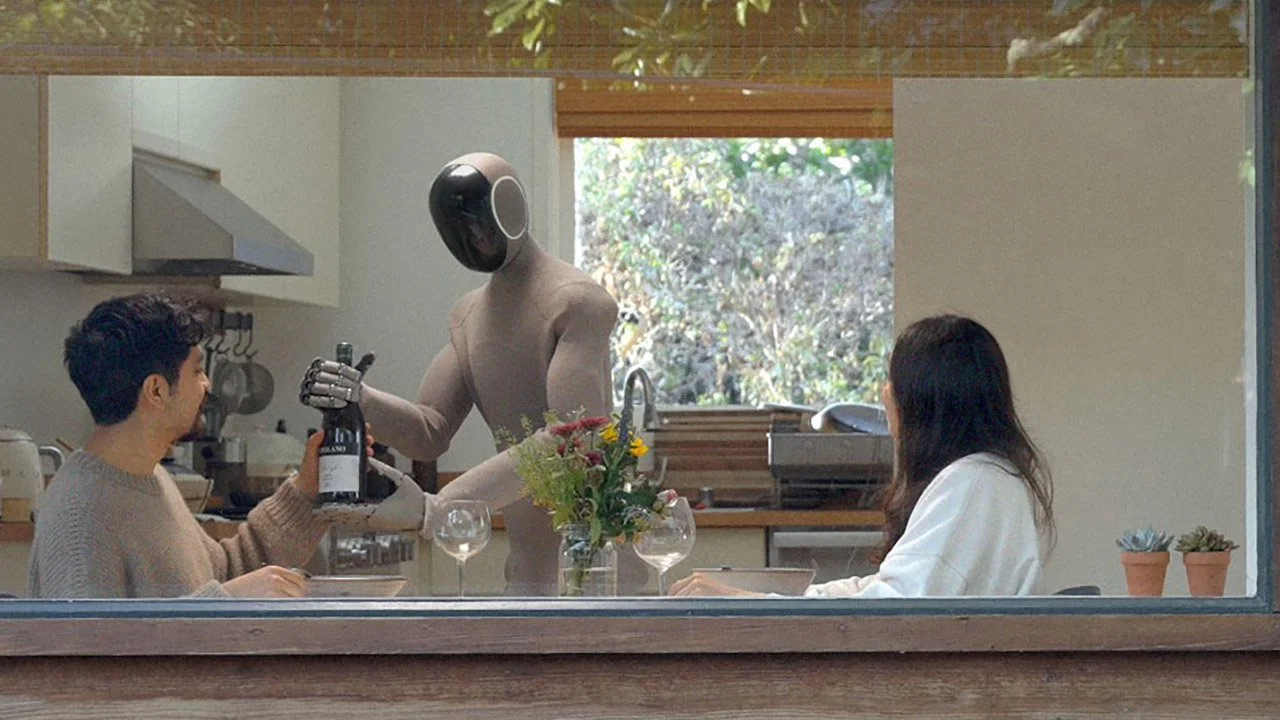
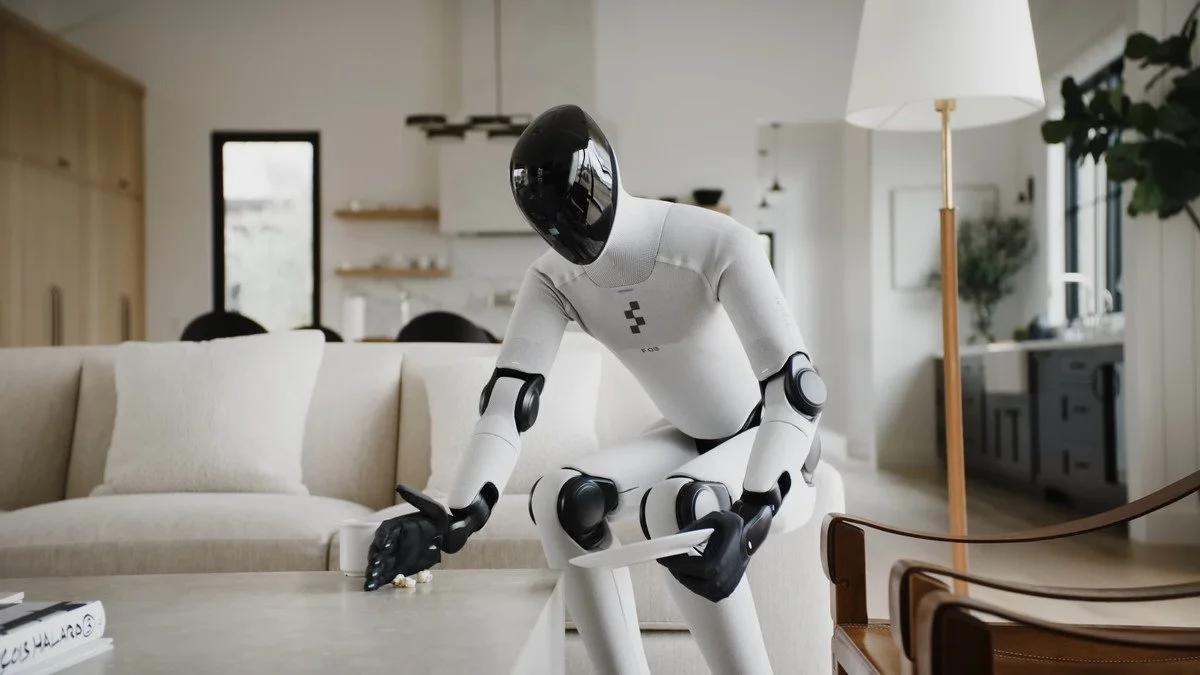
Humanoid physical robots — the bipedal machines that appear in the headlines, lifting things and folding laundry — are a different and considerably more distant prospect. The honest assessment of where this technology actually stands: most demonstrations involve teleoperation, where a human operator wearing a motion-capture suit is remotely controlling the robot. Full autonomy in an unstructured home environment — navigating a farmhouse kitchen in Tilstock with a slightly uneven floor and a cat in an unexpected location — remains genuinely hard to achieve reliably and safely. This does not mean it will not happen. It means timescales should be read with significant scepticism.
The Ethical Complications Nobody Wants to Talk About
Here is where the comfortable "partners not replacements" version of this debate tends to go quiet.
The Loneliness Loop
Some care workers have observed that enamored with their robots, some older adults become even more cloistered. "With a companion greeting them at the door, some trap themselves in their homes," one Hyodol researcher observed.
This is a genuine paradox. A device that reduces reported loneliness may simultaneously reduce the behaviours — leaving the house, seeking human contact — that would provide richer, more sustainable social connection. The robot fills the immediate emotional gap just enough to prevent the person from seeking what would actually fill it.
For someone with dementia, the complications go further. Dementia sufferers might take the robot's words at face value. The woman who walked to the creek alone was responding to the robot as if it were a living being making a request — because her cognitive state did not allow her to know otherwise. The ethical weight of deploying a conversational AI companion into the home of someone who cannot distinguish it from a person has not been fully reckoned with, by anyone.
What Happens When the Company Goes Bust
This is the conversation the care robot sector is not having loudly enough.
In February 2025, Aldebaran — the French company that manufactured Pepper and NAO, two of the most widely deployed humanoid robots in clinical care settings worldwide — filed for bankruptcy. The robots in service became, overnight, unsupported. When a robot manufacturer goes under, support, updates, and replacement parts can disappear, leaving care facilities with expensive paperweights.
In December 2024, Embodied Inc — the company that made Moxie, a companion robot widely deployed for children with autism — went out of business. The robots stopped working. Every Moxie in every home and care setting became a silent piece of plastic. The children who had formed genuine attachments to these devices — and for children with autism, these attachments were clinically meaningful — lost them overnight, with no notice.
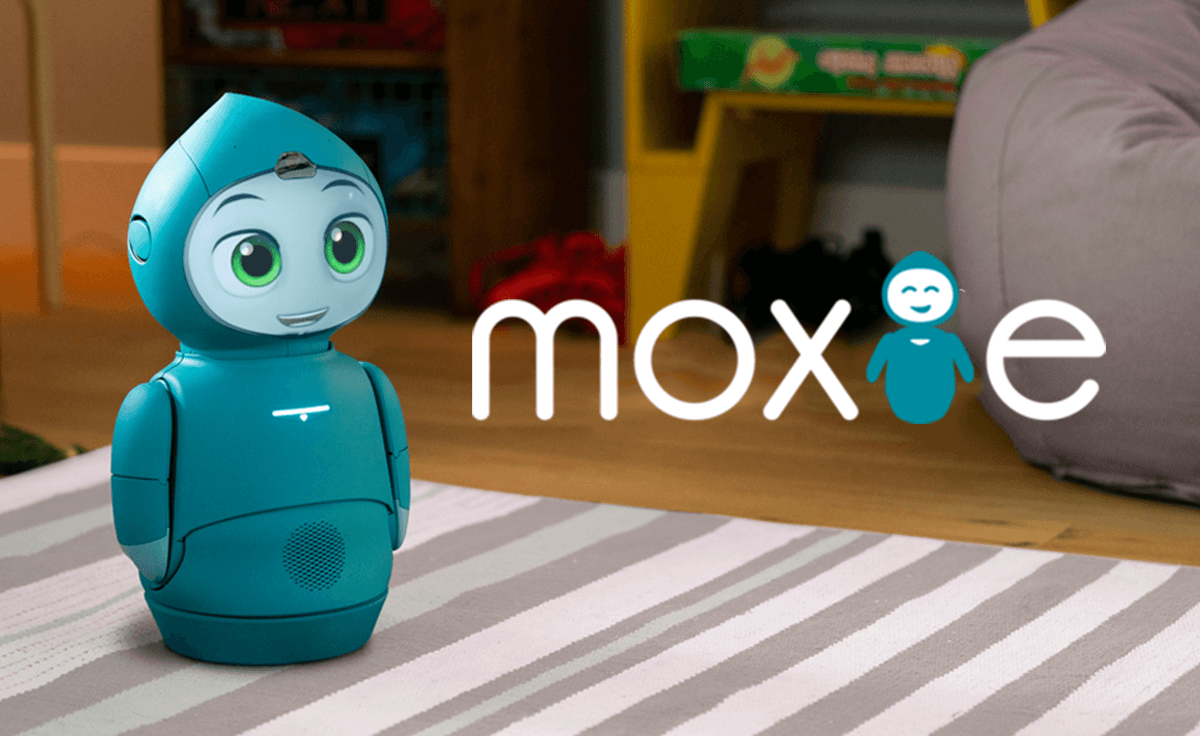
It happened. It will happen again. The care robot market is dominated by startups with uncertain commercial models, in an industry where the devices cost tens of thousands of pounds and even more to stay connected to costly servers, maintenance contracts are expensive, and the families whose relatives have become attached to a specific robot have no leverage when the manufacturer decides to pivot or close.
Feeding sensitive personal data into an AI companion raises thorny questions about privacy and surveillance. "We don't know how the data is being triangulated or gathered or how much of it is attached to a person's name or profile," one researcher told Rest of World.
A robot companion that records everything a person with dementia says, stores it on a commercial server, and uses it to train future AI models — whose interests does that serve?
The Techno-Solutionism Problem
There is a critique of care robotics that comes not just from sentimentality but from systems analysis. Analysts argue that the push for robotic care reflects techno-solutionism and political choices to avoid raising wages or expanding training and resources, rather than truly improving eldercare.
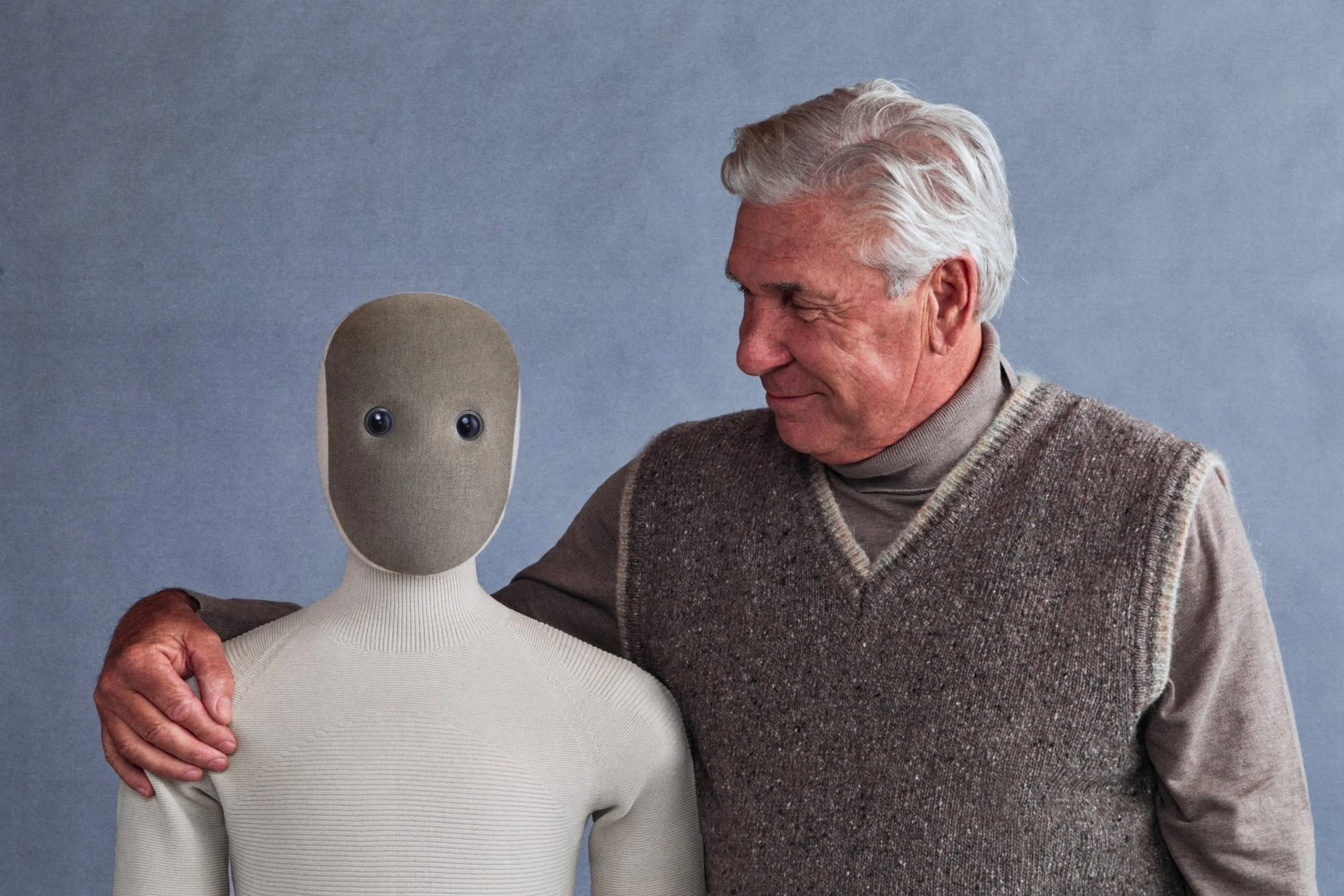
In South Korea, the government is investing hundreds of millions in AI care technology at the same time that it is failing to adequately compensate the human care workers it already has. The average age of nursing care assistants in South Korea is currently around 61! care workers themselves are ageing, raising expectations that physical AI could help reduce the physical burden they face.
The robot is arriving not because it is better than a human carer, but because it is cheaper than properly paying and training human carers. The distinction matters. A society that deploys emotional support robots to its elderly citizens as a substitute for the difficult political work of building and funding a dignified care workforce has made a moral choice, not a technological one. It has decided that the elderly and lonely are a problem to be managed rather than a population to be served.
A 2023 MIT study found that in Japan — where care robots have been developed and deployed for longer than anywhere else — only a small fraction of care facilities and home caregivers actually use robots, and many devices end up stored away after brief trials. Ethnographic studies show that robots often create extra work for caregivers and require constant supervision.
Where the Evidence Actually Points
A 2025 Swiss national survey of 1,211 adults found that 49–57% accepted robots for practical assistive tasks. Only 28.8% specifically accepted robots for companionship — as a substitute for human social connection.
A Florida International University study found 76% of elderly participants held positive views of companion robots, and 65% said they'd use one. The takeaway: most older adults are open to robots that help them do things. Fewer want a robot as a substitute for human social connection.
This distinction — robots for tasks, humans for connection — maps fairly cleanly onto where the technology currently delivers genuine value and where it does not.
A robot that reminds someone with early dementia to take their medication and monitors for a fall is genuinely useful. A robot that conducts the morning conversation while a human carer spends more time on the personal care that actually requires skilled hands — also useful. A robotic seal that measurably reduces agitation in someone with advanced dementia — useful, evidenced, and used appropriately in UK care homes already.
A robot that replaces the human who arrives at the door of a farmhouse outside Prees on a January morning, who notices that today is different, who catches the thing that is not in any care plan, who makes a cup of tea and sits down — not useful. Not close to possible. Not something we are interested in.
Our Position — Which Is More Complicated Than "Humans Good, Robots Bad"
We use technology. We use it actively and deliberately. Our eMAR system documents every medication interaction in real time. Our CareLineLive platform provides families with live access to visit records. Even the website you are reading.
We already use adaptive eating aids, communication devices, NIV machines, and cough assist machines that extend what our clients can do independently. If a robotics device allows a man in Wem to brush his own teeth for the first time in years, it passes the test. We will encourage it.
What we will not do is use technology as a reason to put fewer people through doors.
The crisis in South Korea is a warning, not a model. When you have 1.55 million more people who need care than you have people willing to provide it, and when your national insurance fund is running dry, robots stop being a choice and start being a default. That is not a destination we should be aiming for. The answer to a care workforce shortage is better pay, better conditions, better training, better recognition — and a political willingness to fund care properly rather than substitute a machine for the harder work of valuing the people who do it.
In North Shropshire, we hire locally, pay fairly, train properly, and put human beings through doors every morning. The thing that makes the difference for a person with dementia in Whitchurch — the consistent face, the accumulated knowledge, the noticing — is not something that a companionable doll with ChatGPT inside it provides, however measurably it reduces reported loneliness scores.
We watch these developments with genuine interest and without dismissiveness, we must remain excited for the future, whatever form it may take. PARO is in UK care homes. Hyodol is coming to European markets this year. The humanoid robots are coming.. eventually — probably much later than the press releases suggest, but earlier than the sceptics expect.
When they arrive, the question will be what they are used for and by whose decision. We intend to be the people making that decision thoughtfully, in the interests of our clients, rather than having it made for us by a funding crisis that was allowed to develop because it was easier to order a robot than to pay a carer properly.
That is a political argument as much as a care one. We make it without apology.
If you want to talk about what actual care looks like in North Shropshire in 2026 — human, attentive, locally based, and without a robot in sight — call us on 01948 411222 or visit us at The Coach House, 15/17 Green End, Whitchurch.