
Companionship and Combating Loneliness
Have this page read to you

Some of the most important work our carers do involves no equipment, no medication, and no clinical procedure.
It involves sitting down, paying attention, and being genuinely present with another person.
At North Shropshire Homecare, we believe that connection is not a luxury to be added on top of "real" care. It is real care. The research is unambiguous: chronic loneliness carries health risks comparable to smoking fifteen cigarettes a day. It accelerates cognitive decline, weakens the immune system, raises the risk of heart disease, and contributes directly to depression and anxiety in older adults. In our rural corner of Shropshire — where the distances between neighbours are real, where a car becoming unusable can mean a week without seeing another face, where bereavement can quietly remove the last regular point of social contact — this is not an abstract statistic. It is the lived reality of many of the people we visit.
Our Companionship service exists because we take that seriously.
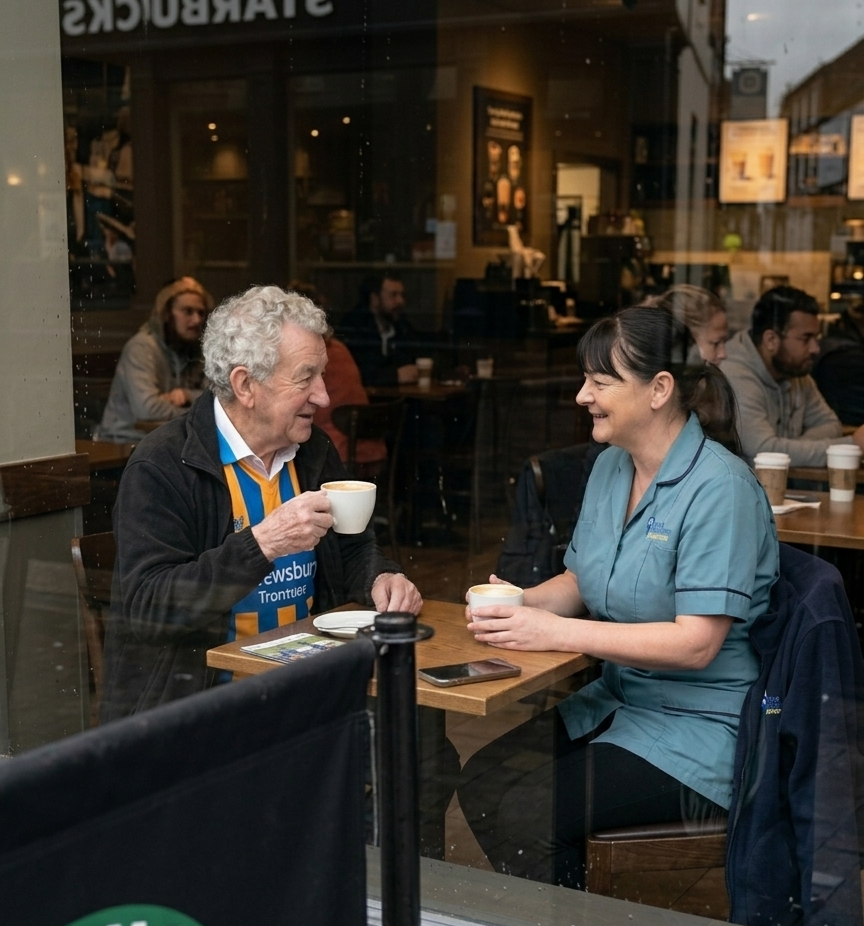
“A family member also valued the experience and consistency of staff. They said, “[Redacted name] care is personalised to them and they (staff) do it well. It is so nice because twice a day we have these lovely smiling faces and friends to chat with.”

The People We Most Often Support Through Companionship
Loneliness does not announce itself. It accumulates quietly, and by the time it is having a measurable effect on someone's health and mood, it has often been building for years. The people who benefit most from companionship support include:
Those who have recently been bereaved. The loss of a spouse often removes at once the person's closest companion, their primary social contact, and the practical partner who made getting out into the world easier. The silence that follows can be profound, and it often falls on adult children — who are grieving themselves and living at a distance — to try to fill it. We can help.
Those whose mobility has reduced. A hip replacement, a fall, the gradual narrowing of what feels safe to do alone — each of these can quietly shrink a person's world. The golf club membership lapses. The weekly lunch with a friend becomes too complicated to organise. The church attendance that was a social cornerstone becomes impossible without a car. Regular companionship visits rebuild some of what has been lost and prevent further withdrawal.
Those living with dementia. Cognitive decline does not reduce a person's need for connection — it can intensify it, while simultaneously making the familiar social scripts harder to navigate. Our carers are experienced in the particular kind of companionship that supports someone living with dementia: patient, consistent, unhurried, responsive to the moment rather than the agenda. The value of a familiar face arriving at a familiar time, with a warm manner and genuine interest, cannot be overstated.
Those whose family carers need a break. Companionship visits give family members — often adult children managing their own lives and careers alongside caring responsibilities — permission to step away for a few hours knowing their relative is in good company. This is not "parking" someone. It is building a team around them so that no single person carries all of the weight.


A Word About Dignity
Accepting companionship support can feel uncomfortable. Many people — particularly those of a generation that values self-sufficiency and dislikes the idea of being a burden — find it difficult to ask for company in the way they might ask for help with the shopping. It can feel like an admission. A concession to loneliness that they would rather not make.
We want to say clearly: there is nothing to be embarrassed about. The need for human connection is not a weakness. It is biology. It is the same need that drives every friendship, every family relationship, every community gathering that has ever existed. Acknowledging it, and doing something about it, is a sign of good judgement — not vulnerability.
If a person you love is quieter than they used to be, less engaged, less interested in the things that once mattered to them, it is worth asking whether isolation is part of what is happening. Often it is. And often, it is far more addressable than families realise.
How Companionship Works Alongside Our Other Services
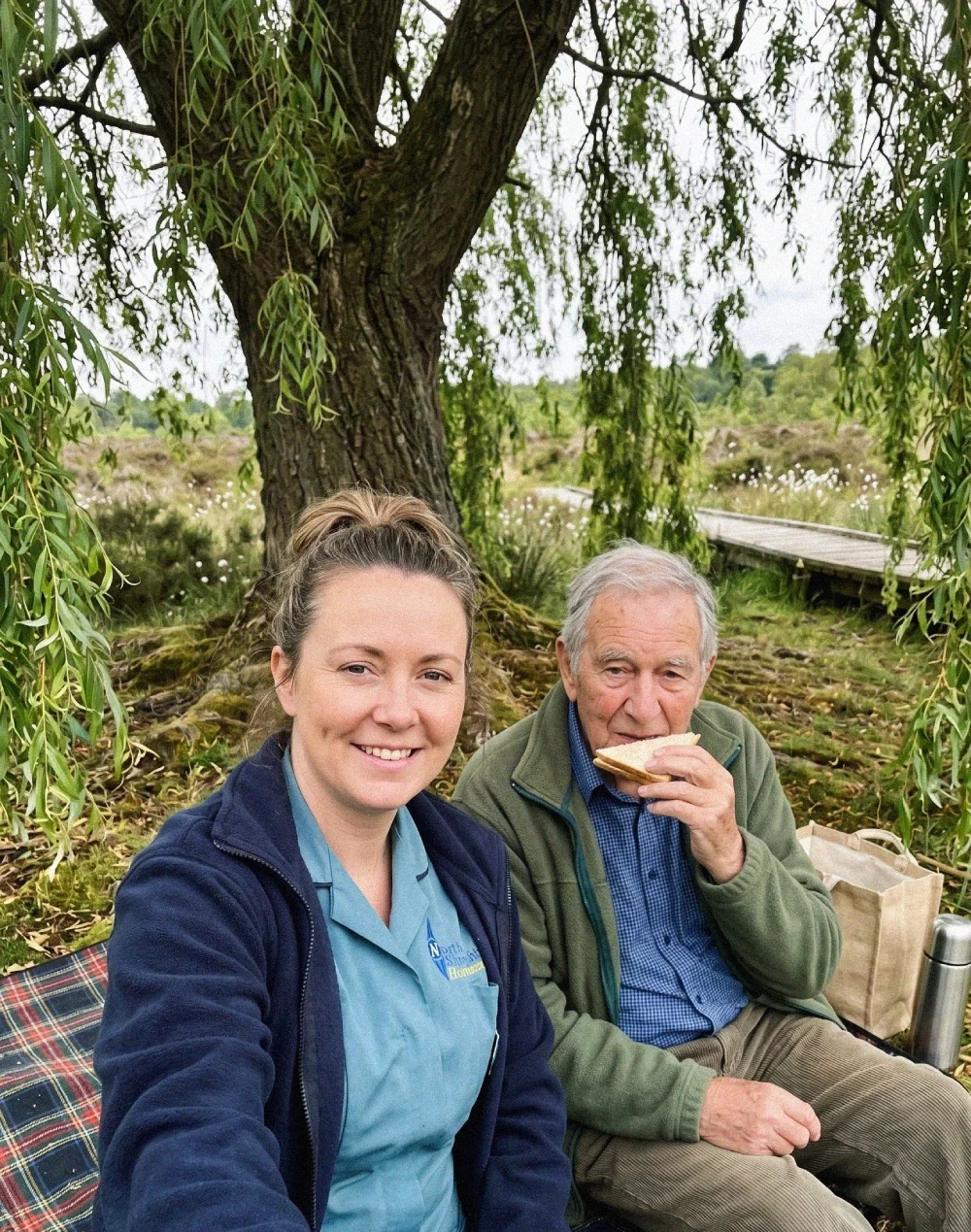
Companionship rarely exists in isolation. Most of our clients who receive companionship support also receive help with personal care, medication, meal preparation, or other practical tasks. The companionship element is woven into all of these — a carer who helps with breakfast and then sits down for a proper conversation is doing both things at once.
For some clients, a dedicated companionship visit — a longer, unhurried call with no task list, focused entirely on the person and their enjoyment of the time — makes a significant difference. We can build this into a care plan in whatever way makes most sense for the individual.
What Companionship Actually Looks Like
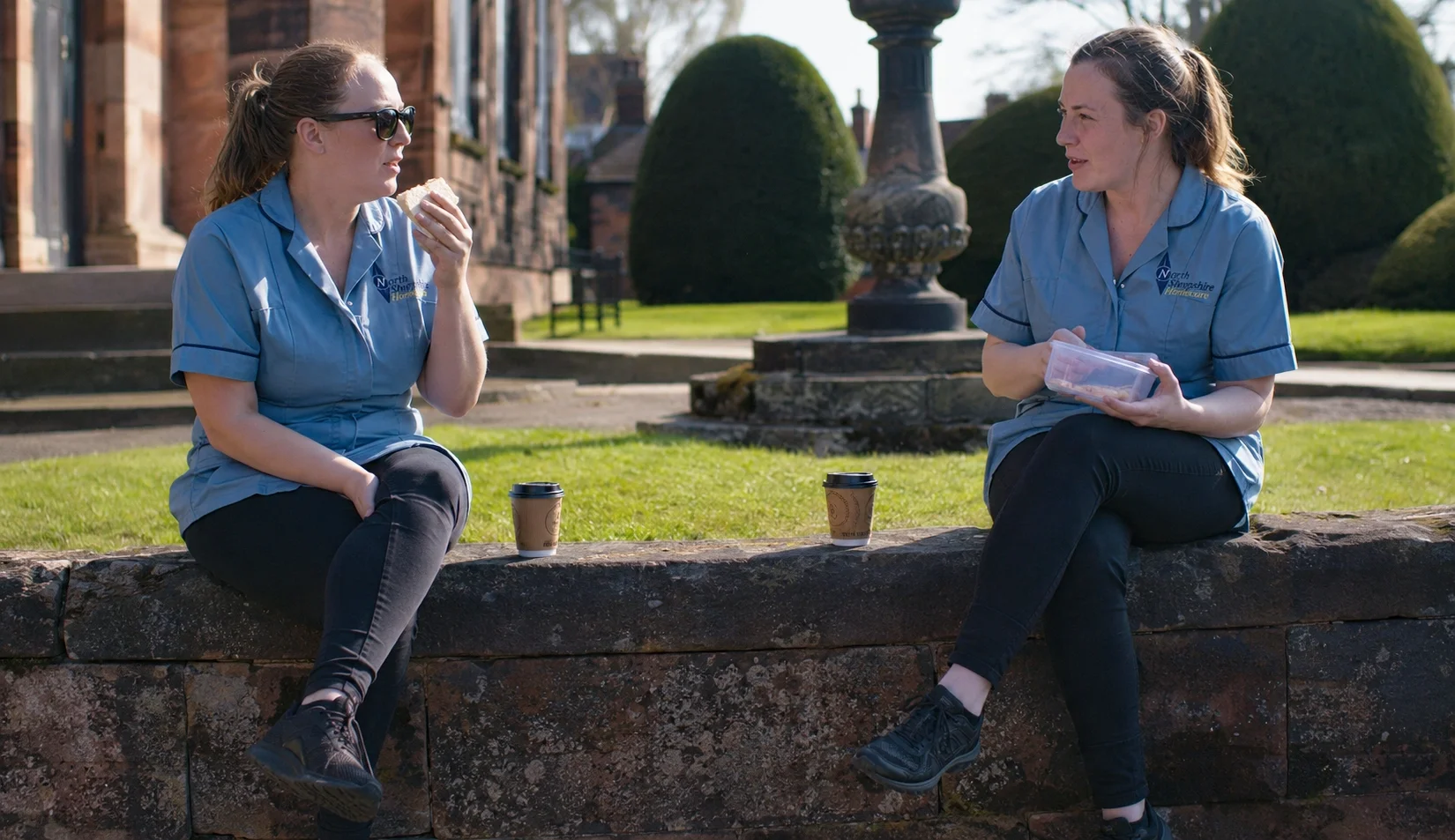
Companionship is not a carer sitting in the corner of a room while a client watches television. It is an active, attentive, genuinely warm relationship between two people — built over time, rooted in real knowledge of who the client is, what they care about, and what makes their day better.
In practice, this looks different for every person we support. It might be:
Conversation and shared interest. For someone who has spent decades following the local cricket, talking through the season with a carer who actually listens — and remembers what was said last week — is not a small thing. For a retired schoolteacher who still reads voraciously, having someone to discuss a book with restores something that isolation had quietly removed. We take the time to learn what a person loves, and we show up with genuine engagement, not polite nodding.
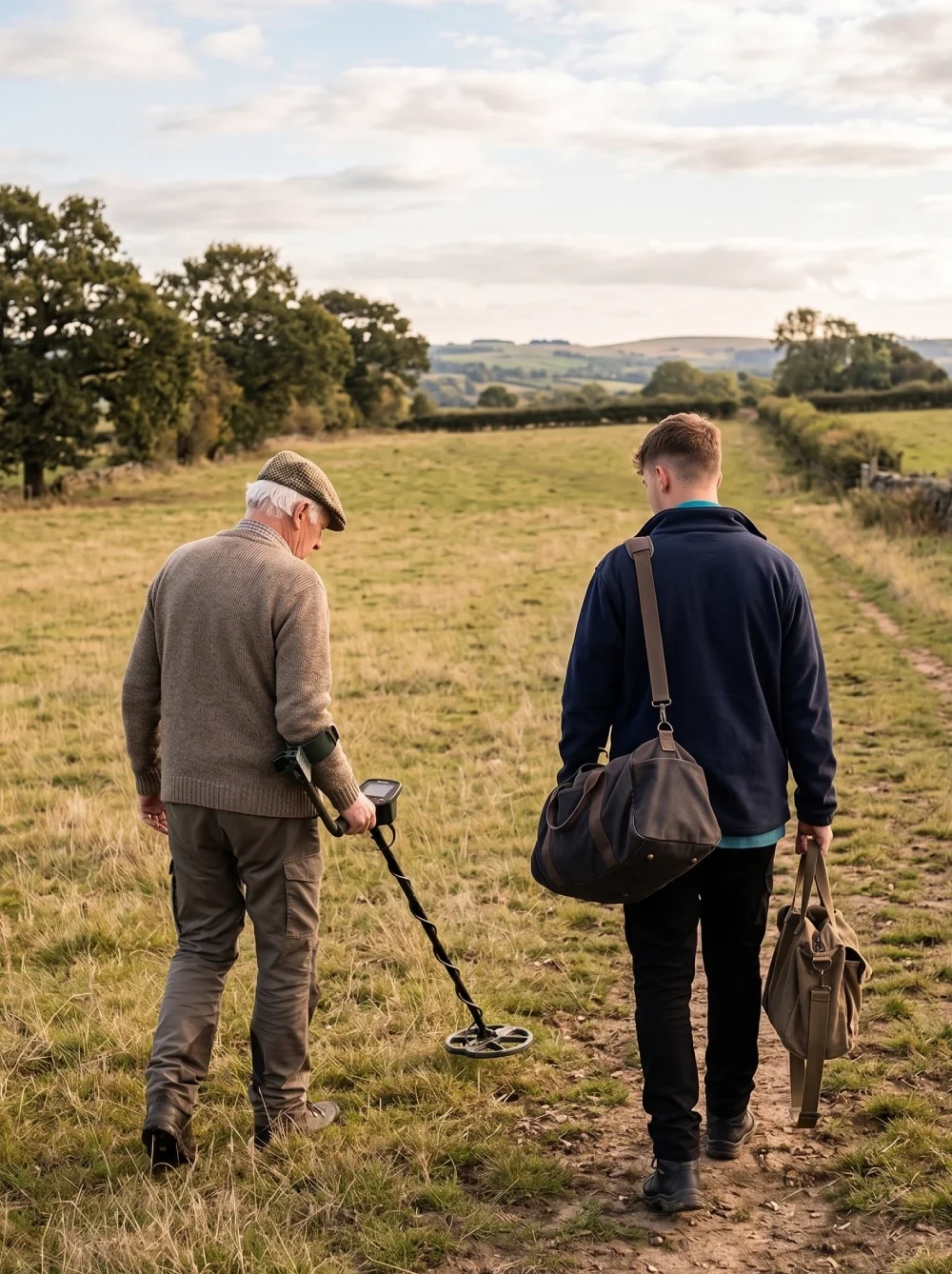
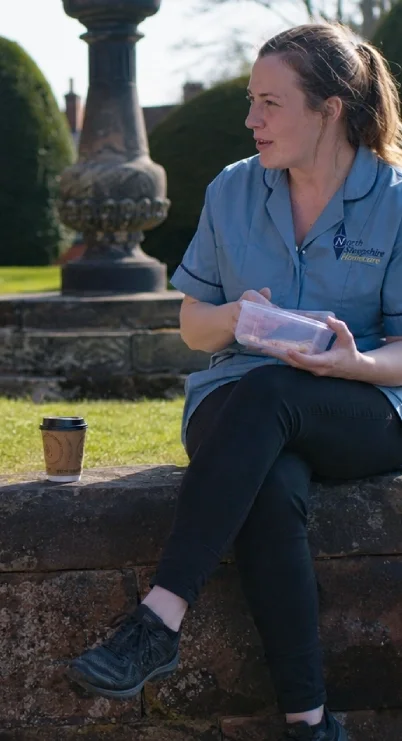
Getting out into the community. A gentle walk around Wem Market on a Thursday morning. A browse through the charity shops on Whitchurch high street. A sit in Jubilee Park when the weather allows. For many of our clients, these outings are not possible without a companion to go with — not because they are incapable, but because confidence erodes when you have been mostly at home, and having someone beside you makes the difference between going and not going. We accompany rather than escort. The distinction matters.
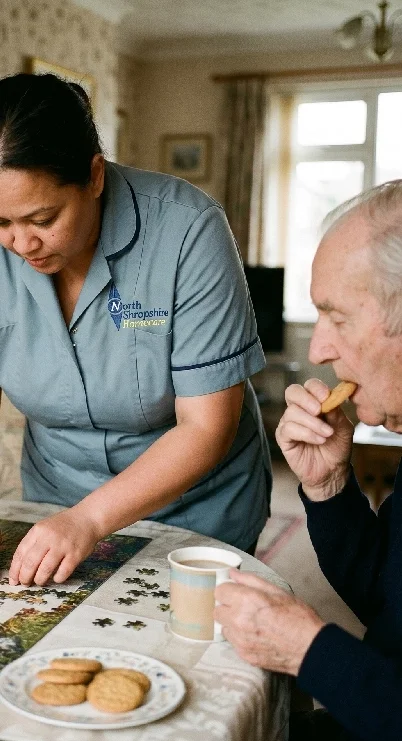
Shared activities at home. Jigsaws, card games, gardening in a small way, looking through photographs, working on a crossword, watching something together and talking about it afterwards. The activity is rarely the point — the point is doing something alongside another person, with shared attention and natural conversation. This is how most human connection works, and our carers understand it.
Simply being there. For some clients, particularly those living alone following bereavement, the most valuable thing a carer brings is the knowledge that someone is coming. The morning call becomes an anchor point in the day. Something to get dressed for. Someone who will notice if things feel different today. The presence itself is the care.


Talk to Us
If you are concerned about a relative who is spending too much time alone, or if you are the person who would benefit from more regular company and conversation, we would be glad to talk.
There is no obligation involved in a conversation. Call our Whitchurch office on 01948 411222 (Monday to Friday, 9am to 4pm) or email mail@nshomecare.co.uk to arrange a confidential chat or a free home assessment.
The first step is simply picking up the phone.
North Shropshire Homecare The Coach House, 15/17 Green End, Whitchurch, SY13 1AD
We provide the best support across Whitchurch, Wem, Higher Heath, Prees, Whixall, Tilstock, Ash, and the surrounding villages of North Shropshire.


We are the Gold Standard.
Exceptional support begins with listening. Before we ever step through your door, we work closely with you to design a fully bespoke care plan tailored to your exact needs, routines, and lifestyle.
We champion true person-centred care, ensuring you remain firmly in control of the entire process from day one. By arranging a comprehensive, relaxed assessment with you and anyone you choose to involve—whether that is family, friends, or advocates—we guarantee that every detail is perfectly aligned with your wishes. With us, your care is always delivered exactly how you want it, on your terms.