Frequently Asked Questions
Have this page read to you
Starting care for yourself or a loved one raises a lot of questions — and they are all good ones. We have tried to answer the ones we hear most often as honestly and completely as we can. If yours isn't here, call us on 01948 411222 or drop us an email and we will answer it properly.
Getting Started
Where do I begin?
The best starting point is a conversation, not a form. Give us a call and tell us a little about your situation — who needs support, roughly what kind of help would make a difference, and any particular concerns you have. We will listen, ask a few gentle questions, and tell you honestly whether we can help and what that might look like.
If you're not sure exactly what you need yet, that's completely fine. Many families come to us at an early stage, when they know something needs to change but aren't sure what. We can help you think through the options without any pressure to commit to anything.
What happens after the first call?
If we seem like a good fit for each other, we will arrange a home assessment — a visit to meet you or your relative in person, at no charge. This gives us the chance to understand the full picture: the home environment, the daily routine, the medical needs, the personal preferences, and the things that matter most to the person at the centre of it all.
From the assessment, we build a care plan together. This isn't a document we write and hand to you — it's something we develop with you, so that the care your relative receives reflects who they actually are, not just what condition they have been diagnosed with.
How quickly can you start?
In straightforward cases, and depending on our current availability, we can sometimes begin within a matter of days. In urgent situations — for example, following a hospital discharge — we will do everything we can to move as quickly as possible and have begun care the same day when genuinely needed.
The speed of a start date depends on how quickly we can complete the assessment and build a care plan we are confident in. We would rather take a few extra days and get it right than rush something as important as this.
How do you record care notes, and can I access them?
We believe that exceptional care requires exceptional technology. That is why our team utilises CareLineLives Care Circle Portal, the most advanced digital care management platform available in the industry today.
Our care professionals use this state-of-the-art software to securely record critical data in real-time during every single visit. This includes precise medication tracking, health vitals, daily activities, and detailed care notes. By moving beyond outdated paper logs, we ensure our data is instantly synced, highly secure, and continuously monitored for the highest standard of safety.
What does this technology mean for you? Complete transparency and absolute peace of mind—at absolutely no extra cost.
Every client and their authorised family members receive a secure, dedicated portal. This gives you 24/7 access to your loved one’s care records, schedules, and live updates from anywhere in the world. We provide full access to this premium platform completely free of charge, because we believe seamless communication and transparency should be a standard, not a paid upgrade.
The Practicalities of Care
Will my relative get the same carer every visit?
Yes, we try our best to give you the smallest number of carers so you see familiar faces. Consistency matters enormously in homecare — both for the practical reason that a familiar carer learns a person's routines, preferences, and subtle changes in condition, and for the human reason that trust takes time to build and is easily disrupted.
We maintain a small, consistent team for each client. The times when you will meet someone new are: when we are introducing a new team member as part of their induction, when covering planned staff leave, or when covering unexpected sickness. In these cases we will always try to ensure the cover carer is already known to the client, or we will introduce them properly in advance where possible.
Will care calls happen at the same time each day?
We work hard to keep visit times consistent, and for most clients the variation is no more than fifteen minutes either side of the agreed time. Carers cover a planned route across the day, and occasionally earlier visits run slightly over or under, which creates small ripples.
Where timing is clinically important — for clients whose medication must be taken at precise intervals, or for conditions such as diabetes where routine is medically significant — we treat those visit times as fixed and schedule around them accordingly. If consistent timing is important to you, tell us at the assessment and we will make sure it is built into the care plan from the start.
What if my relative doesn't get along with their carer?
It happens, and there is no shame in it. Care is an intimate relationship and not every personality combination works — that is simply human nature. If you or your relative are unhappy with a carer for any reason, please call the office and tell us. We will work to see if there is any issues that can be addressed, but if not, we will quietly arrange to introduce a different carer and make the transition as smooth as possible.
What we ask is that you tell us rather than let it quietly become a source of stress. We cannot fix something we don't know about, and your relative's comfort matters more to us than anyone's feelings being spared.
What if our needs change?
Care needs rarely stay static. Someone who started with a thirty-minute morning visit may, over time, need additional calls, more complex support, or help with things that weren't relevant at the start. Equally, people do improve — after a hospital stay or a difficult winter — and may need less support than before.
Call us whenever something changes or you think it might need to. We review care plans regularly as a matter of course, but you don't need to wait for a scheduled review if something feels different. The sooner we know, the sooner we can adjust.
Can I make changes to the care tasks or visit times?
Yes, always. Call the office between 9am and 4pm, Monday to Friday, on 01948 411222 and we will talk through what you'd like to change and how quickly we can make it happen.
We ask that outside of those hours you use the same number only for genuine emergencies — a fall, a hospital admission, a situation that cannot wait until the morning. For non-urgent changes, a message or call during office hours means we can give your request the proper attention it deserves.
Do you offer a faster service if we need care urgently?
Yes. Our Rapid Response Care service exists specifically for situations that can't wait for the ordinary assessment timeline — a hospital discharge happening tomorrow, a sudden fall or change in condition, or a family carer who has reached the point of needing help today rather than next week.
Marking your enquiry as urgent moves you straight to the front of our assessment schedule. We aim to call back ASAP — our line is answered 24 hours a day, 365 days a year. A home assessment usually follows within 24 hours, and care often begins within 72 hours of first contact, sometimes sooner where the situation genuinely requires it.
Importantly, this isn't a stripped-down or lesser version of our service. It's the same assessment, the same properly built care plan, the same locally employed carers, the same standard we hold every client to. And it costs no more than our standard rate. We don't think charging a premium for urgency is the right way to treat families who are already under enough pressure.
📞 Call our Rapid Response Team on 01948 411222, or read more on our Rapid Response Care page.

Paying for Care
How does paying for care work?
For clients who fund their own care privately, we accept payment by bank transfer or cheque. We invoice regularly and clearly, and we are always happy to talk through the costs before any commitment is made — there are no hidden charges and no surprises.
What if my relative cannot afford to pay privately?
Not everyone can, and that is not a reason to go without care. Shropshire Council's Adult Social Care team can carry out a financial assessment to determine whether your relative is eligible for council funding toward their care costs. Contact them on 0345 678 9044 and ask specifically for a financial assessment — they will guide you through the process.
It is worth knowing that eligibility for council funding is based on both financial circumstances and assessed care needs. Even if full funding isn't available, a contribution toward costs may be possible. We are happy to talk through this with you if it would help.
Is there any financial support specifically for carers?
If you are a family member providing unpaid care, you may be entitled to a Carer's Assessment from Shropshire Council, which can open access to respite support and other resources. Carers UK (carersuk.org) also provides detailed, up-to-date guidance on financial entitlements including Carer's Allowance. We can point you toward the right contacts if you are unsure where to start.

Safety and Safeguarding
How do I know the carers coming into our home are trustworthy?
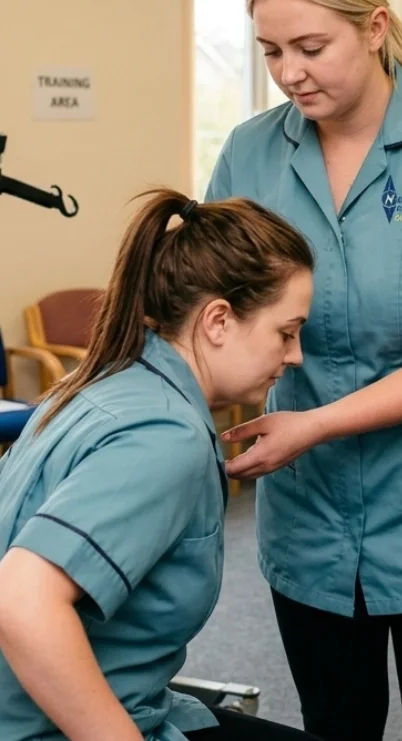
Every member of our team undergoes an enhanced DBS (Disclosure and Barring Service) check before they begin working with clients. References are taken up and verified. All carers complete our induction training programme at The Coach House before their first solo visit, and ongoing training is a condition of employment, not an optional extra.
We are a CQC-registered provider, rated Good, and we are inspected independently and regularly. The full report is available on the CQC website — we link to it from our compliance section — and we encourage families to read it.
What should I do if I have a concern about a carer's conduct?
Call us immediately on 01948 411222. All concerns are taken seriously, investigated promptly, and handled with complete confidentiality. We have a formal complaints procedure and we will walk you through it.
If you ever have a concern that you feel cannot be raised with us directly — or that involves a safeguarding issue — you can contact Shropshire Council's Adult Safeguarding team on 0345 678 9044, or the CQC directly. You are always entitled to do this and we would never discourage it.
What happens if a carer doesn't arrive?
In the rare event that a scheduled visit is missed, our out-of-hours line is available 24 hours a day, 365 days a year on the same number: 01948 411222. Call us and we will establish what has happened and get someone to your relative as quickly as possible. Missed visits are taken extremely seriously and are reviewed by management every time they occur.




Understanding the Care We Provide
What is a care plan and who can see it?
A care plan is a detailed, personalised document that sets out everything a carer needs to know to support your relative well — their routine, their preferences, their medical needs, their emergency contacts, and the specific tasks to be carried out at each visit. It is held securely and is accessible to the carers working with that client and to our management team.
Family members with appropriate authority — for example, those holding a Lasting Power of Attorney — can request to review the care plan. We encourage families to be involved in the care planning process from the start and to tell us when something in the plan no longer reflects reality.
Want to see what a care plan from us looks like? click here for our example care plan page.
Do your carers have medical training?
Our carers are trained in a range of health-related tasks including medication administration, moving and handling, basic life support, and — for clients with complex needs — specific clinical skills such as supporting NIV ventilators, PEG feeds, and catheter care. Training is tailored to each client's needs; no carer is ever sent into a situation they have not been prepared for.
Our carers are not nurses or paramedics, and there are clinical tasks — wound care, catheter insertion, injections — that fall outside our scope and require district nursing input. We are always transparent about where our role ends and another professional's begins. For a full explanation of this, see our post: What Happens When We Can't Help — and Who Can.
What is the difference between homecare and a care home?
Homecare — the kind we provide — supports people to continue living in their own home with professional help coming to them. A care home or nursing home involves a person moving into a residential setting where care is provided around the clock.
Many people can live safely and well at home with the right level of support for far longer than they or their families initially expect. Our role is to make that possible for as long as it genuinely serves the person's wellbeing. We are always honest with families when we believe a person's needs have moved beyond what domiciliary care can safely provide.
Do you provide inclusive care for LGBTQ+ individuals?
Absolutely. At North Shropshire Homecare, we firmly believe that everyone deserves to receive care with absolute dignity, respect, and acceptance in their own home. We operate a strict zero-tolerance policy for discrimination of any kind, and our carers are trained to understand and support the unique needs of older LGBTQ+ adults. Your identity, your history, and your chosen family will always be celebrated and respected by our team.
To learn more about our specific promises, staff training, and how we ensure a safe and welcoming environment, please read our full page HERE
What’s your staff retention rate?
In an industry where the national average staff turnover is over 23%, we are incredibly proud to say we’ve had zero staff leave in the past year (excluding maternity leave). We’ve only grown, welcoming three fantastic new carers to our local team. That means the friendly face walking through your door today will be the exact same one there to support you tomorrow.
Do you provide care for X condition?
no matter your condition we most likely can provide care for you, here’s a list of the most common conditions that also link to thorough guides on how we care for each - Spinal Cord injury Care - Parkinsons Disease Care - Multiple Sclerosis Care - Dementia Care - Stroke Recovery Care - Huntington's Disease Care - Motor Neurone Disease Care MND - Epilepsy and Seizure Care - Cancer Care and Recovery - Post-Surgical and Orthopaedic Recovery Care - Frailty and Arthritis Care - Vision and Hearing Loss Care - Cerebral Palsy Care - COPD and Respiratory Care - Alzheimer's Disease Care - Chronic Pain Care - Heart Failure and Cardiac Care - Stoma Care Colostomy / Ileostomy / Urostomy - Pressure Sore Prevention and Wound Care -
A Question We Are Sometimes Asked But People Hesitate to Raise
We're not sure we're ready to commit to regular care. Is that all right?
Completely. Many families begin with a single visit a week, or a short trial period, to see how their relative responds to having a carer and to build confidence in the process. There is no minimum contract and no pressure to take more than you need.
Care arrangements often grow gradually and naturally as trust develops and needs become clearer. Starting small is not a sign of uncertainty — it is often the wisest way to begin.
Have a question that feels too difficult, awkward, or uncomfortable to ask?
While this page covers the questions we get asked every day, we know there are other worries you might be keeping to yourself. The kinds of questions that might keep you awake at night—like what happens during a worst-case scenario, how our carers handle difficult behaviours, or how you'll know when it's time to step up from home care.
After 15 years of supporting families, we’ve heard them all. We believe there are no wrong questions, and you deserve honest, completely transparent answers.
Read our guide: Ten Questions Nobody Asks — But Almost Everyone Thinks
Read our guide: Ten MORE Questions Nobody Asks — But Almost Everyone Thinks, part 2
Can't find the answer you're looking for? Call us on 01948 411222 — Monday to Friday, 9am to 4pm — or send us an email at mail@nshomecare.co.uk. There are no silly questions and we are always glad to help.
We provide the best level of home care across Whitchurch, Wem, Higher Heath, Prees, Whixall, Tilstock, Ash, and the surrounding villages of North Shropshire.
Tailored to you.
Before we start caring for you, we will make a bespoke care plan suited just to your needs. We believe in person-centred care and we will keep you involved with this process so you have full control of your care. We will arrange to do an assessment with you and anyone else you want involved in your care plan to make sure you are satisfied with how your care will be carried out, reviewing them monthly or when any changes occur.
North Shropshire Local Care & Living Hub