
Palliative Care & End of Life Support
Have this page read to you

This is the page we wish nobody needed to read.
If you are here, something significant is happening in your family. Perhaps a diagnosis has recently been given. Perhaps a condition that has been managed for some time has reached a new stage. Perhaps a conversation with a doctor has changed the way the future looks, and you are trying to understand what comes next and who can help.
We want to be useful to you in this moment. That means being honest rather than vague, specific rather than reassuring-but-empty, and direct about what we can offer and what falls to others.
At North Shropshire Homecare, we have supported many families through this stage of life. We know what it asks of everyone involved. And we know that being cared for at home — in familiar surroundings, among familiar things, close to the people who matter most — is for many people not just a preference but a profound need. Our role is to make that possible, for as long as it is possible, with the standard of care that the moment deserves.
Palliative Care and End-of-Life Care — Understanding the Difference
These terms are sometimes used interchangeably, but they describe different stages and different needs.
Palliative care begins when a person is living with a life-limiting illness — one that cannot be cured but can be managed. This stage can last months or years. The focus is on quality of life: managing symptoms, maintaining comfort and routine, supporting independence where it remains, and allowing the person to live as fully as possible within their changing circumstances. Palliative care is not about giving up. It is about living well with what is.
End-of-life care refers specifically to the final weeks, days, and hours of life. The focus shifts toward comfort, peace, and dignity — ensuring that the person's last experience of their home and their family is as gentle and as meaningful as it can be.
We provide support across both stages. The care we offer evolves alongside the person's needs — beginning, perhaps, with a few hours of practical support each week and deepening, over time, into a more intensive presence as needs change.

What We Provide
Our palliative care support is built around the individual — their wishes, their routines, their physical needs, and the particular shape of their family situation. It includes:
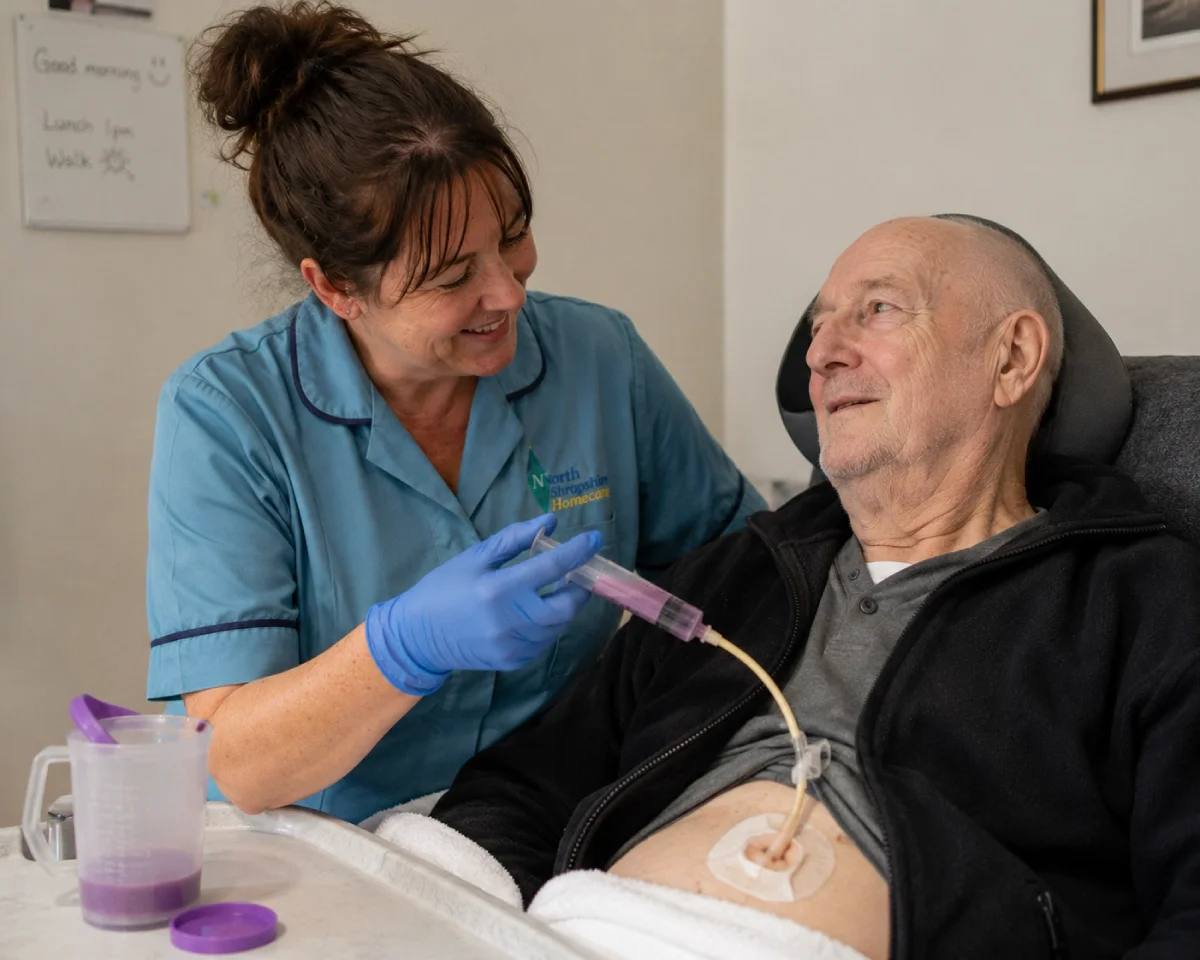
Personal care — washing, dressing, and grooming, delivered with patience and gentleness, at whatever pace feels right. In the later stages of illness, personal care becomes increasingly important as a source of comfort and dignity rather than simply a functional task.
Medication support — prompting and assisting with prescribed medication in accordance with the care plan. We work closely with district nurses and the GP to ensure medication is managed consistently and correctly, and we communicate any changes in a person's response to medication promptly and clearly.
Comfort and positioning — helping with repositioning in bed or in a chair, using appropriate equipment, to prevent pressure sores and maintain physical comfort. This becomes increasingly central to care in the later stages.
Nutrition and hydration — gentle encouragement with eating and drinking, adapted to a person's changing appetite and swallowing ability. We understand that appetite naturally diminishes toward the end of life and we never force or pressure. The goal is comfort, not targets.
Emotional reassurance and companionship — being a calm, familiar, trusted presence. Sitting with someone. Holding a hand. Listening. In the final stage of life, the human presence of a carer who knows the person well and cares about them genuinely is as important as any practical task.
Overnight and extended visits — where a person's needs require a longer or overnight presence, we can discuss arrangements that provide continuous support and peace of mind for family members who cannot be there around the clock.
Support for family members — caring for the family as well as the individual at the centre. This means keeping family members informed, answering questions honestly, providing practical guidance, and offering the reassurance that comes from knowing the person they love is being properly looked after. It also means recognising when a family carer needs to step away — to sleep, to eat, to simply be in another room for a while — and making that possible without guilt.

How We Work Alongside the NHS
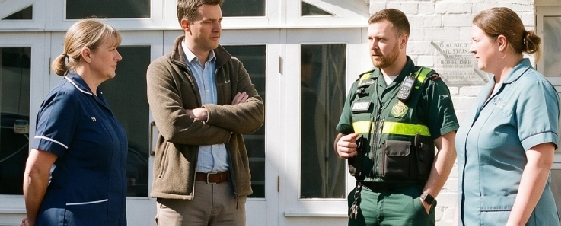
Palliative homecare does not replace the NHS — it works alongside it. Understanding how the different services fit together is one of the things families find most confusing at this stage, and we want to be clear about it.
Your GP remains the clinical lead throughout. They coordinate the medical aspects of care, prescribe medication including anticipatory medications for symptom management, and refer to specialist services where needed.
District nurses visit to provide clinical care that falls outside our scope — wound management, syringe driver setup and monitoring, catheter care, and regular clinical assessment. In the final stages of illness, district nursing visits typically increase in frequency.
The hospice — in our area, Severn Hospice (www.severnhospice.org.uk) provides specialist palliative care support including a Hospice at Home service, a 24-hour advice line for families and carers, and inpatient care where needed. Being supported at home does not mean being without hospice involvement. Many families access both simultaneously. We can help you understand what is available and how to request it.
NSHC provides the consistent daily presence — the personal care, the companionship, the medication prompting, the practical support — that holds everything together between NHS visits. We are often the people who know the individual most consistently and who notice, day to day, what is changing. We communicate those observations to the family and to the clinical team as appropriate.
These services are designed to work together. We will help you understand who does what, who to call for which concern, and how to ensure nothing falls between the gaps.
Being at Home
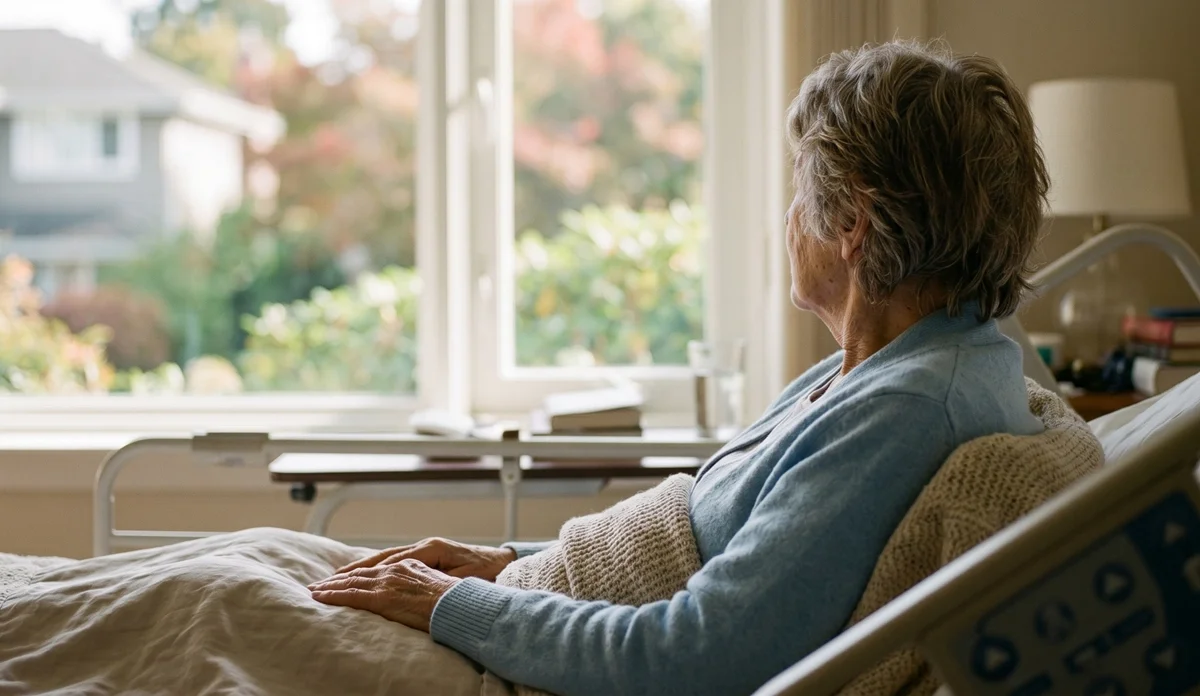
The research on end-of-life care is consistent: when asked, the majority of people say they would prefer to die at home. The reality is that far fewer do — often because the support needed to make it possible was not in place in time, or because families did not know what was available until the moment had passed.
We want to be honest about what staying at home requires. It requires planning, ideally before the situation becomes urgent. It requires a clear care plan, good communication between all involved, and the willingness to ask for help before the point of crisis. It also requires a home environment that can safely support the level of care needed — something we assess carefully and discuss openly.
Where staying at home is what the individual wants and what the family wishes to support, we will do everything within our capability to make it possible. Where circumstances change and a different arrangement becomes necessary, we will help navigate that transition with honesty and care.
We will never tell a family what they want to hear at the expense of what they need to know.
A Note for Family Carers
If you are the person who has been providing most of the care — the spouse, the daughter, the son who changed their own life to be there — this section is for you.
What you are doing is extraordinary. It is also unsustainable without support, and the evidence is clear that family carers who do not receive respite are at serious risk of physical and psychological collapse — often at the very moment when their loved one needs them most.
Accepting professional support alongside your own care is not a retreat. It is not a failure of love or commitment. It is the thing that makes it possible for you to be present — truly present, as a spouse or child rather than as an exhausted carer — for the time that remains.
Please let us help. Not instead of you. Alongside you.
Practical Next Steps
If you are at the beginning of thinking about palliative care support, or if a situation has changed and you need to act quickly, the most useful things to do are:
Contact your GP and ask for a referral to the palliative care team and district nursing service if these are not already in place.
Contact Severn Hospice on 01743 236565 to understand what their Hospice at Home service can provide in your area.
Call us on 01948 411222 for an honest conversation about what NSHC can offer, how quickly we can begin, and how we would work alongside the other services already involved.
You do not need to have everything figured out before you call. You can call simply to talk through the situation and understand your options. That conversation costs nothing and commits you to nothing.
Talk to Us
Call our Whitchurch office on 01948 411222 — 24 hours a day, 365 days a year for urgent situations; Monday to Friday 9am to 4pm for planned conversations.
Email: mail@nshomecare.co.uk
North Shropshire Homecare The Coach House, 15/17 Green End, Whitchurch, SY13 1AD
Providing outstanding palliative and end-of-life care across Whitchurch, Wem, Higher Heath, Prees, Whixall, Tilstock, Ash, and the surrounding villages of North Shropshire.

Tailored to you.
Before we start caring for you, we will make a bespoke care plan suited just to your needs. We believe in person-centred care and we will keep you involved with this process so you have full control of your care. We will arrange to do an assessment with you and anyone else you want involved in your care plan to make sure you are satisfied with how your care will be carried out.