
Medication Support & Management
Have this page read to you
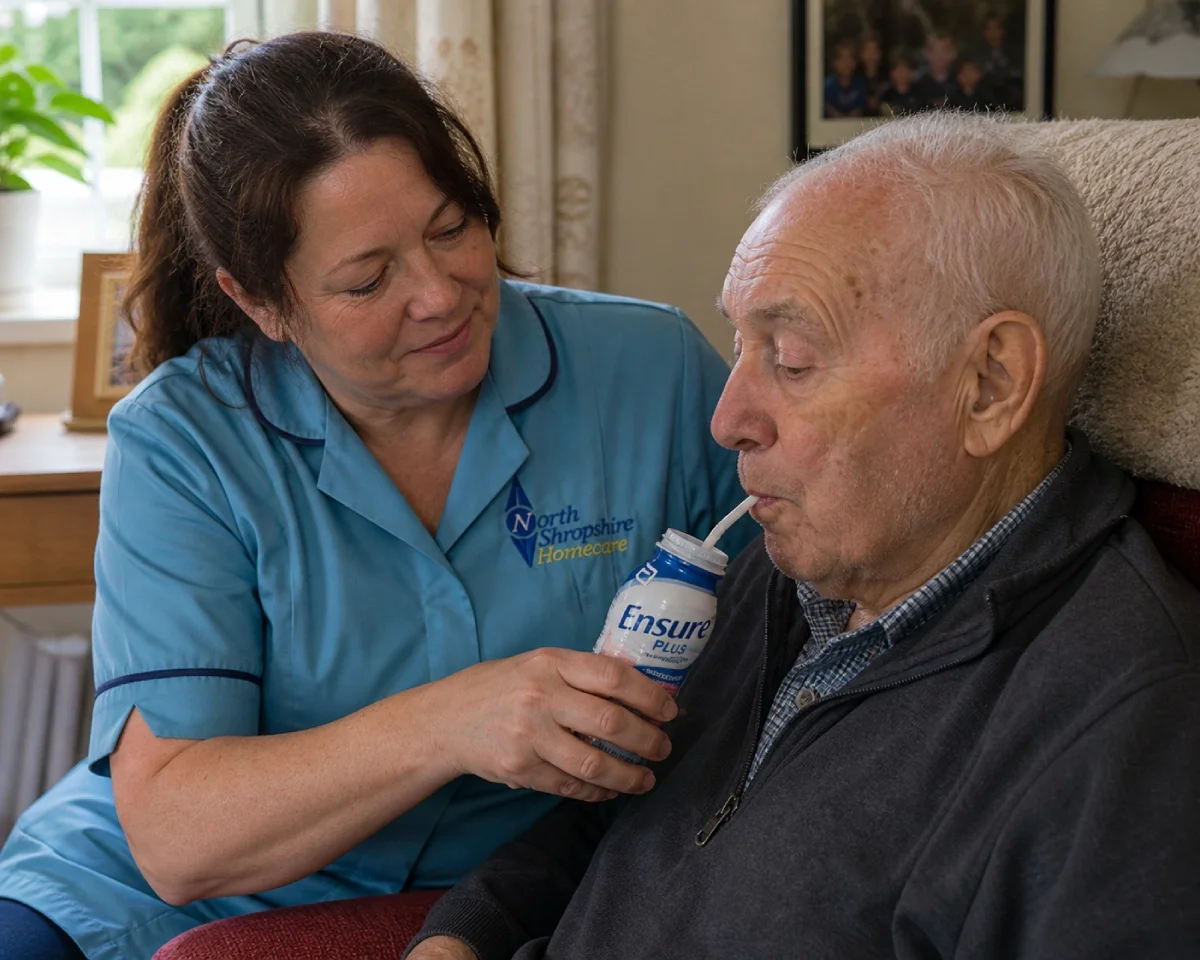
Getting medication right is one of the most important things we do.
It is also one of the most complex. For many of the people we support, a typical morning involves not one tablet but several — for blood pressure, for thyroid, for pain, for heart rhythm, for bone density, for mood. Each with its own dosage, its own timing requirement, its own interaction profile, and its own consequences if missed or doubled. Add in a recent hospital discharge with a changed prescription, a GP review that altered two medications simultaneously, and the cognitive changes that can make managing this independently increasingly difficult, and the margin for error becomes real and significant.
Medication errors are one of the most common causes of avoidable harm in older adults. Missed doses lead to uncontrolled symptoms. Doubled doses lead to toxicity. The wrong medication taken at the wrong time can interact dangerously with another. These are not theoretical risks. They are the reasons families contact us.
Our medication support service is built around eliminating those risks — with training, with systems, and with the consistent human presence of a carer who knows the individual, notices when something is different, and responds before a problem becomes a crisis.
The Different Levels of Medication Support
Medication support is not a single thing. It operates at different levels depending on the individual's needs and their ability to manage their own medication safely. Understanding the distinctions matters, and we are transparent about them.
Medication prompting — reminding an individual to take their medication at the right time, confirming they have taken it, and offering encouragement where needed. The individual takes their own medication independently; the carer provides the prompt and the observation. This level of support is appropriate for clients who retain the capacity to manage their own medication but benefit from a consistent reminder.
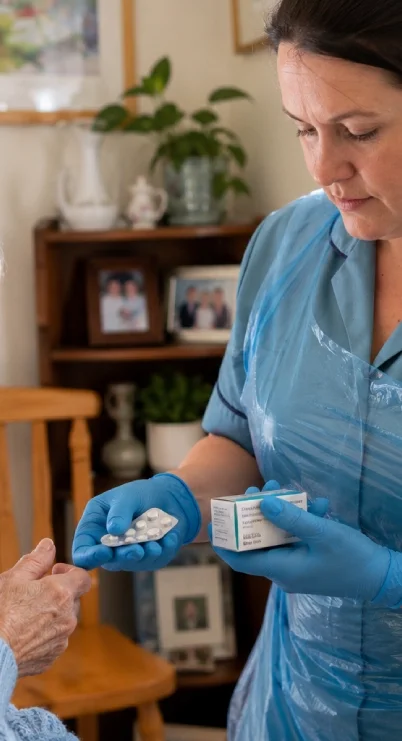
Medication assistance — helping with the practical aspects of taking medication where physical difficulty makes independent management hard. This includes opening child-resistant packaging, popping tablets from blister packs, unscrewing bottles, and ensuring the right tablets are in front of the right person at the right time. The carer is actively involved in the process but the individual remains in control of what they take.
Medication administration — the carer takes full responsibility for preparing and giving medication in accordance with the prescribed care plan. This level is appropriate where an individual cannot safely manage their own medication, and it requires a specific level of training, documentation, and clinical oversight. All carers providing medication administration at NSHC are trained to the standard required and work strictly within what has been prescribed and documented. We do not make medication decisions; we carry out prescribed ones safely and record every action.
We discuss which level of support is appropriate for each client at the initial assessment and review this regularly, because a person's capacity to manage their own medication can change — in either direction — over time.
What We Manage
Our medication support covers the full range of prescribed medications and administration routes that fall within the scope of trained domiciliary carers, including:
Oral medication — tablets, capsules, liquids, and dissolvable preparations, taken at the prescribed time and in the prescribed dose.
Topical medication — prescribed creams, ointments, patches, and eye drops applied as directed in the care plan.
Inhalers — including the important distinction between older aerosol inhalers and the newer dry powder inhalers (DPIs) that the NHS is currently transitioning many patients to as part of its green inhaler programme. These require a completely different technique — a hard, fast, deep breath rather than the slow steady breath used with aerosol inhalers — and our carers are trained on both. If a client has recently been switched to a new inhaler type, we ensure the correct technique is being used.
Dossette boxes and monitored dosage systems — many clients receive their medication pre-packaged in weekly dosette boxes or blister packs prepared by the pharmacy. We work with these systems and flag to the family or GP when a supply is running low or when the packaging does not match the current prescription.
Anticipatory medication — for clients receiving palliative care, supporting the availability and correct management of anticipatory medications prescribed for symptom control, in close coordination with the district nursing team.
We do not administer injections, insert or manage syringe drivers, or undertake any medication administration that falls within the scope of district nursing. Where these are required, we coordinate closely with the NHS clinical team and ensure there is no gap in the overall medication management picture.
The Risks We Are Specifically Trained to Watch For
Medication management in older adults is more complex than simply ensuring tablets are taken. Our carers are trained to observe and report on a range of medication-related risks that go beyond the dose itself.
Polypharmacy — the simultaneous use of multiple medications, which is common among older adults and significantly increases the risk of drug interactions and adverse effects. We document all medications clearly and communicate promptly if a new prescription appears that may interact with existing ones, flagging to the GP or family for review.
Side effects that present as something else — many medications commonly prescribed to older adults can cause symptoms that are attributed to ageing rather than the drug. Certain antihistamines cause drowsiness and confusion that can dramatically increase fall risk. Diuretics for blood pressure and heart conditions cause increased fluid loss that is amplified by warm weather and can lead to rapid dehydration. Blood pressure medications can cause dizziness on standing that is mistaken for general unsteadiness. Our carers know to ask the medication question when they observe these symptoms.
Cognitive changes affecting compliance — for clients living with dementia or other cognitive conditions, medication management requires particular attention. A person may believe they have taken their medication when they haven't, or take it twice, or refuse it during a period of agitation without any record being made. Our eMAR system and our trained approach to medication support with cognitively impaired clients addresses all of these scenarios.
Changes following hospital discharge — discharge prescriptions frequently differ from pre-admission ones. New medications are added, old ones stopped, dosages changed. In the confusion and exhaustion of coming home from hospital, these changes are easily missed. We review the medication list at the first post-discharge visit and communicate any discrepancies or concerns to the family and GP immediately.
Running out — one of the most preventable medication failures and one of the most common. We monitor stock levels actively and alert families and the GP surgery in advance of a prescription needing renewal.

Our Documentation System
Every medication interaction is recorded in real time using our electronic Medication Administration Records — eMAR charts that capture the name, dose, form, time, and method of administration for every medication managed, at every visit.
This means:
No guesswork. Any carer covering a visit has an immediate, accurate picture of what has been given, when, and by whom. The risk of double-dosing is eliminated.
No gaps. Missed or refused doses are documented immediately, with the reason recorded and — where clinically necessary — an alert raised to management or the GP.
Full accountability. Every entry is time-stamped and carer-attributed. The record is complete, auditable, and available to families on request.
Stock monitoring. Medication levels are tracked across visits, with early alerts when prescriptions need reordering. We do not wait until the last tablet.
Clinical oversight. All medication records are audited regularly by our senior team against CQC requirements and our own clinical standards. Anomalies are investigated and addressed.
This system is not a bureaucratic exercise. It is the infrastructure that makes safe medication management possible at scale, across multiple clients and multiple carers, every single day.
For Families Who Live at a Distance
Medication is often the specific worry that drives families who live far away to arrange professional care. The question — is Mum actually taking her tablets? — is one that a phone call cannot reliably answer and that a weekly visit cannot consistently monitor.
Our eMAR system means that the answer to that question is documented, timestamped, and available. If something has been missed, you will know. If there has been a refusal, you will know why. If stock is running low, you will know before it becomes a problem.
We are also always glad to speak to family members directly about a relative's medication — to explain what is being managed, to raise any concerns we have observed, and to coordinate with the GP where a medication review would be beneficial. We treat families as partners in care, not bystanders.
Talk to Us
If medication management has become a source of worry — for the individual, for the family, or for both — we are glad to have an honest conversation about how we can help.
Call our Whitchurch office on 01948 411222 (Monday to Friday, 9am to 4pm) or email mail@nshomecare.co.uk to arrange a confidential chat or a free home assessment.
For urgent situations involving medication concerns, our number is answered 24 hours a day, 365 days a year.
North Shropshire Homecare The Coach House, 15/17 Green End, Whitchurch, SY13 1AD
Providing the best medication support and management across Whitchurch, Wem, Higher Heath, Prees, Whixall, Tilstock, Ash, and the surrounding villages of North Shropshire.
Tailored to you.
Before we start caring for you, we will make a bespoke care plan suited just to your needs. We believe in person-centred care and we will keep you involved with this process so you have full control of your care. We will arrange to do an assessment with you and anyone else you want involved in your care plan to make sure you are satisfied with how your care will be carried out.