
Security & Welfare Calls
Have this page read to you
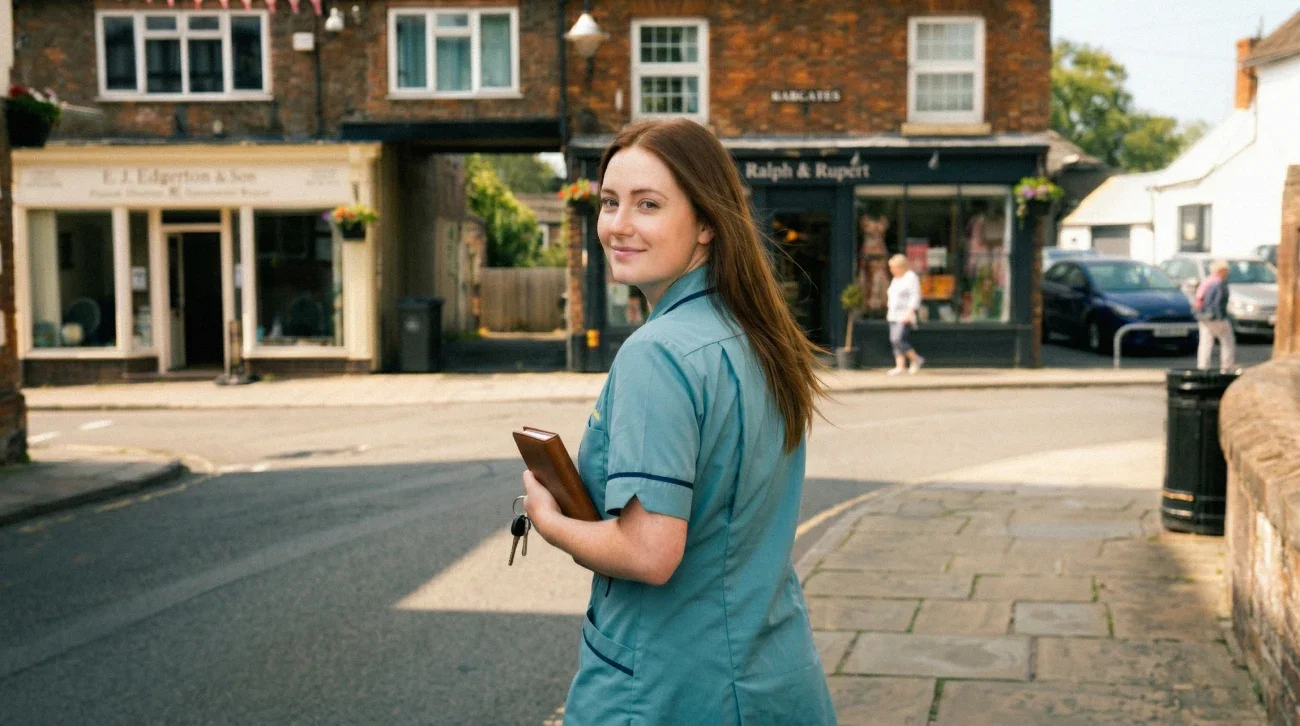
There is a particular kind of worry that settles on a family when a parent or relative lives alone.
It is not always a specific fear. It is more often a background anxiety — the phone that rings out once too often, the nagging question of whether the morning has started normally, the knowledge that a fall at 11pm in a quiet bungalow in Prees might not be discovered until the following afternoon. In rural North Shropshire, where the distance between neighbours can be measured in fields rather than streets, and where a car becoming unusable can mean genuine isolation, that anxiety has a particular shape.
Our Security and Welfare Call service exists to address it directly — with a consistent, professional presence that checks in on the people you love and responds when something isn't right.
What a Security or Welfare Call Actually Involves
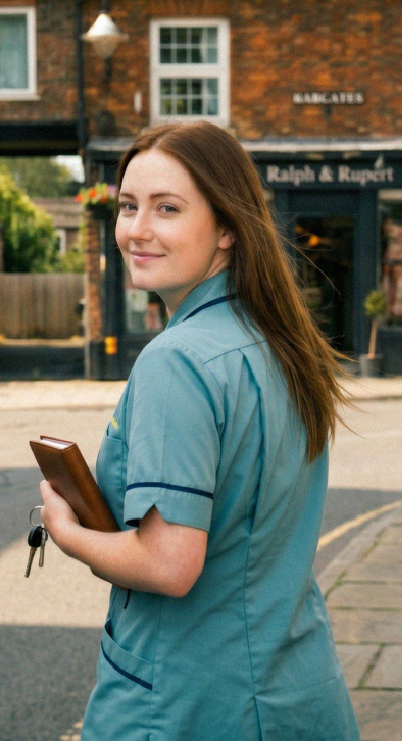
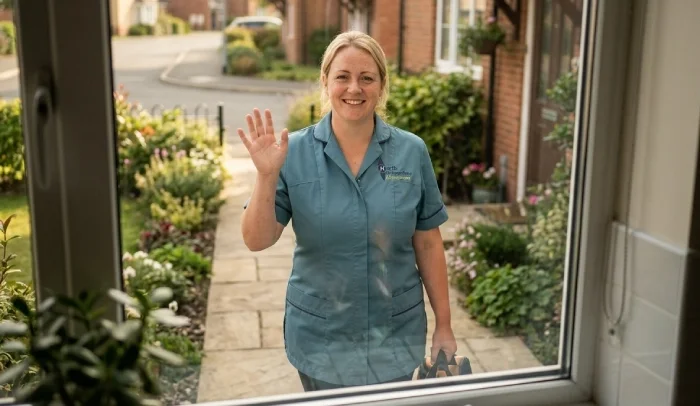
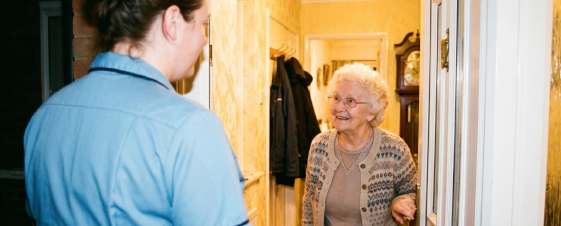
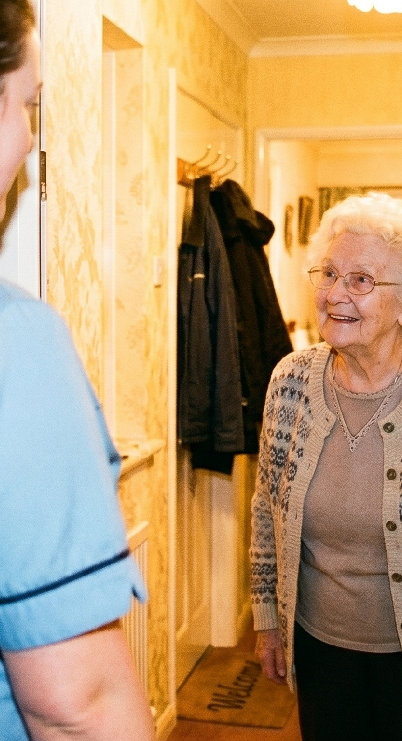
This is not a cursory knock at the door and a wave through the window. A welfare check from NSHC is a purposeful, attentive visit or contact designed to establish that a person is well, safe, and has what they need.
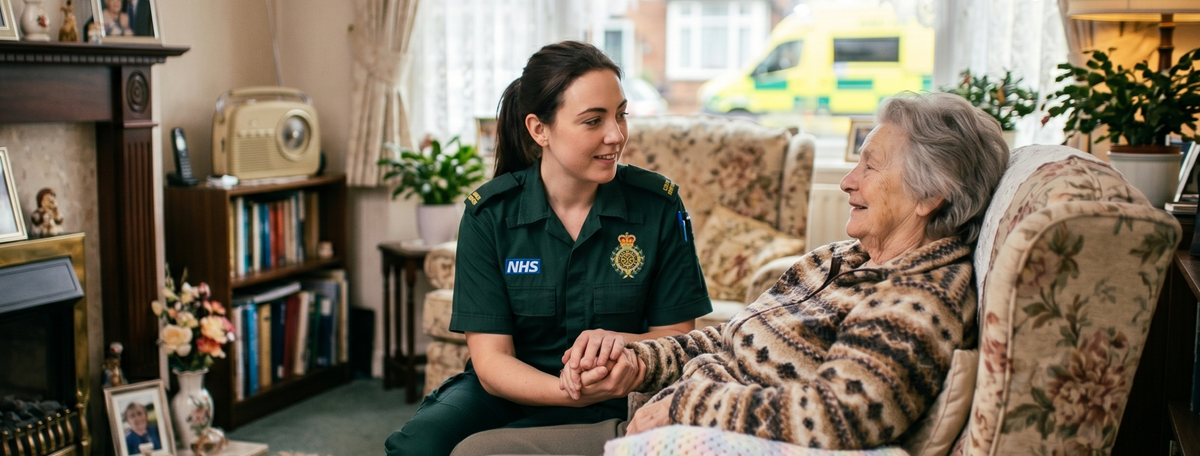
During an in-person welfare visit, our carer will:
Check that the person is up, mobile, and well — observing their general presentation, mood, and demeanour. A carer who knows someone well will notice immediately if something feels different today. Unusual confusion, unsteadiness on their feet, a pallor that wasn't there yesterday, a reluctance to make eye contact — these are the things that a trained, familiar eye catches and a neighbour or family member on a brief phone call might miss.
Check the home environment — ensuring the heating is on and adequate, that there is food and drink available, that the home is safe to move around in. A front door left unlocked, a hob left on, a fall that happened overnight and left someone on the floor — these are things a welfare visit finds.
Check medication — confirming that morning or evening medication has been taken, or prompting and assisting where this falls within the agreed care plan.
Provide a moment of genuine human contact — sitting down, having a brief conversation, offering a drink. For someone who lives alone and whose day might otherwise pass without meaningful interaction, this is not a small thing.
Document and communicate — recording what was observed during the visit and flagging anything that requires follow-up to the family or to the office. If something is wrong, the family knows promptly. If everything is well, the family knows that too.
What Happens If Something Is Wrong
This is the question that matters most, and we want to answer it plainly.
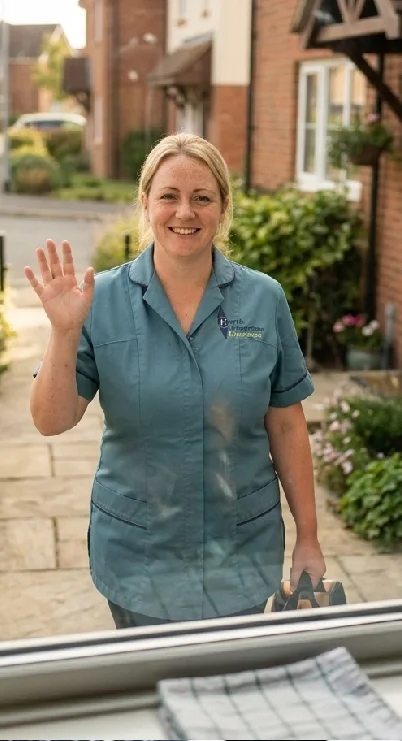
If a carer arrives for a welfare visit and cannot gain access — the door is unanswered and there is no response — they do not simply note it and leave. They follow a clear, documented protocol: attempting contact by telephone, contacting the office, contacting the designated emergency contact, and where there is genuine concern for a person's safety, contacting emergency services. We do not leave an unanswered door uninvestigated.
If a carer gains access and finds a person who has fallen, is confused, is unwell, or is in any situation that requires urgent attention, they act immediately — providing first aid within their training, calling 999 where needed, and ensuring the person is not left alone until appropriate help has arrived.
If something is noticed during a visit that is not an emergency but warrants attention — a change in condition, a concern about medication, a home environment that has deteriorated — this is documented, communicated to the family and to the office, and followed up. We are the early warning system. We take that role seriously.
The Rural Factor
We want to be direct about something that distinguishes care in North Shropshire from care in an urban setting.
In a city, a person who falls at home might be found within hours — by a neighbour, by a passing visitor, by the rhythm of a busy street. In Higher Heath, in Whixall, in the lanes around Ash and Tilstock, the distances are different. A person living alone in a rural property can go unnoticed for considerably longer if no professional check-in is in place.
This is not a reason for alarm. It is a reason for a practical arrangement that removes the risk. A daily welfare visit — even a brief one — closes the gap entirely. The family member in Birmingham or Manchester can go to sleep knowing that someone will be there in the morning.
That peace of mind is the real service we are providing. The visit is how we deliver it.
Who Benefits Most from This Service
Security and welfare calls are used by a wide range of clients across our operating area. The people who benefit most typically include:
Those who live alone — particularly following bereavement, when the routines that previously provided natural daily contact have gone and the silence of the house is both new and large.
Those recovering from a fall or hospital stay — when confidence at home has been shaken, a regular professional check-in provides reassurance that reduces anxiety and supports recovery.
Those whose family lives at a distance — adult children who cannot visit regularly but need to know that someone is looking in consistently and will call them promptly if something changes.
Those in the early stages of a condition that may progress — dementia, Parkinson's, COPD, or any condition where regular observation of subtle changes is clinically valuable. A carer who visits consistently is in the best position to notice when something is shifting.
Those who are not yet ready for regular personal care — welfare visits can be a gentle introduction to professional care for individuals who are resistant to the idea of a carer. A brief, friendly check-in builds familiarity and trust over time, making the transition to more substantial support significantly easier when the time comes.
Flexible Arrangements
Security and welfare calls can be arranged at whatever frequency makes sense for the individual — once daily, twice daily, morning and evening, or several times throughout the week. They can be stand-alone visits or combined with other care services within the same call. They can be telephone-based, in-person, or a mixture of both.
We build the arrangement around what is actually needed, and we review it regularly as circumstances change. A person who needs daily visits through a difficult winter may need less frequent contact in the summer. A person whose condition changes may need more. We adapt accordingly.
Talk to Us
If you are worried about a relative living alone, or if you are the person who would benefit from knowing that a familiar face will check in regularly, we are glad to have that conversation.
Call our Whitchurch office on 01948 411222 — Monday to Friday, 9am to 4pm for planned enquiries, and 24 hours a day, 365 days a year for urgent situations.
Email: mail@nshomecare.co.uk
A welfare call arrangement can often be put in place very quickly. If the worry is present now, there is no reason to wait.
North Shropshire Homecare The Coach House, 15/17 Green End, Whitchurch, SY13 1AD
Providing outstanding security and welfare calls across Whitchurch, Wem, Higher Heath, Prees, Whixall, Tilstock, Ash, and the surrounding villages of North Shropshire.
We are the Gold Standard.
Exceptional support begins with listening. Before we ever step through your door, we work closely with you to design a fully bespoke care plan tailored to your exact needs, routines, and lifestyle.
We champion true person-centred care, ensuring you remain firmly in control of the entire process from day one. By arranging a comprehensive, relaxed assessment with you and anyone you choose to involve—whether that is family, friends, or advocates—we guarantee that every detail is perfectly aligned with your wishes. With us, your care is always delivered exactly how you want it, on your terms.