
Spinal Cord injury Care in Shropshire
Have this page read to you
A spinal cord injury changes everything. The life that existed before — the way a person moved through the world, the things they did without thinking, the physical autonomy that most people never have reason to value until it is altered — is replaced, often without warning, by a new reality that requires learning, adaptation, and a level of daily support that most people have never needed before.

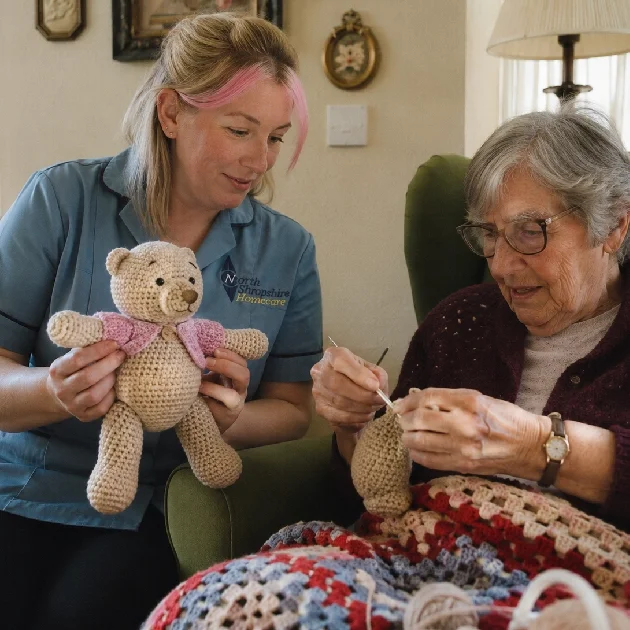
“New data published in 2024 reveals that approximately 4,400 people in the UK sustain a spinal cord injury every year — double the previous estimate of 2,500. Around 105,000 individuals in the UK are currently living with a spinal cord injury. The majority — 87.8% — live in private residences, generally their home prior to the injury.”
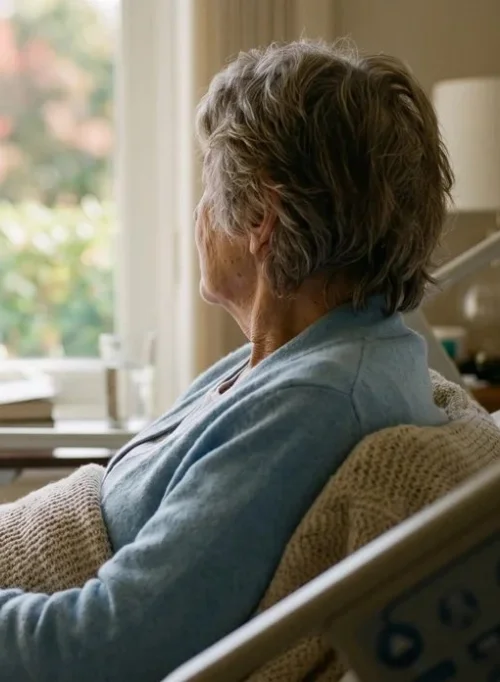
That last statistic is the one that matters most for this page. The overwhelming majority of people living with a spinal cord injury are at home. Not in a nursing home, not in a specialist residential unit — at home, in the place that is theirs, living as independently as their injury level and the quality of their support allows.
At North Shropshire Homecare, we provide specialist home care for people with spinal cord injuries across Whitchurch, Wem, Prees, Whixall, and the surrounding villages. This page explains what that care looks like in practice — in the level of detail that people living with SCI, and the families and clinicians supporting them, actually need.
Understanding Spinal Cord Injury — The Levels That Shape the Care
Spinal cord injuries are not a single condition. The level of the injury in the spinal cord, and whether the injury is complete or incomplete, determines which functions are affected and to what degree. Understanding this is essential to understanding what care is required.
-
affect the neck region and carry risks to arm and hand function as well as breathing. Severe cervical injuries result in tetraplegia — paralysis or significant weakness affecting all four limbs and potentially the trunk, with possible respiratory involvement.
-
affect the trunk and legs while arm function is often preserved. These injuries result in paraplegia — loss of function in the legs and lower trunk.
-
Affect hip, knee, and ankle function, as well as bowel, bladder, and sexual function. Arm and hand function is typically fully preserved.
Of UK spinal cord injuries, 51% result in tetraplegia. The demographic split shows a significant male predominance, with a two-thirds to one-third male-to-female ratio. Young adult men aged 20–29 and those over 70 are the most susceptible to these injuries.
Regardless of injury level, autonomic nervous system dysfunction can occur, affecting diverse functions including temperature regulation, blood pressure, bowel and bladder control, and sexual function.
The practical consequence of all this is that no two people with spinal cord injuries have identical care needs. The care plan we build for each client reflects their specific injury level, their specific functional profile, their specific equipment, and their specific goals — never a generic SCI template.
The Care We Provide — In Detail
Personal Care
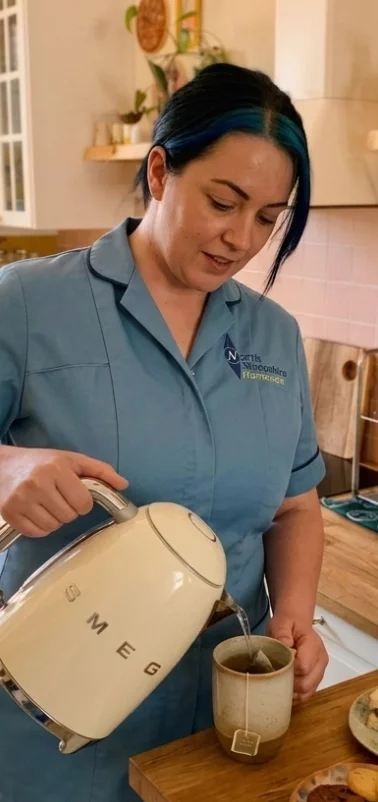
Personal care for someone with a spinal cord injury requires more than standard personal care training. It requires knowledge of the specific functional limitations at each injury level, the adaptive techniques that preserve dignity and safety, and the patience and attentiveness that makes an intimate care task feel respectful rather than clinical.
For tetraplegic clients — those with cervical injuries — personal care may involve complete assistance with all aspects of washing, dressing, grooming, oral hygiene, and shaving. Positioning during personal care is critical: a client with a high cervical injury requires specific head and neck support throughout, and any approach that fails to account for this risks discomfort and injury.
For paraplegic clients — those with thoracic, lumbar, or sacral injuries — personal care typically involves lower body washing and dressing, with upper body independence preserved. The approach changes significantly depending on whether the client uses a manual wheelchair, a powered chair, or transfers independently to a shower chair or bath board.
In all cases, personal care is carried out at the client's pace, following the client's established routine, with gender preferences accommodated wherever our staffing allows. A person who has spent months in a spinal injuries unit developing a routine that works for them does not need that routine overridden by a carer who has their own preferred approach. We follow the client's lead. Always.
Moving, Handling, and Transfers
Safe moving and handling is the technical foundation of everything else in SCI care. Done well, it is safe, dignified, and enables the client to move through their day with confidence. Done poorly, it causes injury, pressure damage, and the specific kind of helplessness that comes from being physically managed rather than supported.
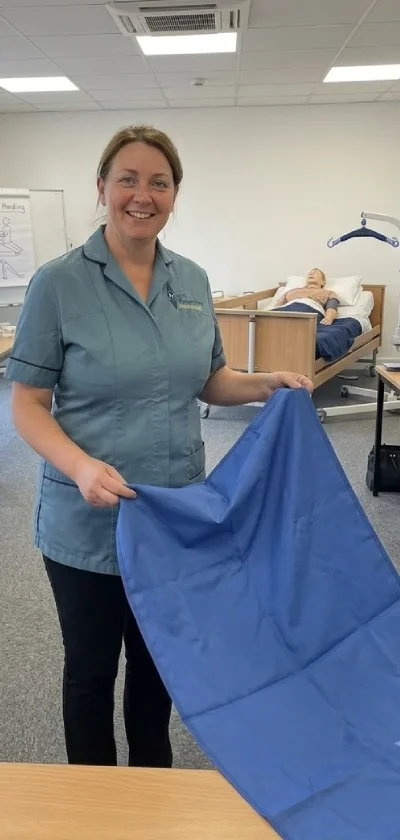
Every NSHC carer working with SCI clients is trained in moving and handling specific to that individual's injury level and equipment. This is not generic moving and handling training — it is client-specific instruction before the first visit.
-
For clients who require full assistance with all transfers, we are trained and experienced in ceiling track hoists, mobile hoists, and standing hoists. Sling selection and fit is specific to each client. The correct sling for a tetraplegic client is not the same as for a paraplegic client, and using the wrong sling is not simply uncomfortable — it can cause pressure injury, respiratory compromise, or loss of positioning during the transfer. We assess, we document, and we follow the clinical team's guidance precisely.
-
For clients who retain some weight-bearing ability, a stand aid can provide safer, more independence-preserving transfers than a full hoist. We assess which approach is appropriate for each transfer, on each day, because a client's ability to participate in a transfer can vary with fatigue, spasticity, or pain.
-
Repositioning in bed is a task that happens multiple times in a day for clients who cannot do it independently. Without correct technique and equipment, it requires significant carer effort and risks shear injury to the client's skin. With slide sheets and a trained approach, it is smooth, safe, and considerably more comfortable.
-
Clients who spend extended time in bed require regular lateral repositioning to relieve pressure from bony prominences. We know the correct positioning angles (typically 30 degrees), the correct cushioning and pillow placement, and the timing appropriate to each client's skin tolerance and pressure relief schedule.
Pressure Area Care — A Non-Negotiable Priority
Pressure sores are among the most common and serious complications of spinal cord injury, and rehospitalisation rates for SCI patients can be in excess of 50% within the first year, with pressure sore management cited as one of the specialist reasons for readmission.
Pressure injuries in SCI clients are not a minor inconvenience. They can be life-threatening, can require surgery, and can undo months of rehabilitation progress. The most important fact about pressure injuries is that they are largely preventable with attentive, consistent daily care.
Our approach to pressure area care for SCI clients includes:
Daily skin inspection at every personal care visit — every bony prominence, every contact point, every area at risk. We are looking for redness that does not blanch, warmth, swelling, or any change from the previous visit. We document what we find. We escalate immediately if we find early signs of tissue damage.
Correct pressure relief mattress and cushion use — we understand the difference between reactive (foam) and proactive (alternating pressure) systems, and we ensure that the equipment in place is being used correctly rather than simply being present.
Repositioning schedules — maintained consistently throughout every visit, documented in the care record, and communicated in handover so that the next carer knows exactly what position the client was in and when they were last turned.
Footwear and heel care — heels are one of the most common sites of pressure injury in SCI clients because they are difficult to see and easy to neglect. We check them at every personal care visit.
Catheter and Continence Care
Neurogenic bladder dysfunction affects the majority of people with spinal cord injuries regardless of injury level, because the autonomic nervous system pathways that control bladder function are almost universally disrupted.
Continence care for SCI clients takes several forms depending on the clinical picture, the level of injury, and the client's personal preference and independence:
Indwelling catheter care — daily hygiene around the catheter site, drainage bag management, monitoring for signs of infection (cloudy or malodorous urine, fever, increased spasticity, confusion), and clear communication with the district nursing team who manages catheter insertion and replacement.
Suprapubic catheter care — the site care requirements for a suprapubic catheter are distinct from those of a urethral catheter. Our carers are trained in the specific hygiene and monitoring requirements.
Intermittent self-catheterisation (ISC) support — for clients who manage their own ISC but may need support with preparation, positioning, or the specific adapted equipment that makes independent catheterisation possible at their injury level.
Bowel management programme — bowel dysfunction in SCI is managed through a specific daily or alternate-day programme that may include digital stimulation, suppositories, or manual evacuation, carried out at a consistent time and in a consistent way. This is a task that requires both clinical training and a particular quality of matter-of-fact dignity — it is intimate, it is necessary, and it is something our carers approach with the same professionalism as every other aspect of care.
Respiratory Support
For clients with high cervical injuries, respiratory function may be partially or significantly compromised. Cervical injuries carry specific risks to breathing, with severe cases potentially requiring ventilatory support.
Where a client uses a Non-Invasive Ventilator, we provide the same level of specialist support described in our Complex Care page — client-specific training from the respiratory team, knowledge of the specific machine settings and alarm protocols, mask management and pressure area prevention, and clear escalation pathways.
For clients with partially compromised respiratory function who are not ventilator-dependent, we are trained in supported coughing techniques, coughing assistance machines, nebuliser support where prescribed, and the early recognition of respiratory deterioration — increased breathlessness, changes in sputum, fever — that warrants prompt clinical escalation.
Where a cough assist machine is in use, we are experienced in its correct operation. If you are an SCI client who struggles to clear secretions effectively and are not aware of cough assist devices, please mention it to your respiratory team — this is a conversation we have had with clients before, and it has made a meaningful difference.
Spasticity Awareness and Management
Autonomic nervous system dysfunction following SCI affects diverse functions and can occur at any level of injury. Spasticity — involuntary muscle contractions and spasms — is one of the most common and variable features of SCI, and its management directly affects how personal care and moving and handling can be safely approached.
Recognise and work with spasticity rather than against it. Sudden movement, cold, or inappropriate positioning can trigger spasm. Slow, smooth, well-telegraphed movements reduce the likelihood of triggering spasm during transfers and personal care.
Recognise changes in spasticity pattern that may signal an underlying problem. Increased spasticity — particularly in clients with injuries at T6 or above — is a well-established warning sign of autonomic dysreflexia, a potentially life-threatening condition that requires immediate response.
Autonomic Dysreflexia — Knowing What to Do
Autonomic dysreflexia is a specific risk for people with injuries at T6 and above, caused by an uncontrolled response of the autonomic nervous system to a stimulus below the injury level.
Triggers include bladder distension (a blocked catheter, for example), bowel distension, pressure sores, tight clothing, or any other painful or uncomfortable stimulus below the level of injury that the client cannot perceive normally.
Symptoms include severe headache, profuse sweating above the level of injury, flushing of the face and neck, blurred vision, and a dangerous rise in blood pressure that can lead to stroke or cardiac events if not treated promptly.
Every carer working with a client at risk of autonomic dysreflexia at NSHC is trained to:
Recognise the symptoms immediately
Sit the client upright if possible
Identify and remove the trigger — checking the catheter for blockage is usually the first step
Call 999 if symptoms do not resolve rapidly
Never leave the client alone during an episode
This is not a rare scenario. It is one of the most important clinical competencies for anyone providing care to a person with a high SCI, and we treat it as such.
Equipment We Work With
-
The equipment present in the home of a person with an SCI can be extensive. Our carers are trained to work safely and competently with all of the following:
Ceiling track hoists and mobile hoists
Stand aids and transfer boards
Profiling beds — adjusting positions, managing rails, understanding the relationship between bed position and respiratory function
Alternating pressure mattresses and cushions
Manual and powered wheelchairs — understanding positioning, cushion management, and the specific transfer techniques for each
Shower chairs, commode chairs, and bath hoists
Ventilators and respiratory support equipment
Cough assist machines
Catheter drainage systems — both leg bags and overnight bags
Suprapubic catheter care equipment
Spasticity management aids — splints, positioning cushions, orthotic supports
Where a client's home includes equipment we have not previously worked with, we arrange training with the relevant clinical or equipment team before the first solo visit. We do not improvise with clinical equipment.
Working With the NHS SCI Clinical Team
Home-based SCI care does not replace the NHS spinal cord injury clinical team. It works alongside it.
People with spinal cord injuries typically have ongoing involvement with their regional spinal injuries centre — in this part of England, often the Midland Centre for Spinal Injuries at the Robert Jones and Agnes Hunt Orthopaedic Hospital in Gobowen, or the Princess Royal Spinal Injuries Centre in Sheffield. They also have community involvement from district nurses, community physiotherapists, continence nurses, and occupational therapists.
Our role is to be the consistent, trained, daily presence that connects all of these inputs into a coherent daily life. We communicate clinical observations to the relevant team members. We flag deterioration promptly. We implement the recommendations of physiotherapists and OTs within the daily routine. We are the people who are there when everyone else has left, and we take that responsibility seriously.
What Good SCI Care at Home Actually Enables
We want to say something about this directly, because it is the point that clinical descriptions sometimes obscure.
A person with a spinal cord injury who is living at home, with excellent support, is not living a diminished version of their former life. They are living a life. With the specific texture and meaning that their home, their community, their relationships, and their identity give it. The injury is present. The person is more present.
87.8% of people with spinal cord injuries live in private residences. That majority exists because home is where people want to be, and because with the right support, home is where they can be safely and well.
In North Shropshire, in the lanes between Whitchurch and Wem and the villages beyond, we are the support that makes that possible for the people we work with. We take it seriously. We take the clinical detail seriously. And we take the person — not the injury level, not the care plan, the actual person — seriously most of all.

Arrange a Free Home Assessment
If you or a family member has a spinal cord injury and you are looking for home care support in North Shropshire — whether following discharge from a spinal injuries unit, following a change in circumstances, or simply because the current arrangement is no longer sufficient — we would be glad to talk.
A free home assessment costs nothing and commits you to nothing. We will visit, understand the full picture, and give you an honest account of what we can provide and how quickly we can begin.
📞 01948 411222 — 24 hours, 365 days
✉️ mail@nshomecare.co.uk
North Shropshire Homecare
The Coach House, 15/17 Green End, Whitchurch, SY13 1AD
Providing specialist spinal cord injury care at home across Whitchurch, Wem, Prees, Whixall, Higher Heath, Tilstock, Ash, and the surrounding villages of North Shropshire. CQC Rated Good. Independently Owned. Locally Staffed.

-
The information on this page has been checked for clinical accuracy and aligns with current best practices for care at home for Spinal Cord injury Care.
REVIEWED BY: Alice Allen CQC Registered Manager
Next review July 2027.
Tailored to you.
Before we start caring for you, we will make a bespoke care plan suited just to your needs. We believe in person-centred care and we will keep you involved with this process so you have full control of your care. We will arrange to do an assessment with you and anyone else you want involved in your care plan to make sure you are satisfied with how your care will be carried out.