
Alzheimer's Disease Care at Home in North Shropshire
Have this page read to you
982,000 people are living with dementia in the UK today — a figure expected to rise to 1.4 million by 2040. A record 506,549 people in England had a formal dementia diagnosis as of mid-2025. In 2024, dementia claimed 76,894 lives in the UK — more than 1 in 10 of all deaths — making it the UK's biggest killer for the second consecutive year and the leading cause of death for women for over a decade. One in three people born today will develop dementia.
Behind every one of these numbers is a person. A person with a history, a personality, relationships, and a life that they have built over decades. And behind that person, almost always, is a family — navigating a condition that is devastating in its progression, demanding in its care requirements, and frequently bewildering in its early stages.
Alzheimer's disease is not the same as dementia. Dementia is the umbrella term for a collection of symptoms — memory loss, confusion, difficulty with language, behavioural change — caused by different underlying brain diseases. Alzheimer's is the most common of those underlying diseases, and understanding what is specifically happening in the brain in Alzheimer's — what the protein accumulations of amyloid and tau actually do, and how they do it — shapes what good care looks like and why it works.
At North Shropshire Homecare, Alzheimer's care is at the heart of what we do. Our leadership brings over 25 years of specialist nursing and dementia care experience. This is not a supplementary service that we provide alongside our primary work. It is the condition that has shaped our training programme, our care planning approach, our communication methods, and our relationship with every family who contacts us for dementia support in Whitchurch, Wem, Prees, Whixall, and the surrounding villages of North Shropshire.
Understanding Alzheimer's Disease — The Biology That Shapes the Care
Understanding what Alzheimer's actually does to the brain is not a clinical exercise irrelevant to home care. It is the foundation of understanding why certain care approaches work and others do not, why the disease presents the way it does, and why the person experiencing it is not choosing to forget or to repeat themselves or to become confused in the evening.
What Is Happening in the Brain
Alzheimer's disease is characterised by the abnormal accumulation of two proteins in the brain: amyloid beta, which clumps together to form plaques between neurons, and tau, which tangles inside neurons. These abnormal accumulations disrupt neuronal communication, trigger inflammation, and ultimately cause the death of neurons in the affected areas.
The disease process begins years — sometimes decades — before symptoms appear. The hippocampus, the region of the brain most critical for forming new memories, is typically affected first. This is why the earliest and most characteristic symptom of Alzheimer's is the inability to form and retain new short-term memories. Long-term memories — episodic memories from decades past, procedural memories for deeply ingrained skills and routines, semantic memories for general knowledge — are stored in other brain regions and are relatively preserved in early Alzheimer's.
As the disease progresses, the neuronal loss spreads to other regions: the parietal cortex (affecting spatial awareness and the ability to navigate the physical world), the temporal cortex (affecting language), the frontal lobe (affecting executive function, planning, and behavioural regulation), and eventually the primary sensory and motor cortices. In very late stage Alzheimer's, the brain's ability to regulate basic bodily functions — swallowing, mobility, continence — is affected.
This progression is not uniform across all people with Alzheimer's. The rate of progression, the specific sequence in which different functions are affected, and the degree to which different domains deteriorate varies significantly between individuals. This is why care plans for people with Alzheimer's must be built around the individual's specific current presentation, not around a generic Alzheimer's template.
Why This Matters for Care
Understanding the neuropathology of Alzheimer's explains things that carers and families otherwise find bewildering or distressing:
Why a person with Alzheimer's can remember the Second World War but not what they had for breakfast. Short-term memory — hippocampal-dependent memory — is damaged early. Long-term episodic memory is stored elsewhere and survives longer. This is not selective forgetting. It is the anatomical reality of where the disease strikes first.
Why a person with Alzheimer's says their long-deceased spouse is still alive. The long-term memory stores that hold the fact of the bereavement are still accessible. The short-term memory processes that would allow the brain to continuously update its model of the world — to remember that the spouse died — are not. The brain's best available model of reality is one in which the spouse is living. Correcting this is not helpful. It is harmful — not because the correction is wrong but because the person cannot retain it, and will experience the grief fresh each time.
Why confusion worsens in the evening. the increase in confusion, agitation, and distress that characterises the late afternoon and evening in many people with Alzheimer's — reflects the depletion of cognitive reserve across the day and the interaction between the circadian rhythm disruptions that are common in Alzheimer's and the accumulated effort of managing a cognitively demanding day. It is not behavioural. It is neurological.
Why familiar environments and routines reduce distress. When the hippocampus fails to form new memories, the brain relies increasingly on older, more deeply encoded procedural memories and on external environmental cues for orientation and stability. A familiar home, a consistent daily routine, familiar faces and voices — all of these serve as cognitive scaffolding for a brain that can no longer build its own.
The Stages of Alzheimer's Disease
Alzheimer's progresses through stages — not sharply delineated, but recognisably distinct in their care implications.
Early Stage (Mild Alzheimer's)
Early Alzheimer's is characterised by:
Frequent forgetting of recent conversations, appointments, and events
Misplacing objects and being unable to retrace steps to find them
Difficulty managing complex tasks — finances, planning a trip, following a complex recipe
Word-finding difficulties — pausing mid-sentence, using approximate words
Subtle personality and mood changes — increased anxiety, withdrawal from social activities, mild irritability
Occasionally getting lost in less familiar environments
Many people with early Alzheimer's are aware of their difficulties and are distressed by them. This awareness — anosognosia (impaired awareness of one's own deficits) is not yet present in most early cases — means that the psychological experience of early Alzheimer's includes grief, fear, and the specific loss of confidence that comes from no longer trusting one's own memory.
Care at this stage is typically light — support with complex tasks, medication management, companionship, and monitoring for the safety concerns that begin to emerge. The most important interventions in early Alzheimer's are relational and informational: helping the family understand what is happening, facilitating legal planning (Lasting Power of Attorney should be established now, while the person has capacity), supporting voice banking if communication changes are anticipated, and establishing the consistent carer relationship that will matter more as the disease progresses.
Middle Stage (Moderate Alzheimer's)
The middle stage is typically the longest and the most demanding for families. It is characterised by:
Significant memory loss affecting both recent and some long-term memories
Increased confusion about time, place, and identity of people — including family members
Greater need for assistance with personal care — dressing, washing, toileting
Wandering — leaving the home and becoming disoriented or unable to return
Increased confusion and agitation in the late afternoon and evening
Repetitive speech and questions
Sleep disturbances — reversed sleep-wake cycles, nocturnal agitation
Behavioural and psychological symptoms — anxiety, aggression, paranoia, hallucinations in some people
Progressive difficulty with language — producing fluent sentences may become difficult, understanding complex sentences may be impaired
Care at this stage is substantially more intensive. Personal care, medication management, meal preparation, and safety monitoring all require professional support. Consistency of carer becomes absolutely critical — an unfamiliar face at the door is not merely uncomfortable but genuinely disorienting for someone who cannot place who they are looking at. The home environment requires specific safety assessment and adaptation. The family carer requires significant support and regular respite.
Late Stage (Severe Alzheimer's)
Late-stage Alzheimer's is characterised by:
Very limited or absent verbal communication
Dependence on carers for all activities of daily living
Loss of mobility — progression to chair-dependent or bed-bound states
Difficulty swallowing — dysphagia with significant aspiration risk
Loss of continence — both urinary and bowel incontinence
Very limited recognition of family members or carers
Vulnerability to infections — aspiration pneumonia, urinary tract infections, pressure injuries
Increasing frailty and approaching end of life
Care at this stage is full personal care, repositioning and pressure area management, dysphagia-adapted nutrition, continence care, and palliative and end-of-life support. The expertise required is considerable and the emotional demands on family carers are profound.
Medication — What Is Available and What Requires Careful Management
There is currently no cure for Alzheimer's disease and no treatment available on the NHS that modifies the underlying disease process. Two new disease-modifying treatments — lecanemab and donanemab — were licensed in the UK in 2024 and have shown meaningful slowing of progression in early Alzheimer's in clinical trials. However, NICE declined to recommend either for NHS use in 2024 on cost-effectiveness grounds, and neither is currently routinely available.
Symptomatic treatments — which improve cognitive function and behaviour without modifying the underlying disease — include:
Cholinesterase inhibitors — donepezil (Aricept), rivastigmine, and galantamine — work by increasing levels of acetylcholine in the brain, a neurotransmitter depleted in Alzheimer's. They produce modest but meaningful improvement in cognitive symptoms in some people. Donepezil is typically taken once daily in the evening.
Memantine — an NMDA receptor antagonist used in moderate to severe Alzheimer's, which reduces the excitotoxic damage caused by excessive glutamate activity. Sometimes used in combination with a cholinesterase inhibitor.
Antipsychotic medication — for the management of severe behavioural symptoms (aggression, psychosis, severe agitation) where non-pharmacological approaches have been exhausted. Antipsychotics carry significant risks in dementia — increased stroke risk and mortality — and their use is subject to review and time-limited prescribing. The Nuffield Trust data shows that only 58 in 100 people with dementia received a medication review in 2024/25, suggesting that medication management in Alzheimer's is systematically inadequate at the population level.
What this means for care:
Medication timing matters in Alzheimer's. Donepezil is typically prescribed at night because its most common side effects — nausea, vivid dreams, diarrhoea — are better tolerated during sleep. Missing doses, or administering them at inconsistent times, produces both pharmacological inconsistency and, for people with Alzheimer's who notice disruptions to their routine, additional confusion.
We manage all Alzheimer's medication through our eMAR system with real-time documentation. We observe and document medication-related side effects. We alert the GP to patterns of refusal and communicate any medication change to the care team. And we flag to the clinical team when antipsychotic medication appears to be causing sedation, falls, or other adverse effects that warrant review.

Behavioural and Psychological Symptoms — What They Are and How We Respond
The behavioural and psychological symptoms of dementia (BPSD) are among the most challenging aspects of Alzheimer's care for families and carers, and among the most consistently undertrained aspects of professional care.
BPSD in Alzheimer's includes agitation, aggression, wandering, sleep disturbance, depression, anxiety, paranoia, hallucinations, and the specific patterns. These are not wilful behaviours. They are neurological symptoms with neurological causes — and they respond to approaches that address those causes rather than to approaches that treat them as behaviour problems to be corrected.
Agitation and Aggression
Agitation — restlessness, verbal outbursts, repetitive movements — and aggression — verbal or physical — occur in a significant proportion of people with moderate to severe Alzheimer's. They are almost always triggered by an unmet need, a threat response, or the specific frustration of not being able to communicate a need or understand what is being asked.
Common triggers include physical discomfort (pain, constipation, hunger, thirst, urinary retention), environmental discomfort (too warm, too cold, too loud, too much stimulation), fear (not recognising the carer, not knowing where they are), the experience of being helped with personal care when the cognitive deficit means the person does not understand what is happening, and medication side effects.
What we do: We are trained in non-pharmacological approaches to agitation management — sensory comfort, calm environment, validation of emotion rather than argumentation, distraction and redirection, the specific CARE (Connect, Acknowledge, Reassure, Environment) approach. We document agitation episodes in detail — timing, trigger, duration, what helped — because pattern recognition is essential to understanding and addressing the underlying cause. We never physically restrain an agitated person. We de-escalate, redirect, and if necessary give space and time before returning to the care task.
Wandering and Safe Navigation
Wandering — leaving the home and becoming lost or disoriented — is one of the most significant safety concerns in community Alzheimer's care, and one that is particularly acute in rural North Shropshire where the distances between a person and help can be considerable.
We assess wandering risk specifically, in collaboration with the family and OT team. Environmental modifications — locks placed above normal visual scanning level, door sensors and alarms, GPS tracking devices worn by the person — can all reduce the risk. Our carers know to check the security of the home at the end of every visit.
For clients at significant wandering risk who live alone, our security and welfare call service — with its clear protocol if there is no response at a visit — provides an important safety net.
Paranoia and Accusations
Paranoid beliefs are common in Alzheimer's and are frequently distressing for families — accusations of theft, of infidelity, of being imposters. These beliefs arise from the memory deficits of Alzheimer's: if you cannot remember where you put something, the most logical explanation your damaged brain can generate is that it was taken. These beliefs are not personality traits. They are symptoms.
What we do: We do not argue, deny, or attempt to correct paranoid beliefs — this does not work and increases distress. We acknowledge the emotional reality of the experience (the person feels frightened or suspicious) without validating the factual content. We distract and redirect. We communicate episodes of paranoia to the family and clinical team, because significant or escalating paranoid beliefs may indicate a medication review is warranted or an underlying physical cause (pain, UTI, constipation) needs addressing.
What We Provide — The Practical Care
Personal Care
Personal care for someone with Alzheimer's requires both technical skill and deep personal knowledge of the individual.
The approach varies with the stage. In early and middle Alzheimer's, the goal is maximum preservation of independence — prompting rather than assisting, assisting rather than completing. A person with moderate Alzheimer's who can brush their own teeth with a prompt does not need a carer to brush their teeth for them. Preserving the ability to do this for as long as possible preserves both function and dignity.
In late-stage Alzheimer's, personal care is full hands-on support — washing, dressing, oral hygiene, grooming, continence care — delivered with complete matter-of-factness, without rushing, and with continuous verbal communication about what is happening even when the person cannot respond meaningfully.
Resistance to personal care is common in Alzheimer's and is almost always triggered by fear, confusion, or the experience of being touched without understanding why. We are trained in the communication and positioning approaches that reduce resistance — approaching from the correct angle, explaining each step clearly in the moment rather than in advance (because a person with advanced Alzheimer's cannot hold advance information and act on it minutes later), working with the person's movements rather than against them.
Morning timing matters. We coordinate morning visits, where possible, so that medication has been administered and had time to act before the most demanding personal care tasks begin. The difference between assisting with dressing before and after donepezil has reached its peak effect can be significant.
Consistency of Carer — Non-Negotiable
We have said this before in the context of dementia care. For Alzheimer's specifically, we want to say it again.
A consistent carer is not a preference. For a person with Alzheimer's whose hippocampal damage means they cannot reliably form new memories, a new face at the door every morning is not merely unfamiliar — it is a repeated experience of encountering a stranger in their home. The anxiety this generates, and the impact on the rest of the morning, is measurable and clinically significant.
We maintain the smallest possible named team for each Alzheimer's client — ideally two or three people. We introduce any change to that team gradually, alongside a familiar carer. We do not send cover carers without preparation and introduction. This is one of the most important things we do, and it is also one of the things that distinguishes a provider who genuinely understands Alzheimer's from one who has been trained in generic dementia care.
Medication Management
Cholinesterase inhibitors, memantine, antipsychotics, and the often-extensive list of medications for comorbid conditions in older adults with Alzheimer's — all managed through our eMAR system with real-time documentation. Consistent timing. Observation of side effects. Prompt communication of any change to the clinical team.
We are specifically alert to the medication-related falls risks that are particularly prevalent in Alzheimer's: antipsychotics and some antihistamines cause sedation and orthostatic hypotension. Many blood pressure medications cause dizziness on standing. Certain medications — including some anticholinergic drugs — worsen cognitive function in Alzheimer's and should be flagged for review.
Meal Preparation and Nutrition
Nutritional decline is a consistent feature of advancing Alzheimer's. Appetite decreases, food recognition becomes unreliable in later stages, the mechanics of eating may become more difficult as coordination and swallowing are affected, and the simple fact of forgetting that one has not eaten can cause significant under-nutrition.
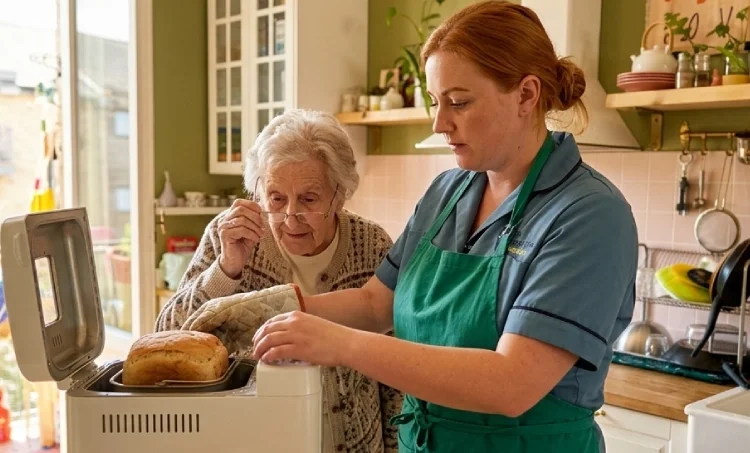
We prepare proper food adapted to the person's preferences and to any texture requirements from the SALT team. We sit with the person during mealtimes in a way that is companionable rather than supervisory. We monitor food and fluid intake and communicate concerns to the clinical team. We ensure adequate hydration — dehydration is a common trigger for UTIs in Alzheimer's, and UTIs in Alzheimer's often present as sudden significant cognitive deterioration rather than typical urinary symptoms.
Companionship, Meaningful Activity, and Life Story
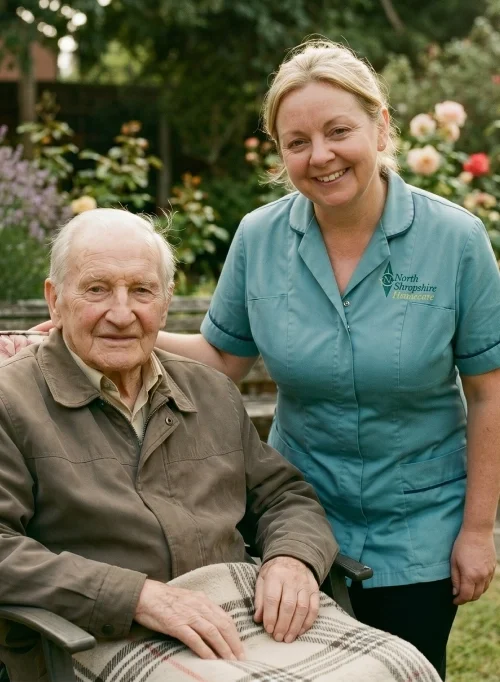
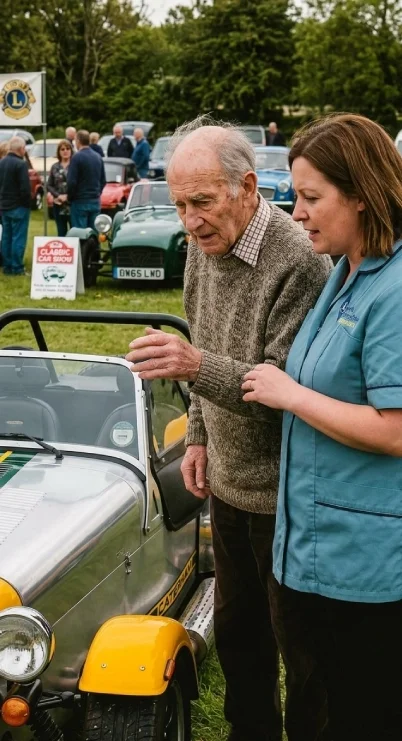
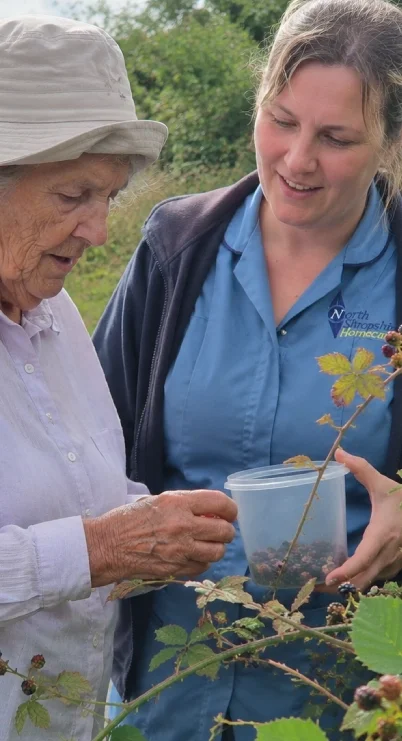
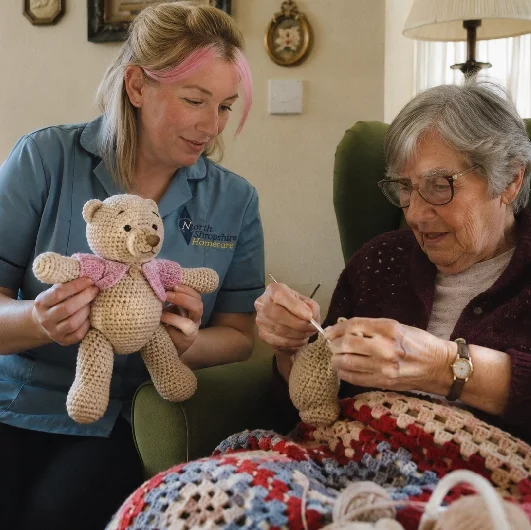
For people with Alzheimer's, the most important thing a carer can provide — alongside the practical tasks — is the experience of being seen as a whole person rather than a set of deficits.
Life story work — knowing who this person was, what they loved, what they were proud of, what music they respond to, what topics bring them alive — is not background decoration in an Alzheimer's care plan. It is the clinical tool by which a carer connects with someone whose language and recent memory are impaired. The person who cannot tell you their name may respond with visible pleasure to the music they danced to in 1965. The person who cannot follow a conversation may engage fully with looking at photographs of their children. The person who becomes agitated during personal care may settle immediately when the carer begins humming a familiar hymn.
We build life story knowledge into every Alzheimer's care plan. We use it. And we update it as the family shares new things about the person that we have not yet known.
Falls Prevention
People with Alzheimer's are at significantly elevated falls risk from multiple compounding factors: spatial disorientation, impaired judgement about physical capabilities, gait changes associated with Alzheimer's (shorter steps, shuffling, postural instability), medication effects, and the specific challenge of when balance and coordination are most compromised.
Falls prevention for our Alzheimer's clients is environmental (removing hazards, ensuring consistent lighting including night lights for nocturnal confusion), postural (appropriate footwear, safe furniture arrangement), and observational (documenting any fall or near-miss and communicating patterns to the clinical team and GP).
End-of-Life Support
Alzheimer's disease is a terminal condition. Most people with Alzheimer's will die from its consequences — aspiration pneumonia, sepsis from pressure injuries or urinary infections, progressive frailty and organ failure. The end-of-life phase of Alzheimer's requires palliative care of the highest quality, and the combination of cognitive impairment and communication loss makes pain and symptom assessment — and the implementation of the person's advance wishes — particularly demanding.
We support Alzheimer's clients through the full arc of the disease, including its final stage. We implement SALT guidance on dysphagia precisely, we coordinate with district nurses and Severn Hospice for palliative symptom management, we attend to comfort and dignity throughout, and we support families through one of the most profound experiences a family can face.
Supporting Families — The Long Goodbye
Alzheimer's has been called the long goodbye. The person is physically present for years, sometimes decades, while the cognitive and personality changes of the disease progressively alter who they are. Family members grieve this loss while the person is still alive — a form of anticipatory grief that has no social script, no bereavement leave, and no acknowledged end point.
Family carers of people with Alzheimer's carry one of the heaviest caregiving burdens of any condition. Research has documented the profound physical and psychological toll — depression, anxiety, social isolation, physical health deterioration — that sustained Alzheimer's caregiving produces.
We take the wellbeing of the whole family as our responsibility, not just the person on the care plan. We communicate honestly and regularly. We provide the respite that makes sustained family caregiving possible. We tell families the truth about what we are observing, including when we believe the current arrangement needs to change.
And we are honest with families about this: the decision to place a relative with advanced Alzheimer's into residential care is not a failure of love or commitment. It is sometimes the most caring decision available. We will never pressure a family to maintain a home care arrangement that has become unsafe, and we will never abandon a family navigating the decision to change it.
Arrange a Free Home Assessment
If you or a family member has received an Alzheimer's diagnosis, or if you are concerned about memory and cognitive changes in a relative in North Shropshire, we would be glad to talk.
A free home assessment costs nothing and commits you to nothing. We visit, we listen, and we give you an honest picture of what we can provide.
📞 01948 411222 — 24 hours, 365 days
✉️ mail@nshomecare.co.uk
North Shropshire Homecare
The Coach House, 15/17 Green End, Whitchurch, SY13 1AD
Providing specialist Alzheimer's disease care at home across Whitchurch, Wem, Prees, Whixall, Higher Heath, Tilstock, Ash, and the surrounding villages of North Shropshire. CQC Rated Good. Independently Owned. Locally Staffed.

-
The information on this page has been checked for clinical accuracy and aligns with current best practices for care at home for Alzheimer's Disease.
REVIEWED BY: Alice Allen CQC Registered Manager
Next review July 2027.

Dementia UK | Our Chosen Charity of the Year.
Every year we pick one cause to put real effort behind — genuine, sustained fundraising, awareness, and support. This year, that cause is Dementia UK.
Supporting the fight for Dementia UK as our Charity of 2026 is our way of putting our energy where our expertise already lives.