
Chronic Pain Care at Home in North Shropshire
Have this page read to you
Chronic pain is the most prevalent condition that home care encounters and the least written about.
According to the NHS England 2024 Health Survey for England — the most comprehensive and current dataset available — 26% of adults in the UK live with chronic pain, defined as pain experienced on most days or every day for at least three months. 13% live with high-impact chronic pain — pain that substantially limits life and work activities on most days or every day. In adults aged 75 and over, the prevalence of chronic pain reaches 40%. In the most deprived areas of England, the prevalence is 36% — nearly twice the rate in the least deprived areas.
By any measure, this is one of the largest health challenges in the country. An estimated 28 million adults — approximately 43% of the UK adult population — live with chronic pain. A 2025 primary care database analysis published in BJGP Open found that chronic pain is the second most prevalent long-term condition recorded in primary care, exceeded only by anxiety. 3.5 million adults are currently prescribed opioids for non-cancer pain — approximately 1 in every 30 adults.
And yet chronic pain is among the least specifically addressed conditions in home care provision. Care plans note that a client has chronic pain and move on. The specific ways in which persistent pain affects every aspect of daily living — the morning stiffness, the activity limitation, the fatigue, the effect on mood and sleep, the medication complexity — are rarely built into the care approach in the detailed, practical way they deserve.
This page addresses that gap. At North Shropshire Homecare we provide care for people living with chronic pain across Whitchurch, Wem, Prees, Whixall, and the surrounding villages — and we take the daily reality of persistent pain seriously.
Understanding Chronic Pain — What It Is and Why It Matters
Chronic pain is pain that persists beyond the normal healing time for an injury, or that occurs without any identifiable tissue damage at all. The standard definition is pain lasting three months or longer. But chronic pain is not simply acute pain that has continued for longer than expected — it is a fundamentally different physiological phenomenon with different mechanisms, different treatment approaches, and a completely different relationship to the underlying tissue state.
The Difference Between Acute and Chronic Pain
Acute pain is a warning signal. Tissue is damaged, nociceptors (pain receptors) fire, and the brain generates the experience of pain to motivate protective behaviour. The intensity of acute pain broadly correlates with the degree of tissue damage. When the tissue heals, the pain resolves.
Chronic pain does not work like this. In chronic pain, the nervous system itself has changed — a process called central sensitisation. The pain pathways have become hypersensitive, so that signals that would not normally produce pain now do, and signals that produce mild pain in a normal nervous system produce severe pain in a sensitised one. This is why a light touch on the skin of someone with fibromyalgia produces genuine pain. It is why a person with chronic back pain may have degeneration on a scan that appears mild, yet experience disabling pain.
The pain is real. This cannot be overstated. Chronic pain — even when it occurs without identifiable tissue damage, even when the scan looks unremarkable — is a real neurological experience in a real nervous system. It is not imagined, not exaggerated, not a psychological weakness, and not the consequence of inactivity or malingering. It is a condition of the pain-processing system, and it deserves the same credibility as any other neurological condition.
High-Impact Chronic Pain
The distinction between chronic pain and high-impact chronic pain — made explicit in the NHS England 2024 Health Survey data — is important for home care. High-impact chronic pain limits daily life and work on most days or every day. It is not background discomfort. It is the reason a person cannot dress without wincing. The reason cooking a meal requires sitting down twice. The reason getting to the bathroom at night is something dreaded rather than automatic.
13% of UK adults have high-impact chronic pain. In those aged 75 and over — the core demographic of home care — the prevalence is considerably higher. These are the people our carers meet every morning.
The Conditions That Cause Chronic Pain
Chronic pain is not a single condition. It is a consequence of many different underlying conditions and mechanisms, and understanding the specific cause matters for both the clinical approach and the daily care.
Musculoskeletal Pain
Pain in the arms, hands, hips, legs, or feet is the most common site of chronic pain at 71% of all chronic pain cases. Osteoarthritis, rheumatoid arthritis, chronic back pain, fibromyalgia, and the accumulated musculoskeletal consequences of a lifetime of physical work — all of these produce the persistent, daily, movement-related pain that most people think of when they imagine chronic pain. We have covered arthritis in specific detail on our Frailty and Arthritis page. Here we address the care principles that apply across all musculoskeletal chronic pain presentations.
Neuropathic Pain
Neuropathic pain arises from damage or dysfunction in the nervous system itself, rather than from tissue injury in the area where the pain is felt. It produces characteristic symptoms — burning, stabbing, electric shock sensations, allodynia (pain from a light touch), hyperalgesia (exaggerated pain from a normally painful stimulus) — that distinguish it from nociceptive musculoskeletal pain.
Common causes in the population we support include: diabetic peripheral neuropathy, post-herpetic neuralgia (the persistent pain that follows shingles), chemotherapy-induced peripheral neuropathy, post-surgical neuropathic pain, and neuropathic components of spinal conditions including sciatica and spinal stenosis. Neuropathic pain is typically less responsive to standard analgesics and more responsive to specific agents — tricyclic antidepressants, gabapentinoids, SNRIs — that target the sensitised nervous system.
Chronic Back and Spinal Pain
Chronic low back pain is the single most common form of chronic pain in the UK, contributing substantially to the 26% prevalence figure. Spinal stenosis, disc degeneration, facet joint arthritis, and the structural changes of an ageing spine combine to produce pain that affects every aspect of movement — sitting, standing, lying, walking — and that significantly limits daily function for a large proportion of older adults.
Fibromyalgia
Fibromyalgia is a chronic widespread pain condition characterised by musculoskeletal pain, fatigue, sleep disturbance, cognitive difficulties (sometimes called fibro fog), and heightened sensitivity to sensory stimuli. It is a condition of central sensitisation — the pain-amplification systems of the nervous system are dysregulated without identifiable tissue damage.
Fibromyalgia is frequently dismissed or disbelieved because investigations are normal and the pain does not follow tissue damage patterns. This dismissal is harmful and incorrect. NICE guidelines have increasingly recognised fibromyalgia as a legitimate neurological condition requiring specific, evidence-based management. Approximately 1.8 million people in the UK have fibromyalgia — the majority women.
Complex Regional Pain Syndrome (CRPS)
CRPS is a chronic pain condition that usually develops after an injury — often a fracture or surgery — but produces pain, swelling, skin changes, and temperature abnormalities that are vastly disproportionate to the original injury. It reflects a dysregulation of the nervous and vascular systems in the affected limb and is among the most debilitating of all chronic pain conditions. The pain of CRPS is frequently described as burning, constant, and severe, and it is notoriously treatment-resistant.
Cancer-Related Chronic Pain
For people living with advanced or treated cancer, chronic pain may reflect ongoing tumour-related pain, treatment-induced neuropathy (chemotherapy, radiotherapy), or post-surgical pain. We have addressed this in the context of our Cancer Care page. The principles of pain management described here apply across this population as well.
Pain in the Context of Other Conditions
Chronic pain co-occurs with virtually every other condition on our conditions pages. Parkinson's disease, multiple sclerosis, spinal cord injury, cerebral palsy, Huntington's disease, MND, stroke, COPD, heart failure, and dementia all produce or are complicated by chronic pain. Pain in the context of these conditions is frequently undertreated — either attributed to the underlying condition rather than addressed as a treatable problem in its own right, or inadequately assessed because of communication difficulties or cognitive impairment. We address pain observation and management as a specific clinical task in every complex care situation, not only in clients whose primary presenting condition is pain.


The Impact of Chronic Pain on Daily Life — What Carers Need to Understand
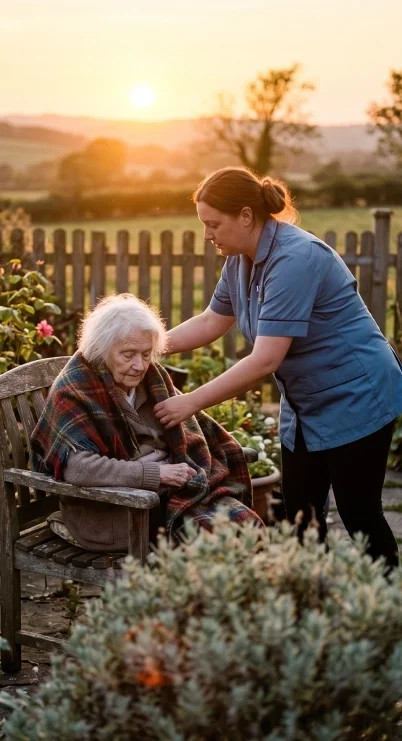
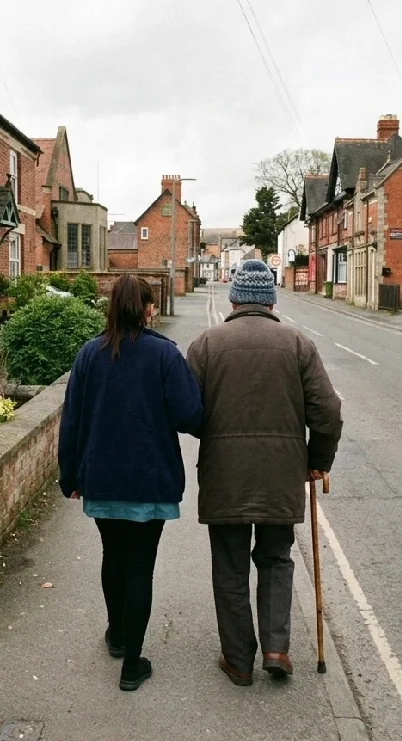
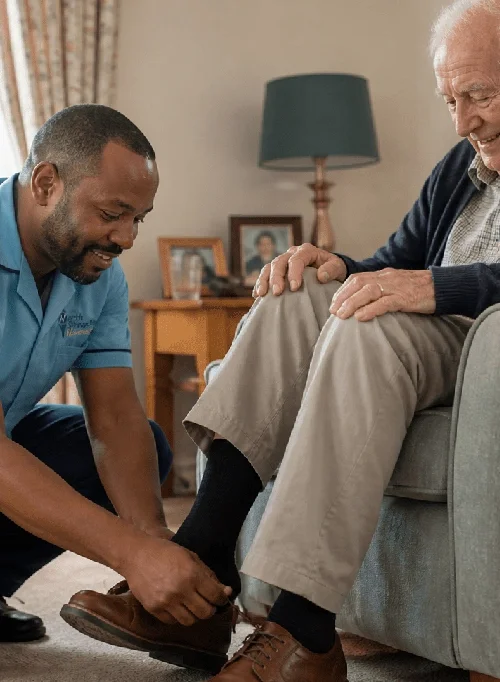
Chronic pain does not affect only the hours when it is at its worst. It pervades every aspect of daily life in ways that are difficult to fully communicate to someone who has not experienced it, and that require specific understanding from carers if the care provided is to actually help.
Morning
Morning is often the most difficult time for people with chronic pain — particularly musculoskeletal pain, inflammatory arthritis, and fibromyalgia, where overnight inactivity produces stiffness and the accumulated rest position of sleep creates the maximum of morning pain. The first hour of the day — before movement has loosened joints, before medication has had time to act, before the body has had time to warm up — may be the most challenging hour.
Carers who arrive for a morning visit and rush through personal care before this morning period has passed are providing care that actively increases suffering rather than reducing it. We time personal care to accommodate the morning pain curve — allowing medication to begin working, allowing gentle movement to ease stiffness, allowing the person to set the pace of the care tasks rather than the carer's schedule.
Fatigue
Chronic pain and fatigue are inseparable companions. The neurological cost of continuous pain processing, the sleep disruption that persistent pain produces, the psychological toll of living with pain, and the effect of many pain medications on energy levels all combine to produce a fatigue that is as disabling as the pain itself.
Pain-related fatigue is not laziness. It is not depression, though depression commonly co-occurs. It is the physiological consequence of a nervous system that has been under sustained stress for months or years. We understand this and we structure care to work with fatigue rather than against it.
Sleep Disruption
The relationship between chronic pain and sleep is bidirectional and vicious. Pain disrupts sleep — both the ability to fall asleep and the ability to maintain it, as the position changes of sleep trigger pain episodes that wake the person. Disrupted sleep, in turn, lowers pain tolerance, amplifies central sensitisation, and worsens fatigue. Research has documented this cycle clearly: pain causes poor sleep; poor sleep worsens pain; worse pain causes worse sleep.
For our clients with chronic pain, sleep quality is a clinical variable that we observe and document. Carers who help a person settle in the evening — ensuring comfortable positioning, ensuring medication has been taken, ensuring the room temperature is appropriate, ensuring that any evening pain-relieving routine has been completed — are contributing directly to sleep quality and therefore to pain management overnight.
Mood and Mental Health
The prevalence of depression and anxiety in people with chronic pain is two to three times higher than in people without chronic pain. This is not simply the understandable emotional response to living with persistent pain, though that contributes. Pain and mood have shared neurochemical pathways — the same neurotransmitters (serotonin, noradrenaline, dopamine) that regulate mood also modulate pain signals. Depression itself lowers the pain threshold. Anxiety amplifies pain perception. The relationship is bidirectional and neurobiological.
This has two clinical implications for home care. First, low mood in a person with chronic pain is not simply a personality feature or an expected consequence to be accommodated — it is a clinically significant comorbidity that may respond to treatment and that, if unaddressed, worsens pain outcomes. We observe and communicate mood changes to the clinical team.
Second, genuinely good company and human engagement — the kind that a skilled, attentive carer provides — has a measurable effect on both mood and pain perception. This is not a claim that cheerfulness cures pain. It is a recognition that social connection, warmth, and the sense of being seen and valued are genuine modulators of the pain experience.
Activity and the Boom-Bust Cycle
One of the most damaging patterns in chronic pain management is boom-bust — the cycle in which a person feels relatively well, overdoes activity, suffers a pain flare, rests completely until the flare passes, then feels relatively well again and overdoes activity again. Each cycle reinforces deconditioning, increases fear of movement, and typically worsens the pain condition over time.
The evidence-based alternative is pacing — planning activity in sustainable, consistent amounts that avoid both overdoing and underdoing, and maintaining that level even on good days when more feels possible and on bad days when less feels manageable.
Carers who understand pacing — who support the person in doing what is planned rather than what feels possible today — are actively contributing to pain management. Carers who do not understand pacing, and who either encourage a person to push through pain or enable complete inactivity on bad days, are unwittingly undermining it.
Medication Management — The Most Complex Aspect of Chronic Pain Care
Chronic pain medication management in older adults is among the most complex in home care. The range of agents used, the interactions between them, the side effect profiles of long-term use, and the national shift away from opioid-based treatment toward multimodal approaches all require specific knowledge and careful daily management.
The Range of Medications Used
-
Simple analgesics — paracetamol remains a first-line analgesic for many chronic pain conditions despite its limitations in nociceptive pain. Timing matters — paracetamol is more effective as a scheduled medication taken at regular intervals than as a PRN rescue medication taken only when pain peaks.
-
NSAIDs — ibuprofen, naproxen, diclofenac, and celecoxib are effective for inflammatory pain but carry significant risks in older adults: gastrointestinal bleeding, cardiovascular effects, and renal impairment. Their use is typically limited in duration and dose in older patients and often prescribed with gastric protection.
-
Opioids — codeine, tramadol, morphine, oxycodone, fentanyl patches, buprenorphine patches. Opioid prescriptions for non-cancer chronic pain have been a major public health concern in the UK. 3.5 million adults are currently prescribed opioids for non-cancer pain — approximately 1 in 30 adults. While overall opioid prescription volumes are declining since their 2017 peak, the number of people on long-term opioid therapy remains high. Opioids carry significant risks in older adults: falls (opioids cause sedation and balance impairment), constipation (which causes pain in itself and requires active management), cognitive effects, and dependency. Their place in chronic non-cancer pain management has been significantly revised in recent NICE guidance.
-
Gabapentinoids — gabapentin and pregabalin, prescribed for neuropathic pain components. Also associated with falls risk, sedation, and cognitive effects in older adults. Both are now controlled drugs (Class C) due to misuse potential. Dose adjustment is required for renal impairment — common in older adults.
-
Antidepressants — tricyclic antidepressants (amitriptyline, nortriptyline) and SNRIs (duloxetine, venlafaxine) have evidence for both neuropathic pain and fibromyalgia at doses lower than those used for depression. Their anticholinergic effects (particularly TCAs) can be problematic in older adults.
-
Topical agents — topical NSAIDs, capsaicin cream and patches, lidocaine patches. These provide local pain relief with minimal systemic absorption and are particularly valuable in older adults where systemic medication side effects are a significant concern.
-
Muscle relaxants — baclofen, cyclobenzaprine. Used for muscle spasm components of chronic pain. CNS-depressant effects can significantly increase falls risk.
What We Do
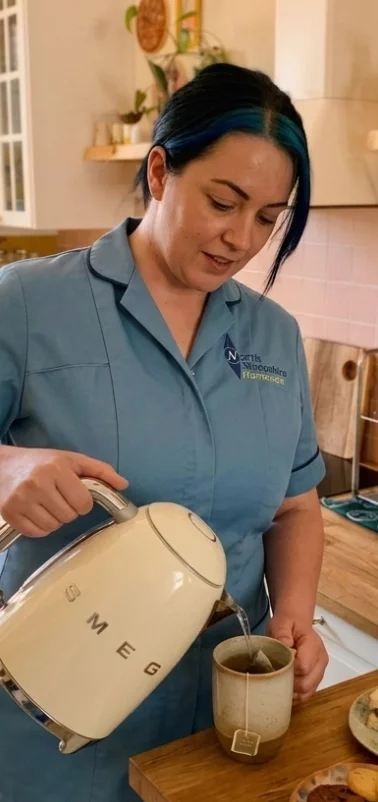
We manage all pain medication through our eMAR system with real-time documentation of every dose. We observe and document side effects specifically — sedation that increases falls risk, constipation (extremely common on opioids and requiring proactive management rather than reactive response), cognitive effects, dizziness on standing. We ensure that scheduled medications are taken at the scheduled times, because the effectiveness of many pain medications depends on maintaining consistent plasma levels. We communicate medication-related concerns to the GP promptly.
We are trained in recognising the signs of opioid-related problems — excessive sedation, respiratory depression, constipation requiring urgent management, and the signs of dose escalation that may indicate tolerance rather than undertreated pain. We never increase or decrease pain medication doses without clinical instruction.
We are also aware of the current clinical context around opioids. NICE guidelines now prioritise non-drug interventions for chronic primary pain, and 20% more people are being referred to non-drug pain management programmes than in 2018. Where a client's pain management appears to be heavily opioid-dependent in a way that is not benefiting them, we communicate this observation — sensitively and appropriately — to the GP and clinical team.
Non-Pharmacological Pain Management — Our Role
NICE guidance on chronic primary pain explicitly recommends non-drug approaches as first-line management. These include supervised exercise, psychological interventions (particularly acceptance and commitment therapy and cognitive behavioural therapy), and acupuncture. Home care does not deliver these specialist interventions. But it does provide the daily support within which these approaches can be maintained.
Activity pacing — supporting the consistent, graduated activity level that prevents boom-bust cycles.
Gentle movement — encouraging and facilitating the regular movement that maintains joint mobility and prevents the deconditioning that worsens chronic pain. Not exercise programmes — that is for physiotherapy — but the consistent, safe movement that daily life provides.
Comfort positioning — ensuring that the person is positioned comfortably for sleep, rest, and meals, with appropriate support and cushioning.
Heat and cold — supporting the use of prescribed or agreed heat (warm baths, heat pads) and cold (ice packs, cooling gels) that many people with chronic pain find beneficial for symptom management.
Sleep hygiene — the specific evening routine that supports sleep quality in the context of chronic pain.
What We Provide — The Practical Care
Personal Care
Personal care for someone with chronic pain requires pacing, timing, and continuous attention to comfort — the antithesis of the rushed, task-completion approach that chronic pain makes so much more harmful than in other care contexts.
We allow time. Personal care that is rushed is personal care that hurts. We structure our visits to avoid rushing and we communicate to the scheduling team when a visit is insufficiently long for the care required.
We respect pain-informed movement. We do not move a person's limbs or body in ways that we know to cause pain. We ask, at every visit, how today is — because chronic pain is variable, and the approach that was appropriate yesterday may not be appropriate today.
We adapt to the good day and the bad day. On a good day, we support maximum independence — the person does as much as they can for themselves. On a bad day, we provide more active assistance without judgment, without commentary about the difference, and without encouraging the person to push through pain that they are telling us is limiting them.
We monitor pain specifically. Not "does it hurt?" but where, how severe on a consistent scale, what makes it better, what makes it worse, whether it has changed since the previous visit. This documentation is clinically valuable in a way that generic comfort observations are not.
Meal Preparation
Cooking with chronic pain is genuinely difficult. Standing at a kitchen counter produces back, hip, and knee pain. Fine motor tasks — peeling, chopping, managing fastening — are limited by hand pain. The cognitive load of managing multiple tasks simultaneously is harder when chronic pain is consuming attentional resources.
We prepare proper nutritious food in a way that manages the specific limitations of the person's pain. We are aware that nutrition directly affects inflammation — particularly relevant in inflammatory chronic pain conditions — and we support the dietary approaches recommended by the clinical team. We ensure adequate hydration, which affects pain sensitivity and medication clearance.
Companionship and Emotional Support
The psychological dimension of chronic pain — the depression, anxiety, catastrophising (the belief that pain means serious harm), and social isolation — is as clinically significant as the physical dimension and is frequently better addressed by consistent, warm human engagement than by any medication.
A carer who comes with genuine attention, genuine interest in the person, and the ability to be present in a way that is neither dismissive of pain nor exclusively focused on it — who treats the whole person rather than the pain condition — is providing something real and valuable. We approach the emotional dimension of chronic pain care with the same seriousness as the physical.
Supporting Pain Flares
Chronic pain conditions produce flares — periods of significantly increased pain intensity, often triggered by infection, weather changes, activity excess, stress, or sleep disruption. Flares are not emergencies in most cases, but they do require a specific care response.
We are trained to distinguish a pain flare from a clinical emergency that requires urgent medical attention. Musculoskeletal or fibromyalgia flares — even severe ones — rarely require emergency care. New pain with a different character, pain accompanied by new neurological symptoms, pain with constitutional symptoms (fever, weight loss), or pain following a fall are all indications for prompt clinical review.
During a flare, our care approach adapts — more active assistance with daily tasks, more attention to comfort positioning and comfort measures, more careful medication management, and clear communication to the family and GP about the severity and duration of the flare.
The Rural North Shropshire Context
The prevalence of chronic pain is highest in the most deprived areas of England — 36% in the most deprived quintile compared to 19% in the least deprived. The relationship between deprivation, occupational exposure (the manual labour history common in rural agricultural communities), and chronic pain is well established.
For people with chronic pain in rural North Shropshire, the specific challenges of rural life compound the condition's impact. The loss of a driving licence — or the inability to drive because of medication effects — removes access to healthcare appointments, pain management programmes, and social connection. The distances involved in attending physiotherapy, psychology, or pain clinic appointments can make the non-pharmacological interventions that NICE recommends practically inaccessible.
Home care, for people with chronic pain in our area, is not simply personal support. It is often the primary professional contact. We take that responsibility seriously.
Arrange a Free Home Assessment
If you or a family member is living with chronic pain in North Shropshire and would benefit from home care support — whether to manage daily living, support medication management, or provide the consistent human presence that makes a meaningful difference to the experience of persistent pain — we would be glad to talk.
A free home assessment costs nothing and commits you to nothing. We visit, we listen, and we give you an honest picture of what we can provide.
📞 01948 411222 — 24 hours, 365 days
✉️ mail@nshomecare.co.uk
North Shropshire Homecare
The Coach House, 15/17 Green End, Whitchurch, SY13 1AD
Providing specialist chronic pain care at home across Whitchurch, Wem, Prees, Whixall, Higher Heath, Tilstock, Ash, and the surrounding villages of North Shropshire. CQC Rated Good. Independently Owned. Locally Staffed.


-
The information on this page has been checked for clinical accuracy and aligns with current best practices for care at home for Chronic Pain.
REVIEWED BY: Alice Allen CQC Registered Manager
Next review July 2027.