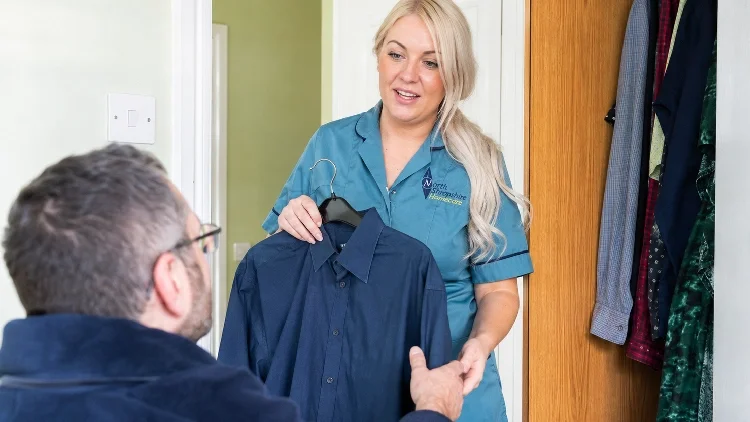
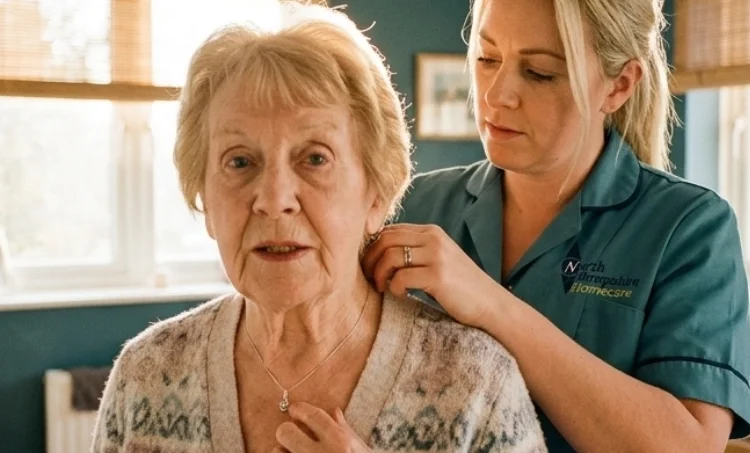
MND Motor Neurone Disease Home Care in North Shropshire
Have this page read to you
Motor Neurone Disease is a condition I know inside out—not only through clinical training and care experience, but personally. This website has been built largely by me, someone currently living with late-stage MND. When I write about MND care, I write as an unwilling expert in both sides of it: what providing good care requires, and what receiving it actually feels like.
You will never find another care agency able to come close to this level of expertise. Nor will you find another Registered Manager who has the lived experience of holding a hand and seeing every single change that MND takes over the years—not only on my body, but my mind too.
Being my best friend has unintentionally turned Alice (Registered Manager of NSHC) into an expert on MND care. There is simply no one else I would rather have in charge of my care.
With that said, let me continue with writing this page with the care and detail we deserve.
Around 5,000 people are living with MND in the UK at any given time. The annual incidence is approximately 2 per 100,000 — making MND relatively rare, but its impact is disproportionate to its prevalence. It is one of the most rapidly progressive and physically demanding conditions that home care encounters, and the care it requires is among the most specific, most technically demanding, and most personally significant that we provide.
The peak incidence of MND occurs between 60 and 75 years of age, with a male-to-female ratio of 1.3 to 1.5. Around 5–10% of cases are familial, caused by inherited gene mutations. The remaining 90–95% are sporadic, with no clear family history.
There is currently no cure. Riluzole can modestly extend survival. Everything else in MND management is about symptom control, functional support, and maintaining the quality of the life that remains for as long as possible.
What that requires — in a home in Whitchurch or Wem or Prees or the surrounding villages — is exactly what this page describes.
Understanding MND — The Types and What They Mean for Care
MND is not a single condition. It is a group of progressive neurological disorders that selectively affect the upper and lower motor neurons in the brain and spinal cord. The type of MND determines which neurons are affected, how the condition begins, and how it progresses — which in turn determines what care is needed at each stage.

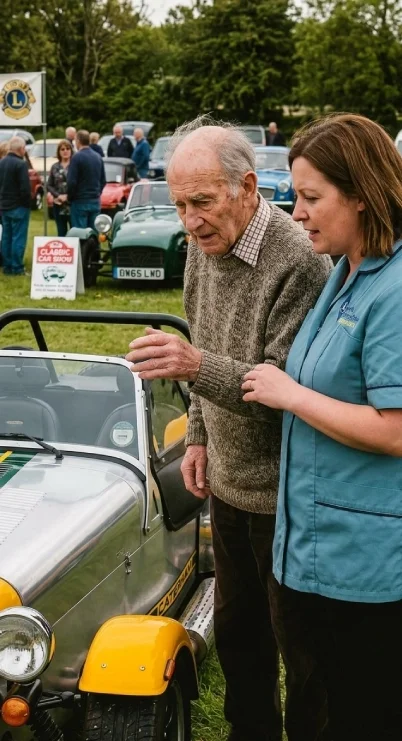
-
The most common form of MND, accounting for around 85% of cases. ALS affects both upper and lower motor neurons, producing a combination of spasticity, weakness, and wasting. It progresses relatively rapidly — median survival from symptom onset is two to five years. ALS is the form most people are referring to when they say "MND."
ALS can begin in the limbs (limb-onset ALS) or in the speech and swallowing muscles (bulbar-onset ALS). Bulbar-onset ALS progresses faster and poses the most immediate challenges for communication and nutrition.
-
A form of MND primarily affecting the muscles of speech and swallowing from the outset. Communication difficulties, dysarthria, and dysphagia are the dominant early features. Respiratory involvement and limb weakness develop later. PBP is the form in which voice banking — recording the person's own voice for use with a communication device — is most urgently needed, as speech deteriorates relatively early.
-
PMA mainly affects the lower motor neurons in the spinal cord, causing muscle wasting, weakness, and twitching (fasciculations), often starting in the hands and spreading to other parts of the body. PMA typically progresses more slowly than ALS, and respiratory involvement, when it develops, often comes later in the disease course.
-
A rarer form of MND that primarily affects the upper motor neurons, producing significant stiffness and spasticity in the limbs with less prominent muscle wasting. PLS generally progresses more slowly than other MND types. Some people live with PLS for many years. The care needs are shaped by spasticity and mobility difficulties rather than by the rapid progression of ALS.
What All Types Share
Regardless of MND type, the condition is progressive and without cure. All forms eventually involve loss of motor function across multiple domains — mobility, speech, swallowing, respiratory function. The trajectory differs. The destination, without a medical breakthrough, does not.
Care planning for MND needs to acknowledge this honestly — not to remove hope, but to ensure that decisions about communication, nutrition, and respiratory support are made while the person retains the capacity and the function to make them, rather than being rushed into in crisis.
The Symptoms That Shape Daily Care
Muscle Weakness and Wasting
Progressive loss of muscle strength is the central feature of all MND types. It affects different muscle groups depending on where the disease begins and how it spreads. For limb-onset ALS, early weakness may present as a weakened grip, difficulty lifting the arms, or foot drop. For bulbar-onset presentations, speech and swallowing are affected first.
As weakness progresses, previously independent activities — personal care, transfers, meal preparation, getting in and out of bed — require increasing assistance. The care package that works at six months post-diagnosis may be entirely inadequate at twelve months.
What we do: We build care plans that are reviewed regularly and adapted proactively — not in response to crisis but in anticipation of progression. We work with the occupational therapist to ensure that adaptive equipment is in place before it is urgently needed, and we adjust our approach continuously as functional capacity changes.
Respiratory Failure — The Central Medical Challenge
Respiratory muscle weakness is the most life-threatening feature of MND and, for most people, the cause of death. As the diaphragm and accessory breathing muscles weaken, the capacity to take a full breath diminishes. Carbon dioxide builds up in the blood. Breathlessness on exertion, disturbed sleep, morning headaches, and recurrent chest infections are the early signs.
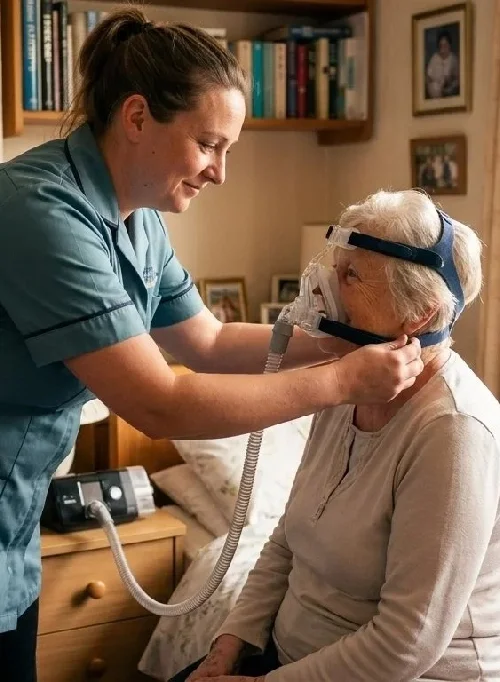
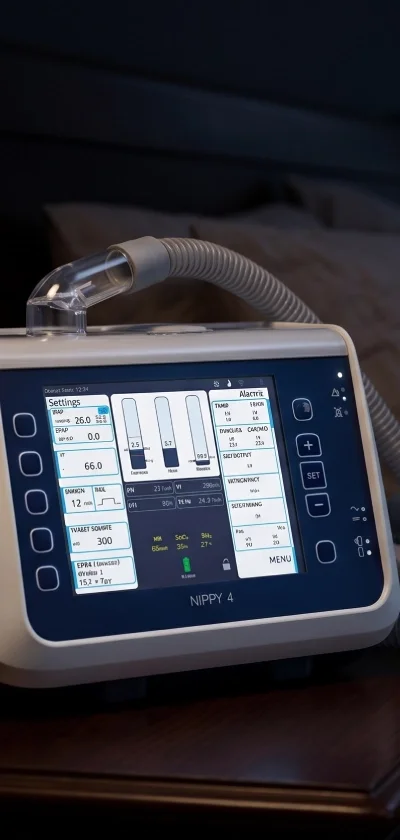
Non-Invasive Ventilation (NIV) is the most significant intervention available for respiratory failure in MND. NIV supports the breathing muscles through a mask interface — typically used overnight initially, and for increasing periods of the day as the condition progresses. It improves quality of life, reduces breathlessness, and extends survival. The MND Association and NICE both recommend early introduction of NIV — before respiratory failure is severe — to achieve the best outcomes.
Our care team has detailed, hands-on experience of NIV support in MND. We know the equipment — the machines, the mask interfaces, the settings, the alarms, and the protocols for when something is not right. We know the power-on and power-off sequence, the strap tension, the pressure sore prevention at the contact points, the filter maintenance, and the battery backup arrangements that matter when a power cut occurs. Every carer working with a client using NIV is trained specifically for that client, by the respiratory team managing their care, before the first solo visit.
The Cough Assist Machine — A Critical and Underused Intervention
As respiratory muscles weaken, the ability to generate an effective cough — to clear secretions from the airway — diminishes. Secretions that cannot be cleared lead to chest infections. Chest infections in a person with compromised respiratory function are potentially life-threatening.
We want to say something directly about this, because it reflects our own experience and because it matters.
We have supported clients with MND who were struggling to cough effectively — producing the laboured, inadequate cough that anyone who has seen it will recognise — without knowing that a specific device exists to address it. The mechanical insufflator-exsufflator, also called a cough assist machine, inflates the lungs with positive pressure and then rapidly reverses to negative pressure, simulating the airflow of a natural cough. Clinical evidence shows it was effective for 83% of patients during respiratory tract infections, compared to 35% with manually assisted coughing.
We know this device. We tell our clients about it. We have facilitated conversations between clients, families, and respiratory teams that have resulted in cough assist machines being prescribed — devices that significantly reduced chest infection frequency, prevented hospitalisations, and in at least one case that we know of, made a meaningful difference to both survival and quality of life.
If you are living with MND and you are struggling to cough effectively, and nobody has mentioned a cough assist machine to you, please raise it with your respiratory team. Or call us and we will help you have that conversation.
Nebulizers — Managing Thick Secretions and Easing Respiratory Distress
As motor neurone disease progresses, changes in saliva control become a frequent and highly distressing symptom. While some people experience an excess of thin saliva, others face the opposite problem: extremely thick, sticky, and tenacious secretions. When the muscles responsible for swallowing and coughing are weakened, these thick mucus plugs can easily get trapped in the throat or upper airways, creating a terrifying sensation of choking, worsening breathlessness, and significantly elevating the risk of chest infections.
A medical nebulizer is an invaluable tool for managing this challenge. By turning a liquid solution—typically sterile saline (0.9% normal saline or sometimes a higher-concentration hypertonic saline)—into a fine, easily inhaled mist, the nebulizer delivers deep moisture directly to the airways. It doesn't stop secretions from forming, but it dramatically changes their consistency, breaking down and thinning the sticky mucus so it can be cleared.
The Power of a Combined Respiratory Protocol
In daily care, we find that a nebulizer is most effective when paired systematically with other respiratory interventions. For many of our clients, a 10-to-15-minute nebulizer session serves as the critical preparation step. Once the thick secretions are thoroughly thinned and loosened, we can immediately utilize the Cough Assist machine or a gentle suction unit to clear the airway cleanly and comfortably. Attempting to clear dry, stubborn mucus plugs without this hydration step is exhausting for the client and far less effective.
What we do: Our care team is thoroughly trained in the daily management, operation, and rigorous hygiene protocols that nebulizer care demands. Because nebulizer chambers and masks handle moisture, strict cleaning and drying procedures are non-negotiable to prevent any bacterial contamination that could compromise vulnerable lungs. We assist with proper positioning to maximize the therapy's effectiveness, monitor for immediate comfort, and work hand-in-hand with your respiratory nurses to ensure that nebulizer use is seamlessly integrated into your overall care routine.
PEG Feeding — Nutrition, Timing, and the Decision Nobody Wants to Make
Dysphagia — difficulty swallowing — is one of the most distressing features of MND for both the person living with it and the family supporting them. Food and drink become unsafe when the muscles controlling swallowing weaken. The risk of aspiration — food or liquid entering the airway — increases, bringing with it the risk of aspiration pneumonia.
Before swallowing becomes acutely unsafe, a Speech and Language Therapist will recommend modifications to food texture and fluid consistency. We implement these modifications precisely and consistently. We allow the extended mealtime duration that safe eating with dysphagia requires. We monitor for the early signs of aspiration.
For many people with MND, a time arrives when oral nutrition alone is no longer sufficient or safe — and a Percutaneous Endoscopic Gastrostomy (PEG) feeding tube is recommended. This is one of the most emotionally significant decisions in the MND journey, and it often feels — wrongly — like a surrender.
The clinical reality is different. Early PEG nutrition, even when some oral feeding is still possible, may reinforce the preventative role of enteral feeding in maintaining nutrition and potentially improving survival. The evidence suggests that PEG placement is safer and better tolerated when respiratory function is still adequate — which argues strongly for making this decision earlier rather than later, while the person has both the physical reserves to tolerate the procedure and the capacity to make an informed choice.
We provide full PEG feeding support for MND clients — the preparation and administration of prescribed feeds, site hygiene and monitoring for infection, management of the external tube, and close communication with the clinical nutrition team and district nursing service who are responsible for clinical oversight.
We also understand that a person with a PEG tube may still eat and drink orally for pleasure and social connection, even when nutrition is primarily tube-based. We support this where the clinical team agrees it is safe. Food and mealtimes carry meaning beyond nutrition, and we do not reduce them to a clinical calculation where a human one is also possible.
Communication — Voice Banking, AAC, and the Long View
Speech deteriorates in most forms of MND. For bulbar-onset presentations, it is among the earliest and most significant losses. For limb-onset ALS, speech may remain adequate for longer while physical function deteriorates.
The most important thing we can say about communication planning in MND is this: voice banking should begin as early as possible, before speech changes significantly. Voice banking involves recording the person's own voice — sentences, phrases, sounds — so that a text-to-speech communication device can speak in something close to their own voice, rather than a generic synthesised one. Once speech has deteriorated significantly, banking a natural-sounding voice is no longer possible.
We are not voice banking specialists or AAC (Augmentative and Augmentative Communication) specialists — the MND Association's visitor service and the SALT team are the right resources for this. But we are the people who are present daily, and we communicate to families and clinical teams when we observe changes in speech that suggest the timing for voice banking and AAC introduction should be reviewed.
During care visits, we adapt our communication to the person's current capacity — allowing time, using alternative communication methods, never speaking for the person or finishing their sentences, and treating every means of communication the person uses as equally valid whether it is speech, a communication device, gesture, or eye gaze technology.
Spasticity and Pain
Spasticity — involuntary muscle stiffness and spasms — is common in forms of MND that involve upper motor neurons, particularly PLS and ALS. It can be painful and can significantly complicate personal care, positioning, and transfers.
Pain in MND arises from multiple sources: spasticity, immobility, pressure on joints, and the muscle cramps that are common in the condition. MND does not affect sensory neurons — the person's ability to feel pain is preserved while their ability to communicate it may diminish.
What we do: We document pain observations specifically — location, character, timing, relationship to movement — as clinically useful information rather than vague notation. We approach all care tasks with awareness of pain and spasticity, using slow, smooth movements and positioning that reduces discomfort. We communicate pain observations to the clinical team promptly, because changes in pain pattern often indicate either disease progression or a complication that requires intervention.
Cognitive and Behavioural Changes
MND was historically understood as a purely motor condition. It is now recognised that up to 50% of people with MND have some degree of cognitive or behavioural change, and around 10–15% develop frontotemporal dementia (FTD) alongside the motor symptoms.
Cognitive changes in MND can include difficulties with attention, executive function, and verbal fluency. Behavioural changes can include apathy, disinhibition, and changes in personality. These changes affect the person's capacity to make decisions about their care, and they affect how care is provided.
We are trained to recognise cognitive and behavioural changes in MND, to document them specifically, and to communicate them to the clinical team. Where cognitive change raises questions about capacity, we involve the appropriate professionals rather than making assumptions in either direction.

The Importance of Planning Ahead in MND
The rapid progression of ALS, in particular, means that decisions which could have been made carefully and with full participation of the person with MND can become urgent within months. The decisions that are most important to make early include:
Respiratory support. When to begin NIV. Whether to consider, at some point, invasive ventilation via tracheostomy — a decision that is deeply personal, involves significant quality of life considerations in both directions, and should never be made in a respiratory crisis if it can possibly be made in advance.
Nutritional support. When to (or if to) introduce PEG feeding. Whether to continue some oral eating alongside tube nutrition. What the plan is if a respiratory infection makes swallowing temporarily more dangerous.
Communication. Voice banking. AAC device selection and training. What happens when speech is no longer reliable.
Legal and financial. Lasting Power of Attorney — both for health and welfare, and for property and financial affairs. Advance decisions about specific treatments. Where the person wants to be at the end of life.
Palliative care. The MND Association recommends palliative care involvement from early in the diagnosis — not only at the end of life. Palliative care in MND is about living as well as possible throughout the whole disease course, with skilled symptom management alongside the practical and emotional support the condition demands.
We support families in having all of these conversations — not by replacing the specialist team, but by being the present, consistent, trusted resource who can help families understand what they are deciding and who to speak to.
What We Provide — The Practical Care
Personal Care
Personal care in MND is delivered with awareness of the specific combination of weakness, spasticity, fatigue, and pain that characterises the individual's current presentation — and with the understanding that this combination will change.
We follow the person's established routine wherever possible, because familiarity and predictability reduce anxiety and cognitive load when so much else is changing. We adapt approach continuously as functional capacity evolves. We maintain gender preferences for personal care. We approach every care task with the time it requires and not the time a rota would prefer.
Oral hygiene in MND is a priority that often receives insufficient attention. Oral health is directly relevant to aspiration risk — bacteria in an unhealthy mouth can cause pneumonia when aspirated. We prioritise oral hygiene throughout the care relationship.
Moving, Handling, and Transfers
MND produces a distinctive moving and handling picture — progressive weakness without the fixed presentation of a stroke or spinal injury. What is appropriate at one stage may be inadequate within weeks.
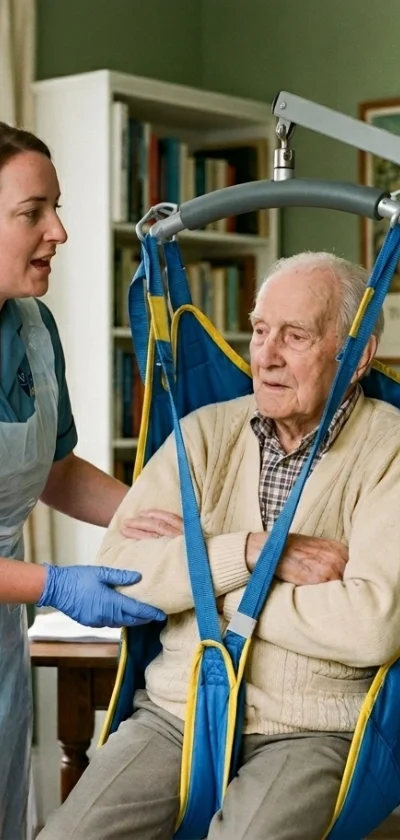
We assess moving and handling needs regularly, work with the occupational therapist to ensure the right equipment is in place before it is urgently needed, and are trained in the specific techniques for each client's current functional level. This includes hoist transfers, stand aid transfers, slide sheet repositioning, profiling bed management, and wheelchair transfer technique.
For MND clients specifically, we are alert to the shoulder complications that can arise when a weakened arm is not supported correctly during transfers — and to the respiratory position requirements that mean certain bed positions are safer than others for someone with respiratory muscle weakness.
Respiratory and Equipment Support
We provide comprehensive support for all respiratory equipment used in MND:
NIV — daily mask management, strap tension, pressure sore prevention, circuit cleaning, filter replacement, battery backup awareness, alarm recognition and response, and the escalation protocol for respiratory concerns that cannot wait.
Cough assist machine — correct technique, appropriate pressure settings as documented by the respiratory team, timing of sessions, and recognition of when an infective episode warrants increased session frequency. Get one of these free on the NHS, you won’t need it till you really need it, it will save hours of coughing, trust me.
Suction — for clients who require airway secretion management via suction machine, with client-specific training from the clinical team.
Oxygen — where prescribed, management of oxygen concentrators, portable cylinders, and the specific safety requirements of an oxygen-using home environment.
Every piece of equipment is managed according to client-specific protocols developed with the relevant clinical team. We do not improvise with respiratory equipment.
Nutrition and Meal Preparation
For clients still eating orally, we implement SALT texture and fluid guidance precisely, allow adequate mealtime duration, monitor for aspiration signs, and maintain the pleasure and social dimension of eating alongside the clinical safety requirements.
For clients using PEG feeding, we prepare and administer prescribed feeds according to the clinical team's feeding plan, care for the tube site, monitor for complications including site infection and tube displacement, and communicate any concerns immediately to the district nursing team and family.
For many MND clients, both oral and tube nutrition are in play simultaneously — the tube providing reliable nutrition and hydration while oral eating continues for pleasure where safe. We support both, carefully and without conflating them.
Palliative and End-of-Life Support
MND care and palliative care are not sequential — they are concurrent from early in the diagnosis. The MND Association and NICE both recommend palliative care involvement from the point of diagnosis, not only in the final weeks.
We provide palliative support that is embedded in daily care throughout the MND journey — skilled symptom management, emotional presence, support for the family alongside the individual, and the specific kind of attentiveness that the end-of-life phase requires.
For clients in the final stage, we work closely with the district nursing team, the GP, and Severn Hospice to ensure that pain and breathlessness are properly managed, that the person's advance decisions are known and respected, and that the people around them are supported as well as the person themselves.
We have supported people with MND through the full arc of the condition — from the first visit when the primary need was company and a little help around the house, to the final weeks when the need was complex and continuous and deeply human. We do not flinch from any part of it.
Respite and Support for Family Carers
Caring for someone with MND is one of the most intensive caregiving experiences there is. The pace of change is relentless. The equipment is demanding. The emotional weight — of watching someone you love lose function progressively, of holding the practical and the emotional simultaneously — is profound.
Family carers of people with MND are at significant risk of burnout, depression, and physical health deterioration. This is not a weakness. It is the predictable consequence of an unsustainable situation sustained without sufficient support.
We provide sitting services, regular scheduled visits, and overnight sleeping calls that give family carers genuine rest. Not managed time in the next room listening for the ventilator alarm, but real time away — with confidence that the person they love is with someone who understands MND, who knows the equipment, and who is genuinely equipped for whatever the visit requires.
Arrange a Free Home Assessment
If you or someone you love has received an MND diagnosis and is thinking about care at home in North Shropshire — at whatever stage, and whether the need is immediate or still being planned — we would be glad to talk.
There is value in calling early. Early care planning in MND produces better outcomes than late crisis response. The conversation costs nothing and commits you to nothing.
📞 01948 411222 — 24 hours, 365 days
✉️ mail@nshomecare.co.uk
North Shropshire Homecare
The Coach House, 15/17 Green End, Whitchurch, SY13 1AD
Providing specialist Motor Neurone Disease care at home across Whitchurch, Wem, Prees, Whixall, Tilstock and the surrounding villages of North Shropshire. CQC Rated Good. Independently Owned. Locally Staffed.
-
The information on this page has been checked for clinical accuracy and aligns with current best practices for care at home for MND.
REVIEWED BY: Alice Allen CQC Registered Manager
REVIEWED BY: J.C MND Survivor.
Next review July 2027.
North Shropshire Local Care & Living Hub (MND Related)