
What Is Domiciliary Care? Overview for Families in Whitchurch, Wem, and North Shropshire
When families across Whitchurch, Wem, Prees, and the surrounding North Shropshire villages first begin exploring eldercare and home care services for an aging parent or loved one, they often encounter the formal healthcare term “domiciliary care.”

While the terminology sounds clinical, domiciliary care simply means visiting care and support delivered directly in your own home. Rather than moving into a residential care home or nursing facility, domiciliary care enables older adults, individuals with physical disabilities, and adults with complex health needs to maintain their independence, dignity, and daily routines in the familiar surroundings they love.
How Does Domiciliary Care Work?
Domiciliary care is highly adaptable and structured entirely around the unique lifestyle, preferences, and healthcare needs of each individual. Visits can range from a brief 30-minute daily welfare check to multiple extended visits throughout the morning, afternoon, and evening—or even full-time, live-in support.
A comprehensive domiciliary care plan in North Shropshire typically includes a blend of the following core services:
1. Personal Care Services
Maintaining personal hygiene is essential for health, dignity, and confidence. Trained care professionals provide compassionate, dignified assistance with:
Morning and evening routines (getting out of bed, washing, and dressing)
Bathing, showering, and hair care
Oral hygiene and denture care
Continence care, toilet support, and personal hygiene management
Mobility assistance, transferring, and safe positioning
2. Medication Management & Administration
Medication errors or missed doses are among the most common reasons vulnerable adults experience preventable hospital admissions. Domiciliary carers are fully trained in medication administration, providing:
Gentle verbal reminders to take prescribed medications at scheduled times
Full administration of blister packs, liquid medicines, and topical creams
Accurate logging and digital recording of all administered medication
Coordination with local Shropshire pharmacies and GPs for prescription refills
3. Meal Preparation & Nutritional Support
Proper nutrition and hydration are vital for staying healthy at home. Carers trained in food hygiene assist with:
Preparing hot, nutritious, home-cooked meals tailored to dietary preferences
Managing specialist diets (e.g., low-sodium, diabetic, or soft-food/pureed diets)
Monitoring daily fluid intake to prevent dehydration and urinary tract infections (UTIs)
Assisting with eating and drinking when physical support is needed
4. Household Management & Light Housework
A clean, hazard-free living environment reduces the risk of falls and promotes general wellbeing. Domiciliary care visits often include light domestic tasks such as:
Washing up dishes and cleaning kitchen countertops
Running the hoover, dusting, and wiping down high-touch surfaces
Putting on laundry, hanging clothes out to dry, and ironing
Emptying household bins and keeping walkways clear of clutter
5. Companionship & Community Access
Social isolation can have a profound impact on physical and mental health. Domiciliary care provides crucial human connection through:
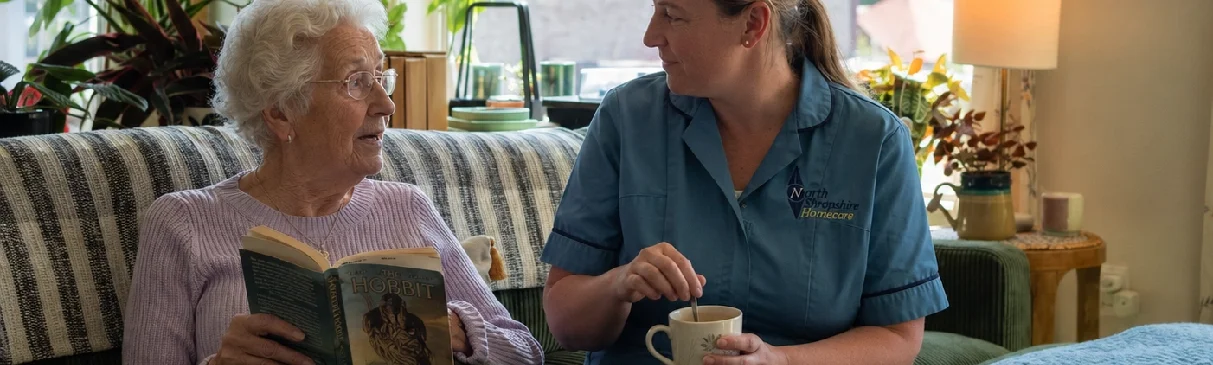
Dedicated companion calls for a hot drink, a game of cards, and a warm chat
Escorting clients to local social groups, day centres, and community events
Support with local grocery shopping in Whitchurch or Wem town centres
Transportation and accompaniment to GP appointments, dentist visits, and hospital clinics
Tailored Condition-Specific Domiciliary Care
Domiciliary care is not limited to basic domestic support—it provides clinical, compassionate care specifically adapted to manage a wide array of chronic health conditions, physical disabilities, and recovery pathways:
Spinal Cord Injury Care: Specialist routine support, autonomic dysreflexia awareness, bowel and catheter management, and safe transfer techniques.
Parkinson’s Disease Care: Timed medication schedules to manage "on/off" phases, mobility prompts, freezing management, and daily routines tailored to energy levels.
Multiple Sclerosis (MS) Care: Flexible support that adapts to fluctuating fatigue levels, flare-ups, heat sensitivity, and mobility requirements.
Dementia Care: Person-centered routines using memory prompts, sensory connections, and gentle redirection to reduce anxiety and maintain a safe home environment.
Alzheimer’s Disease Care: Specialised dementia support focused on maintaining familiar daily schedules, cognitive stimulation, and preserving dignity through every stage of memory loss.
Stroke Recovery Care: Dedicated physical rehabilitation support, speech and language practice, and re-learning day-to-day independent living skills.
Huntington’s Disease Care: Experienced assistance navigating involuntary movements (chorea), swallowing changes, nutrition management, and emotional support.
Motor Neurone Disease (MND) Care: Empathetic care coordinating non-invasive ventilation support, mobility aids, eating guidance, and non-verbal communication tools.
Epilepsy and Seizure Care: Trained seizure monitoring, emergency trigger protocol awareness, rescue medication support, and home safety adaptations.
Cancer Care and Recovery: Compassionate assistance managing chemotherapy/radiotherapy fatigue, pain management support, emotional comfort, and nutrition during treatment.
Post-Surgical and Orthopaedic Recovery Care: Targeted short-term care to assist with wound care, physio exercise encouragement, mobility aid use, and preventing hospital readmission after joint replacements or surgery.
Frailty and Arthritis Care: Gentle morning assistance for stiff joints, fall-prevention measures, thermal comfort, and adaptive techniques for daily tasks.
Vision and Hearing Loss Care: Sensory-aware care focused on home navigation safety, clear communication techniques, tactile prompts, and maintaining social engagement.
Cerebral Palsy Care: Individualised support focused on spasticity management, positioning, communication aids, and promoting personal autonomy.
COPD and Respiratory Care: Breathing exercise encouragement, energy conservation techniques, oxygen equipment monitoring, and allergen/dust management around the home.
Chronic Pain Care: Gentle positioning, pacing daily activities to avoid overexertion, warm therapy preparation, and strict medication adherence schedules.
Heart Failure and Cardiac Care: Daily weight/fluid intake tracking, symptom monitoring for breathlessness or swelling, salt-restricted meal preparation, and low-exertion assistance.
Stoma Care (Colostomy / Ileostomy / Urostomy): Discreet, hygienic assistance with bag changing, skin care integrity around stoma sites, and pouch management.
Pressure Sore Prevention and Wound Care: Regular repositioning schedules, skin integrity checks, pressure-relieving mattress setup, and sterile dressing support under clinical supervision.
Domiciliary Care vs. Residential Care: Key Comparison
Choosing between visiting home care and moving into a residential care facility is one of the biggest decisions a family can make. Understanding the key differences helps ensure you make the right choice for your loved one's independence and budget.
Why Independence Matters: Staying at home allows older adults to keep their cherished pets, tend to their gardens, and stay connected with local North Shropshire communities where they may have lived for decades.
What to Look for in a Local Domiciliary Care Provider
When evaluating home care agencies across Whitchurch, Wem, Prees, Higher Heath, Tilstock, Whixall, and Ash, ask potential providers these essential questions:
What is their Care Quality Commission (CQC) rating? Ensure the provider is registered with the CQC and holds a strong inspection rating for safety, effectiveness, and leadership.
Do they have clinical expertise for specific conditions? Verify that staff receive ongoing, specialist training for complex conditions like MND, Parkinson's, stoma management, or palliative care.
What is their staff turnover rate? High caregiver turnover causes stress for clients. Look for agencies with high staff retention that offer a dedicated small team of 2–3 regular carers.
Do they have a strict local hiring policy? Local carers living within North Shropshire mean shorter travel times, more reliable arrival times, and staff who genuinely know the community.
How transparent are their care plans? A reliable agency should provide clear, plain-English care plans detailing every aspect of support before care begins.
How do they keep family members updated? Modern agencies utilise digital care logging platforms (such as CareLineLive), allowing family members—even those living far away—to view real-time visit notes instantly online.
Taking the First Step Toward Home Care in North Shropshire
Arranging home care for yourself or a family member does not have to be complicated or stressful:
Initial Phone Consultation: Speak with a care manager to discuss daily challenges, mobility needs, specific health conditions, and desired outcomes.
In-Home Care Assessment: A Registered Care Manager visits your home to assess safety, discuss preferences, review clinical needs, and answer every family question.
Tailored Care Planning: Create a personalised visit schedule built around your existing routines and condition-specific requirements, ensuring complete peace of mind.
Need Guidance on Arranging Home Care in North Shropshire?
If you are researching home care options for a loved one in Whitchurch, Wem, Prees, Higher Heath, Tilstock, Whixall, or Ash, our local team is here to help answer your questions with honest, friendly advice.
Call our Whitchurch office: 01948 411222
Explore our resources:Download The Complete Guide to Home Care in Whitchurch and North Shropshire, inspect our public Sample Care Plan, or browse our local Community Directory.