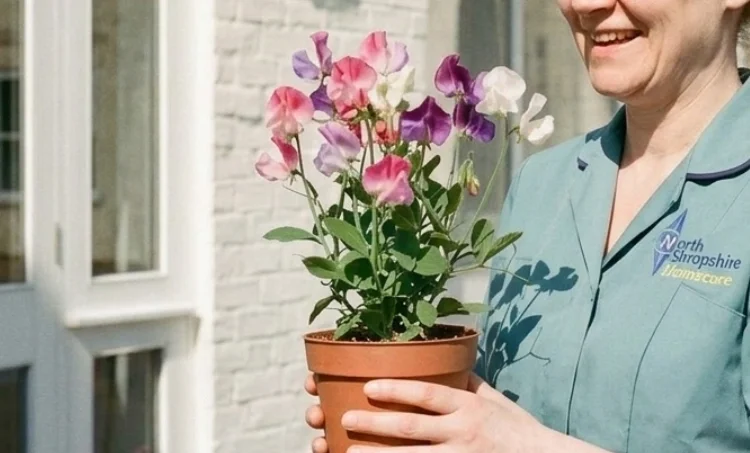
Vision and Hearing Loss Care at Home in North Shropshire
Have this page read to you
Two of the most common conditions affecting older adults in North Shropshire receive, in our experience, among the least specific attention from home care providers.
Vision and hearing loss are frequently treated as background facts about a person rather than conditions that significantly shape how care must be provided. The care plan notes that a client wears hearing aids and moves on. The assessment records a visual impairment and proceeds to the medication list. The carer who arrives for a morning visit has not been briefed on which eye is affected, what the specific visual field loss looks like, how the client communicates when their hearing aids are not yet in, or what the environment needs to look like to be navigable for someone who can no longer see clearly to the right of centre.
This is not adequate. Vision and hearing loss are not incidental features of an older person's presentation. They are conditions that affect safety, communication, independence, mental health, and the fundamental experience of daily life — and they require home care that is specifically adapted to them.
This page explains what vision loss and hearing loss look like in older adults in North Shropshire, and how we support people living with either or both.
The Scale of It — Numbers That Deserve Attention
Hearing loss is among the most prevalent conditions in the UK and among the least discussed in care contexts.
Over 11 million people in the UK have a hearing loss. 96% are aged 40 and over. Over half of adults aged 55 and above experience some form of hearing impairment. Around 80% of adults over 70 are affected. Among adults aged 90 and over, the prevalence of measurable hearing loss approaches 98%. By 2031, it is projected that around 14.5 million people — approximately 20% of the national total — will have measurable hearing loss.
Untreated hearing loss is associated with social isolation, depression, cognitive decline, and falls. Its estimated cost to the UK economy is £30 billion per year in lost productivity alone. And yet the majority of people with hearing loss do not use hearing aids, either because they have not been assessed, because they find aids uncomfortable or difficult to manage, or because the equipment they have is not adequately maintained.
Vision loss is equally prevalent and even more directly linked to physical safety.
Approximately 2.5 million people in the UK have some degree of visual impairment, with 350,000 registered as partially sighted or blind. These figures are expected to increase by 40% by 2050. One in three people over the age of 65 has some form of vision-reducing eye disease. Age-related macular degeneration affects 700,000 people and is the leading cause of irreversible sight loss in UK adults. Glaucoma affects 500,000 people. Cataracts — the most surgically treatable cause of vision impairment — resulted in over 581,000 hospital admissions for surgery in England alone in 2024.
Vision loss in older adults is linked to significantly increased risk of falls, hip fracture, depression, social isolation, and reduced ability to perform activities of daily living.
Dual sensory loss — the co-occurrence of both vision and hearing impairment — affects a significant proportion of older adults, and has specific care implications that go beyond simply managing each condition individually. Research has found that hearing and vision problems share common causes, meaning that older adults with one condition are at elevated risk of the other. The combined effect on communication, independence, and quality of life is greater than the sum of its parts.
Understanding Vision Loss in Older Adults
Vision loss in older adults is not a single condition. The specific nature of the visual impairment — which part of the visual field is affected, whether it is correctable, whether it is stable or progressive — determines what daily life looks like and what care needs to provide.

-
AMD is the leading cause of irreversible blindness in people over 60 in the UK. It affects the macula — the central part of the retina responsible for detailed, central vision — causing progressive loss of the ability to see directly ahead. The peripheral visual field is typically preserved.
In practical terms, AMD makes faces difficult to recognise, reading impossible without magnification, and tasks requiring fine central vision — reading medication labels, managing money, recognising food packaging — increasingly difficult. The world is not dark for most people with AMD, but the centre of it is obscured.
Early AMD may cause minimal functional difficulty. Many people with early AMD are managing independently and may not yet have connected their visual changes to a specific condition. Monitoring, adaptation, and ensuring regular eye appointments are the primary care considerations.
Late AMD — geographic atrophy or neovascular AMD — produces significant central vision loss that fundamentally affects daily function. Reading, cooking, personal grooming, and recognising people across a room all become difficult or impossible without specific adaptation.
-
Glaucoma is a group of eye conditions in which the optic nerve is damaged, typically by elevated intraocular pressure. Unlike AMD, glaucoma affects peripheral vision first, leaving central vision initially intact. Because peripheral vision loss is less immediately noticed — the brain partially compensates — many people with glaucoma are undiagnosed until significant damage has occurred.
Peripheral vision loss affects navigation, driving (which is typically ended by glaucoma before the person is aware of a significant problem), and the detection of obstacles and hazards at the edges of the field of view. Falls risk is specifically elevated, because the hazard at the periphery — the step, the furniture, the person walking past — is no longer seen.
-
Cataracts — clouding of the lens of the eye — are the most common surgically treatable cause of vision impairment in older adults. Over 650,000 cataract procedures are performed across the UK annually. Where cataracts are identified and treated, the majority of the associated vision impairment is resolved.
Before surgery, cataracts cause blurred, cloudy, or misty vision, increased sensitivity to glare, and reduced contrast sensitivity — the ability to distinguish objects from their backgrounds. The specific risks for care are falls (glare and reduced contrast affect safe navigation, particularly in bright or variable lighting conditions), medication errors (blurred vision makes reading small print extremely difficult), and the general reduction in independence that comes from not being able to see things clearly.
After cataract surgery, vision improves substantially for most people. The post-operative period requires specific monitoring and eye drop management that we support where this forms part of the care plan.
-
Diabetic retinopathy affects the blood vessels of the retina and is the leading cause of blindness in people of working age, though it is also common in older adults with long-standing diabetes. It can cause both central and peripheral vision loss, and in advanced cases can produce sudden significant sight changes.
For our clients with both diabetes and vision loss, the care implications are specific and interconnected. Blood glucose management — diet, medication timing, monitoring — directly affects the rate of retinopathy progression. We support this within the daily care routine.
-
Not all vision loss in older adults represents progressive eye disease. Uncorrected or inadequately corrected refractive error — the need for glasses or contact lenses that have not been updated — is a common and entirely addressable cause of vision impairment. We encourage regular optometry appointments and are alert to the possibility that a client's visual difficulties might reflect a need for a new prescription rather than disease progression.
Understanding Hearing Loss in Older Adults
Age-Related Hearing Loss — Presbycusis
The most common form of hearing loss in older adults is presbycusis — the gradual deterioration of hearing function that begins around the age of 40 and accelerates with age. It typically affects higher frequencies first, which means that the ability to hear speech — particularly consonants, which carry the intelligibility of words — deteriorates before the ability to hear sounds in general.
The practical consequence is that a person with presbycusis may hear that someone is speaking without being able to understand what is being said. Background noise — a television in the room, traffic outside, other voices — compounds this dramatically. A conversation that is entirely comprehensible in a quiet room becomes incomprehensible in a noisy environment.
This is important for carers to understand, because it shapes how communication should be adapted — and because many older adults with hearing loss feel embarrassed to ask for repetition, and may nod and respond appropriately to the tone of a question without having heard its content. A carer who does not understand this may believe that a client has understood when they have not.
Hearing Aids — The Gap Between Having and Using
The majority of people who would benefit from hearing aids either do not have them or do not use them consistently. The barriers are multiple: the referral and fitting process can be lengthy, the adjustment period for new aids can be frustrating, the fine motor demands of inserting and managing hearing aids are considerable for someone with arthritic hands, and the daily maintenance — charging or battery changing, cleaning, storage — requires both dexterity and memory.
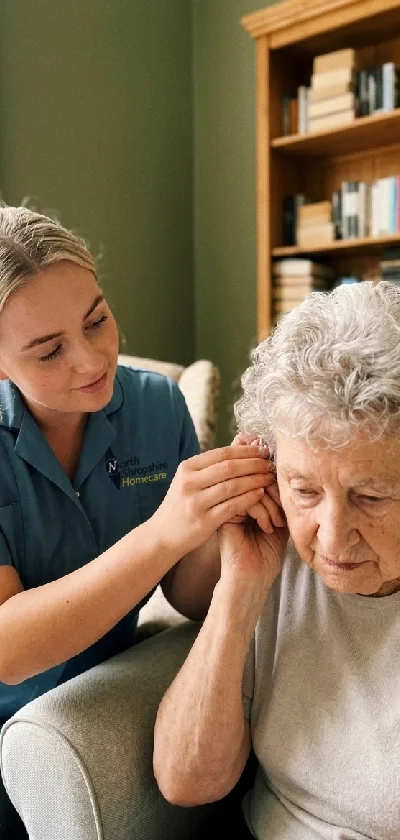
For our clients with hearing aids, we build hearing aid management into the care plan. Checking that aids are in and functioning at the start of every visit. Ensuring that the correct ear receives the correct aid. Changing batteries or ensuring overnight charging. Cleaning the aid regularly to prevent occlusion. Communicating to the family and audiology team if an aid appears to be malfunctioning or not fitting correctly.
An older person whose hearing aids are not in, not charged, or not functioning correctly is effectively deaf for that visit. Carers who begin a visit without checking this are providing care to someone who cannot reliably understand them — and may not know it.
Tinnitus
Tinnitus — the perception of sound without an external source — affects many people with hearing loss and can range from mildly annoying to profoundly distressing. Constant tinnitus significantly affects sleep, concentration, and mood. It is not a condition that home care can treat, but it is one that carers need to understand — because a client who seems distracted, irritable, or unable to concentrate may be experiencing significant tinnitus distress that they have not mentioned.
Sudden Hearing Loss
Sudden sensorineural hearing loss — abrupt unilateral or bilateral hearing loss occurring over hours — is a medical emergency. It can be caused by viral infection, vascular event, acoustic trauma, or other acute causes. Early treatment with corticosteroids significantly improves outcomes.
Our carers are trained to recognise sudden changes in hearing function as a clinical concern requiring prompt GP contact — not a development to be noted and reported at the next scheduled call.
How We Adapt Our Care
Communication Adaptation for Hearing Loss
Every aspect of communication during a care visit needs to be adapted when a client has hearing loss, and the adaptations are specific rather than generic.
Face the person. Lip reading is used — consciously or unconsciously — by the majority of people with hearing loss. Talking from another room, turning away, or covering the mouth removes the lip reading cues that may be filling the gaps in what is heard. We face clients when speaking and ensure adequate lighting on our face.
Speak clearly, not loudly. Shouting distorts speech and does not improve intelligibility for sensorineural hearing loss. Speaking clearly, at a moderate pace, with distinct articulation — not slow, over-enunciated speech that is also distorting — improves understanding far more than volume.
Reduce background noise. Television, radio, and other background sounds reduce speech intelligibility dramatically for people with hearing loss. We turn down background noise before beginning important communication — medication discussions, care plan updates, anything that requires genuine two-way understanding.
Check understanding, not compliance. We confirm that a client has understood what we have said by asking them to repeat back key information — not by asking "did you understand?" which invites a polite yes regardless of comprehension.
Written communication. For clients with significant hearing loss, written notes — a simple whiteboard, a notepad, a phone used as a text display — can supplement verbal communication for important information.
Be patient. Processing speech is cognitively demanding for someone with hearing loss. Rapid conversation, multiple questions in sequence, or impatience with requests for repetition all create unnecessary difficulty. We build the time that communication requires into every visit.
Environmental and Safety Adaptation for Vision Loss
Visual impairment changes the safety profile of a home that may have been navigated without conscious thought for decades. We assess and address the specific safety implications of each client's visual field loss.
Lighting. Adequate, consistent lighting is one of the most important safety adaptations for vision-impaired clients. We ensure lights are on before the person moves through a space. We are alert to bulbs that need replacing — a dim hallway is disproportionately hazardous for someone with reduced contrast sensitivity. We consider the specific lighting needs for each type of visual impairment — AMD clients may find glare from bright sunlight distressing, while many other vision-impaired clients benefit from maximum illumination.
Contrast. Many people with vision impairment have reduced contrast sensitivity — the ability to distinguish objects from their backgrounds. High-contrast markers on steps, a differently coloured toilet seat, coloured tape on the edge of a shelf — these small adaptations can make a significant difference to safe navigation. We flag contrast issues we observe to the OT and family.
Consistency of environment. A person with significant vision loss builds a mental map of their home that allows confident navigation. Moving furniture, leaving doors partially open in unusual positions, or placing objects in different locations from usual destroys this mental map and creates hazard. We maintain the environment consistently and communicate to families the importance of not rearranging without informing the client.
Falls prevention. Vision loss significantly elevates falls risk — particularly for peripheral vision loss (glaucoma) where the hazard at the side or below is not seen. We implement falls prevention for vision-impaired clients with specific attention to the floor-level hazards that peripheral vision would normally detect.
Medication management. Reading medication labels, identifying individual tablets, and managing blister packs are all significantly more difficult with vision impairment. We manage medication for vision-impaired clients with particular attention to the visual demands of medication management — ensuring that what we administer is correct, verified, and documented rather than relying on the client's ability to read small print.
Personal Care Adapted to Sensory Loss
Personal care for a person with vision or hearing loss requires specific adaptations that preserve dignity and autonomy.
For vision-impaired clients: We narrate what we are doing before we do it — not a running commentary, but clear advance communication of each action. We do not touch the person without first signalling through voice. We ensure that clothing choices are communicated clearly and that the person can exercise genuine preference despite not being able to see what they are choosing from. We maintain the established routine precisely, because predictability is more important for safety when visual cues are unavailable.
For hearing-impaired clients: We ensure that hearing aids are in before personal care begins wherever possible, so that the client can hear and participate in the care process. We establish a shared signal — a gentle tap, a visual gesture — for situations where speech communication is not practical. We do not begin an intimate care task without first establishing clear two-way communication.
Dual Sensory Loss — The Combined Challenge
When both vision and hearing are significantly impaired, the care challenge becomes substantially more complex. The two sensory systems that most people rely on for orientation, communication, and safe navigation are both compromised simultaneously.
For clients with dual sensory loss, we:
Identify the least impaired sense and prioritise communication through it. A person with moderate hearing loss and severe vision loss may best communicate through speech, adapted as above. A person with moderate vision loss and severe hearing loss may communicate best through written or visual means.
Use gentle touch as a communication channel — agreed in advance, consistently applied — to signal presence, movement, or transitions when other communication channels are limited.
Ensure absolute environmental consistency. For someone who can neither see nor hear reliably, a changed environment is a significantly increased hazard. We treat environmental consistency as a safety priority of the highest order for dual sensory loss clients.
Communicate more slowly and with more confirmation. The cognitive load of communication with dual sensory loss is very high. We allow more time and confirm understanding more frequently.
The Mental Health Dimension
The connection between sensory loss and mental health is well established and frequently underaddressed in care practice.
Vision loss is associated with significantly increased risk of depression and anxiety. The loss of the ability to read, to recognise faces, to watch television, to drive, to pursue hobbies that depend on visual acuity — these losses are profound and their cumulative effect on identity and wellbeing is serious. Depression following vision loss is not an inevitable or appropriate response to be tolerated — it is a clinical condition that warrants recognition and treatment.
Hearing loss is associated with social isolation, depression, and accelerated cognitive decline. The effort of following conversations with significant hearing loss is exhausting and often ultimately futile — many people with untreated hearing loss simply withdraw from social situations rather than continuing to struggle with them. This withdrawal compounds the isolation that is already a risk for older adults in rural North Shropshire.
Our carers are trained to observe and document mood changes in clients with sensory loss, and to communicate these to the family and clinical team rather than accepting social withdrawal or low mood as an expected feature of the condition. Many of the mental health consequences of sensory loss are addressable — through social support, through referral to appropriate services, through the consistent human engagement that good care provides.
Arrange a Free at Home Assessment
If you or a family member is living with vision loss, hearing loss, or both — and would benefit from home care support that is specifically adapted to sensory loss in North Shropshire — we would be glad to talk.
A free at home assessment costs nothing and commits you to nothing. We visit, we listen, and we give you an honest picture of what we can provide and how quickly we can begin.
📞 01948 411222 — 24 hours, 365 days
✉️ mail@nshomecare.co.uk
North Shropshire Homecare
The Coach House, 15/17 Green End, Whitchurch, SY13 1AD
Providing specialist vision and hearing loss care at home across Whitchurch, Wem, Prees, Whixall, Higher Heath, Tilstock, Ash, and the surrounding villages of North Shropshire. CQC Rated Good. Independently Owned. Locally Staffed.
-
The information on this page has been checked for clinical accuracy and aligns with current best practices for care at home for Vision and Hearing Loss.
REVIEWED BY: Alice Allen CQC Registered Manager
Next review July 2027.