Post-Surgical and Orthopaedic Recovery Care at Home in North Shropshire
Have this page read to you
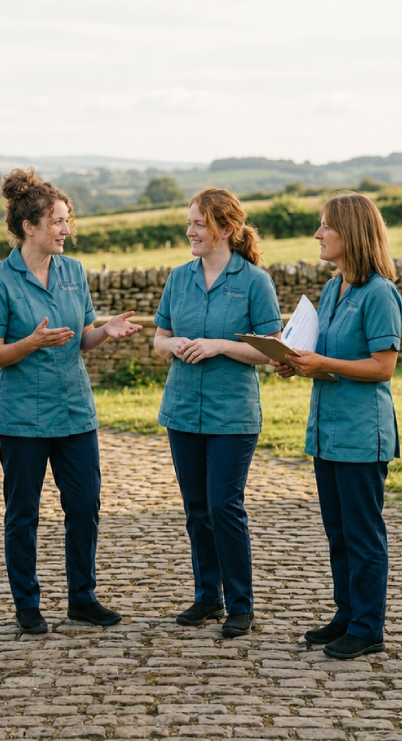
There is a significant and growing gap between when hospitals discharge surgical patients and when those patients are genuinely ready to manage at home without support.
This gap is not a system failure. It is a deliberate and evidence-based policy shift. Enhanced recovery protocols — the NHS framework for optimising patients' readiness for discharge — have dramatically reduced hospital length of stay after orthopaedic surgery over the past decade. Where a hip replacement might once have kept a patient on a ward for a week or more, the mean length of stay for total hip replacement in England is now around two to four days across NHS providers. Knee replacement is similar.
The evidence supports this approach. Patients recover better at home than on a ward. Risk of hospital-acquired infection, deconditioning, and the confusion that institutional environments can cause in older adults — all of these reduce when a patient leaves hospital earlier and recovers in their own home. The 30-day readmission rate for hip replacement across NHS England is 5.27%, and for knee replacement 5.88% — these represent real complications in a small but significant proportion of patients, and many are preventable with adequate post-discharge support.
The condition for earlier discharge working is that adequate support exists at home. Professional home care — consistent, skilled, properly briefed — is that condition. Where it is not in place, earlier discharge does not serve the patient. Where it is, it genuinely does.
At North Shropshire Homecare we provide specialist post-surgical and orthopaedic recovery support for people across Whitchurch, Wem, Prees, Whixall, and the surrounding villages. This page covers what that support actually involves — for joint replacement surgery, for amputation, and for the wider range of surgical procedures that create transitional care needs in the weeks following discharge.
The Recovery Gap — Why Home Care After Surgery Matters
The National Joint Registry recorded over 100,000 primary hip replacements and over 100,000 primary knee replacements in England, Wales, and Northern Ireland in its most recent annual report. Projections suggest primary hip and knee replacement demand will continue rising significantly to 2060, driven by an ageing population and the long-term consequences of the COVID-19 surgical backlog.
Each of these patients goes home — often within days of surgery — to a house that has not changed but a body that has. A house with a bath rather than a shower. Stairs that were previously unremarkable and are now a significant daily challenge. Socks that require bending to put on. A kitchen where everything requires the ability to stand, bear weight, and move that the first post-operative weeks may not fully support.
Without the right support, the gap between hospital and genuine independence is where things go wrong. Patients fall. Patients develop post-operative complications that go unnoticed until they become serious. Patients stop doing the rehabilitation exercises that determine how fully they recover because nobody is there to support them through the pain and discomfort of doing them. Patients become depressed, isolated, and more dependent than their surgical outcome warrants.
With the right support — consistent, attentive, properly briefed to the specific procedure and the specific patient — the early post-surgical weeks are a period of genuine recovery rather than a high-risk holding pattern.
Hip Replacement Recovery Care
Total hip arthroplasty is one of the most commonly performed elective procedures in England and one of the most consistently reported as producing good patient outcomes — when the post-surgical period is adequately supported.
The first six weeks after hip replacement are governed by specific precautions designed to protect the new joint while surrounding tissues heal and muscle strength rebuilds. For posterolateral approaches — the most common surgical approach — these precautions typically include avoiding hip flexion beyond 90 degrees, avoiding crossing the legs, and avoiding internal rotation of the operated leg. For anterior approaches, precautions are different but equally specific.
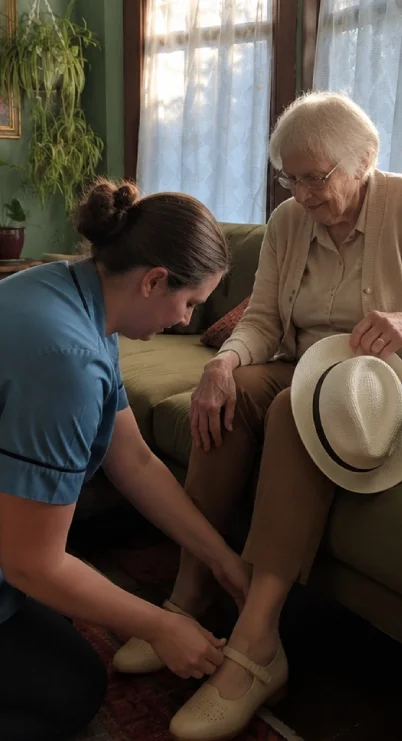
These precautions affect every aspect of daily life. Sitting down requires a raised seat to keep the hip above 90 degrees. Getting dressed requires a specific sequence that avoids the prohibited movements — socks and shoes require a long-handled aid or assistance. Getting in and out of bed requires a technique that maintains leg alignment. Using the toilet requires appropriate height and support. Bathing requires a shower rather than a bath, or a bath board and specific technique if no shower is available.
What we do:
Daily personal care adapted to hip precautions recommended post op by your health team. We know the importance of specific precautions for the approach used — posterolateral and anterior approaches have different requirements — and we apply them consistently at every personal care visit. We do not adapt technique on the fly. We learn the specific precautions from the discharge information and apply them precisely.
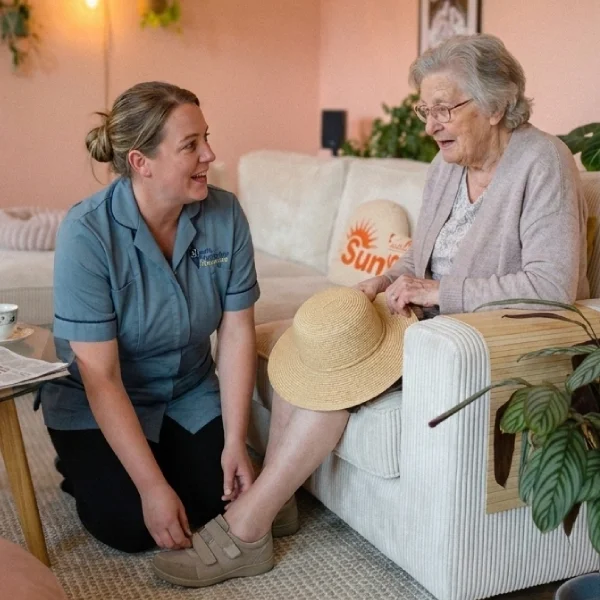
Assistance with dressing using long-handled aids where appropriate, supporting the sequence of dressing that avoids prohibited movements, and maintaining independence where the patient can manage with minimal assistance rather than full support.
Mobility support — supporting safe ambulation with crutches or frame as prescribed by the physiotherapist, encouraging progressive weight-bearing on the timeline specified by the surgical team, and being alert to the signs that weight-bearing is causing unexpected pain or difficulty that warrants clinical review.
Rehabilitation exercise support — the physiotherapy programme prescribed after hip replacement is the primary determinant of long-term functional outcome. We support patients through their prescribed exercises, providing the encouragement and physical support to complete them even when they are uncomfortable, and documenting completion and any pain concerns for the physiotherapy team.
Falls prevention — the combination of analgesic medication (which can cause dizziness), reduced muscle strength in the operated leg, the learning curve of crutch or frame use, and a home environment not yet adapted for post-operative mobility creates a specific and significant falls risk in the early post-hip replacement period. A fall onto or near the operated hip in the first weeks can be catastrophic. We take falls prevention for hip replacement patients with the seriousness this risk demands.
Home environment assessment — on the first post-discharge visit, we carry out a practical check of the home environment for the specific hazards of post-hip replacement recovery: rug and threshold risks, the height of seating, bathroom accessibility, stair handrail provision, and the arrangements for sleeping and getting in and out of bed safely.
Knee Replacement Recovery Care
Total or unicompartmental knee replacement produces a different recovery profile from hip replacement — different precautions, different rehabilitation priorities, and a different relationship between pain and the recovery programme.
Knee replacement recovery is typically more painful in the early weeks than hip replacement, and swelling around the joint can persist for several months. The rehabilitation programme is correspondingly demanding — progressive flexion exercises, quadriceps strengthening, and graduated ambulation that requires active effort from the patient rather than passive healing.
Pain and swelling are the two factors that most frequently compromise the early recovery programme. Pain that is not adequately managed reduces willingness to mobilise and exercise. Swelling that is not adequately managed delays flexion recovery. Both require consistent attention rather than passive observation.
What we do:
Pain and swelling monitoring — observing the wound site, the degree of swelling, and the patient's reported pain level at every visit. Documenting and communicating concerns to the GP and physiotherapy team. Ensuring cold therapy equipment is used correctly and consistently where prescribed.
Elevation support — proper leg elevation (heel supported, not the calf resting on a surface) is essential for managing post-knee replacement swelling. We ensure correct positioning at rest and during sleep where we are present.
Medication management — the analgesic and anti-inflammatory regimen after knee replacement is specific and time-critical. We manage medication precisely, ensuring doses are taken at the correct times to support the pain management that makes the rehabilitation programme achievable.
Rehabilitation exercise support — we support patients through the prescribed flexion and strengthening exercises, providing physical assistance where needed and documentation of progress for the physiotherapy team.
Mobility support — weight-bearing after knee replacement is typically immediate and progressive, with crutches for stability rather than for weight relief. We support safe ambulation and the progressive reduction of walking aid use on the timeline prescribed by the physiotherapy team.
Wound monitoring — the knee replacement wound requires monitoring for the signs of infection — increasing redness, warmth, swelling beyond expected levels, discharge, or fever — and prompt communication to the surgical team if any of these are observed.
Amputation Recovery and Rehabilitation Care
Amputation — whether following vascular disease, diabetes, trauma, cancer, or infection — represents one of the most significant physical and psychological adjustments a person can face. The care that follows amputation is among the most complex and most personally sensitive that home care encounters.
Around 7,000 lower limb amputations are performed in the UK each year, the majority in older adults with peripheral vascular disease, often in the context of diabetes. Upper limb amputations are less common but carry their own specific care and rehabilitation requirements.
The post-amputation recovery period has two distinct phases: immediate post-surgical recovery, and the longer rehabilitation phase oriented toward prosthetic fitting and functional independence where this is the goal.
Immediate Post-Surgical Care
Stump care and wound management — the residual limb following amputation requires meticulous daily care. Wound monitoring for signs of infection, appropriate bandaging or shrinker sock application to shape the stump for eventual prosthetic fitting, positioning to prevent contracture, and skin integrity monitoring of a limb that has had its blood supply significantly altered by the amputation procedure.
We work alongside the district nursing team who are responsible for clinical wound care, providing the daily practical support around the surgical wound management that the district nursing visit does not cover.
Pain management — post-amputation pain presents in two forms. Residual limb pain — pain in the remaining tissue — is expected and managed with prescribed analgesia. Phantom limb pain — the experience of pain or sensation in the amputated limb — affects the majority of amputees and can be severe and persistent. Both require specific, consistent medication management and careful documentation of pain patterns for the clinical team.
Positioning and contracture prevention — the risk of joint contracture in the residual limb is significant and has direct consequences for prosthetic fitting. A below-knee amputee who develops a knee flexion contracture may be unable to achieve a functional prosthetic fit. We support correct positioning and implement the physiotherapy programme for contracture prevention from the earliest post-discharge days.
Transfers and mobility — post-amputation mobility involves either wheelchair use or single-leg hopping with aids for lower limb amputees, or adapted manual tasks for upper limb amputees, in the period before prosthetic fitting. We are trained in the specific transfer and mobility techniques for each type and level of amputation, working with the occupational therapist and physiotherapist's guidance at every stage.
Rehabilitation and Prosthetic Adaptation
Activity of daily living adaptation — occupational therapy following amputation focuses on finding adapted methods for every task that the amputation has affected. We implement OT recommendations in the daily care routine — the adapted dressing technique, the kitchen adaptations, the bathroom equipment — and we support the patient in practising and becoming proficient in adapted methods rather than defaulting to carer assistance for every task.
Prosthetic use support — once a prosthetic limb has been fitted, the rehabilitation programme for learning to use it is intensive and often uncomfortable. We support patients through prosthetic donning and doffing, skin monitoring at the prosthetic interface (where pressure and friction are highest), and the progressive ambulation programme prescribed by the prosthetics team.
Psychological adjustment — the psychological impact of amputation is profound. Body image, identity, independence, relationships, and the fear of further deterioration in underlying vascular or diabetic disease — all of these are present in the experience of adjusting to an amputation. We are not counsellors and we do not provide psychological treatment. We provide the consistent, warm, genuinely attentive human presence that supports psychological wellbeing, and we communicate to the clinical team when we observe signs of depression or adjustment difficulty that warrant formal psychological support.
Other Post-Surgical Recovery Care
Beyond joint replacement and amputation, we provide transitional home care after a wide range of surgical procedures that create short-term or medium-term support needs.
Spinal surgery — recovery from spinal decompression, discectomy, or spinal fusion involves specific movement and activity restrictions, pain management, and graduated return to function that requires consistent daily support.
Abdominal surgery — bowel surgery, hernia repair, and other abdominal procedures create temporary limitations on lifting, bending, and core activity that affect personal care, meal preparation, and daily living tasks during the recovery period.
Cardiac surgery — sternotomy following cardiac surgery creates specific lifting restrictions (typically no lifting above a few kilograms for six to twelve weeks), sternal wound monitoring requirements, and the generalised deconditioning of a major surgical recovery.
Vascular surgery — peripheral arterial bypass, angioplasty, and other vascular procedures often occur in the context of diabetes and peripheral vascular disease that require ongoing skin and limb monitoring as part of daily care.
Fracture fixation — surgical repair of hip, wrist, ankle, or other fractures with plates, screws, or intramedullary nails creates recovery requirements similar to joint replacement in terms of mobility support, weight-bearing guidance, and rehabilitation exercise support.
General surgery — colostomy or ileostomy formation, nephrectomy, pulmonary resection, and other major surgical procedures create specific transitional care needs that we support in coordination with the relevant surgical and nursing teams.
For each of these, we begin with a thorough understanding of the specific procedure, the specific precautions, and the specific rehabilitation programme — not a generic post-surgical approach applied without adaptation.

Working With the Orthopaedic and Surgical Team
Post-surgical home care does not work in isolation from the clinical team. The physiotherapist's rehabilitation programme, the occupational therapist's activity and equipment recommendations, the district nurse's wound care plan, and the surgeon's precautions and follow-up requirements all shape what we do at every visit.
We implement the clinical team's guidance precisely. We communicate observations — wound concerns, pain patterns, rehabilitation exercise progress, mobility difficulties — to the relevant team members promptly. We attend discharge planning meetings where relevant and invited.
We also understand the pressures the surgical team is under. The RJAH in Gobowen and Royal Shrewsbury Hospital are the primary orthopaedic services for our area. The NHS elective surgery backlog — while reducing from its peak of nearly 34,000 — continues to create pressure on post-surgical support provision. A home care team that is well-briefed, communicates clearly, and prevents the complications that lead to readmission contributes to the efficiency of the surgical pathway as well as to the individual patient's recovery.
The Transition from Hospital to Home — Getting It Right
The first 72 hours at home after surgery are the highest-risk period of the recovery. The patient is adjusting to an environment that has not adapted to them, managing pain with medications that have side effects, and beginning the rehabilitation programme that will determine their long-term outcome — all simultaneously.
Call us before discharge day if possible. The ward team and discharge coordinator can provide surgical-specific information — the precautions, the weight-bearing status, the wound care requirements, the rehabilitation programme — that shapes the care plan before the first visit.
Prepare the home environment before the patient returns. Raised toilet seat, shower seat, grab rails, a bed arrangement that allows for post-surgical getting in and out — these should be in place on arrival, not arranged in the days after. The occupational therapy team in hospital can advise on what is needed. We can check on the first visit that what is there is correct.
Communicate the full discharge information to us. The discharge summary is a clinical document that we need to see. The specific precautions for the specific surgical approach. The weight-bearing status. The wound care instructions. The medication regimen and timing. The rehabilitation programme. All of this informs the care plan.
Expect the first week to be harder than anticipated. Post-surgical pain, swelling, and fatigue in the early days are often greater than patients expect — particularly for knee replacement, where the rehabilitation programme itself is a significant source of discomfort. This is normal. It does not mean something has gone wrong. It means the recovery is doing what recovery does.
Arrange a Free Home Assessment
If you or a family member is preparing for surgery and would like home care support in place from the day of discharge — or if surgery has already taken place and support is urgently needed — we would be glad to talk.
For planned surgery, the earlier we are involved in the planning, the better the transition from hospital will be. For urgent post-discharge situations, call us immediately.
📞 01948 411222 — 24 hours, 365 days
✉️ mail@nshomecare.co.uk
North Shropshire Homecare
The Coach House, 15/17 Green End, Whitchurch, SY13 1AD
Providing specialist post-surgical and orthopaedic recovery care at home across Whitchurch, Wem, Prees, Whixall, Tilstock and the surrounding villages of North Shropshire.
-
The information on this page has been checked for clinical accuracy and aligns with current best practices for Post-Surgical and Orthopaedic Recovery care at home.
Next review July 2027.