
Cancer Care and Recovery at Home in North Shropshire
Have this page read to you
One in two people in the UK will be diagnosed with cancer in their lifetime. More than 3 million people are currently living with cancer in the UK — a figure projected to rise to 5.3 million by 2040. Around 392,000 new diagnoses are made every year — someone is diagnosed every 90 seconds.
What has changed profoundly in recent decades is what those numbers mean. Average survival from a cancer diagnosis is now estimated at over 10 years — up from one year in the 1970s and six years in 2007. More people are surviving cancer, living alongside cancer for longer, and managing the long-term consequences of treatment for years after the active disease phase has passed.
This is a profound shift. It means that cancer care is no longer primarily a story about dying. For a growing majority of people, it is a story about living — through treatment, through recovery, through remission, and through the complex, sometimes lifelong consequences of what the disease and its treatment have done to the body and the mind.
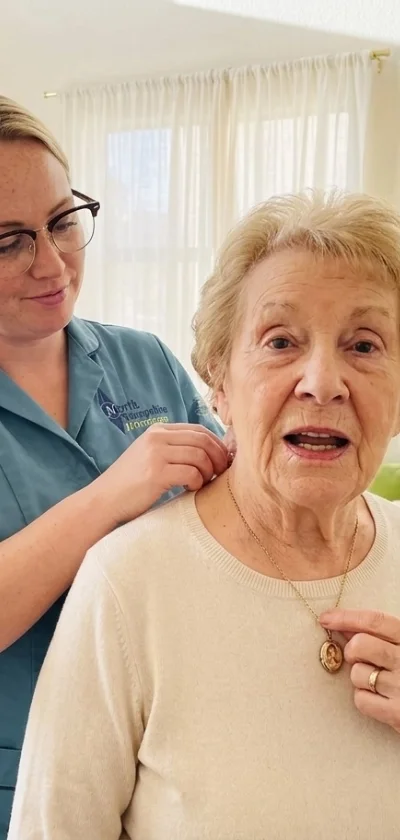
At every stage of that story, the right home care makes a meaningful difference. At North Shropshire Homecare we provide specialist support for people living with cancer, recovering from cancer treatment, or approaching the end of life after a cancer diagnosis — across Whitchurch, Wem, Prees, Whixall, and the surrounding villages of North Shropshire.
This page covers the full arc. Because cancer care at home is not one thing — it is many different things, at different stages, for different people.
Understanding the Different Stages of Cancer — and What Each Requires
Cancer is not a single condition. It is more than 200 distinct diseases, each with its own biology, its own treatment pathway, and its own set of consequences for daily life. The care that supports someone through chemotherapy for breast cancer is different from the care that supports someone managing the long-term effects of prostate cancer treatment. The care that supports someone living with advanced pancreatic cancer is different again.
What all people living with cancer share is the need for support that is responsive to where they are right now — not a generic cancer care package, but care built around their specific diagnosis, their specific treatment, and their specific situation at this specific moment.
For the purposes of understanding how home care fits into the cancer journey, it helps to think in stages.
During Active Treatment
Chemotherapy, radiotherapy, immunotherapy, hormone therapy, and surgery all have consequences that extend well beyond the clinic or the theatre. The person receiving treatment comes home — and what home care provides during this period can be the difference between treatment being tolerable and treatment being abandoned.
The side effects of cancer treatment are wide-ranging, often cumulative, and frequently invisible to the clinical team who see the person for appointments rather than in their daily life. Fatigue so profound that personal hygiene becomes an effort of will. Nausea that makes the thought of preparing food overwhelming. Immunosuppression that makes infection a genuine medical risk. Pain from surgery that limits mobility for weeks. Peripheral neuropathy from certain chemotherapy drugs that makes fine motor tasks — managing medication, cooking, dressing — genuinely difficult.
Home care during active treatment is not a luxury supplement. For many people — particularly those living alone, or those whose family carers are managing their own working lives and their own health — it is what makes the treatment pathway sustainable.
Following Surgery
Post-surgical recovery is one of the most common and most acute needs for cancer home care. The person who has had bowel resection, mastectomy, lung resection, prostatectomy, or any of the other surgeries that form part of cancer treatment returns home from hospital earlier than previous generations, often with wounds, drains, stomas, or functional limitations that require specific management.
The early post-surgical period is high-risk for both physical and psychological reasons. Infection risk is elevated. Falls risk is elevated — pain, anaesthesia effects, and deconditioning combine to make the home environment more dangerous than usual. The emotional impact of a significant surgery, often compounded by the underlying cancer diagnosis, can affect motivation, appetite, sleep, and recovery capacity.
What surgery patients need at home is consistent, attentive daily support — not clinical nursing, which the district nursing team provides, but the practical and human support that bridges the gap between clinical visits.
After Treatment — Recovery and Survivorship
The end of active treatment is not the end of the cancer journey. For a growing number of people, the months and years after treatment are shaped by consequences that persist long after the disease itself has been addressed.
Cancer-related fatigue affects the majority of cancer survivors and can persist for years after treatment ends. It is neurologically distinct from ordinary tiredness and does not respond reliably to rest. Its presence during the recovery period is not a sign that something is wrong — it is the expected consequence of what the body has been through. But it affects every aspect of daily function and requires a care approach that works with it rather than expecting the person to push through it.
Peripheral neuropathy — nerve damage caused by certain chemotherapy drugs — can produce persistent numbness, tingling, and pain in the hands and feet that affects fine motor control and balance. Lymphoedema — swelling caused by damage to the lymphatic system after surgery or radiotherapy — requires specific management. Bowel and bladder changes following pelvic treatments can require ongoing daily management. Cognitive changes — sometimes called "chemobrain" — affect memory, concentration, and processing speed in a significant proportion of cancer survivors.
These are not temporary inconveniences. They are the lasting physical cost of the treatment that saved or extended the person's life, and they deserve the same attentive, specific support that the treatment phase received.
Living With Advanced or Incurable Cancer
For some people, cancer cannot be cured but can be managed. Advanced or metastatic cancer — cancer that has spread beyond its original site — may be treated with therapies that control its progression for months or years without eliminating it. During this time, a person may continue working, maintain their relationships, and live a life of considerable quality. They also live with the knowledge of what their diagnosis means for the longer term.
Living with advanced cancer requires care that addresses both the practical consequences of the disease and its treatment, and the psychological reality of living with a life-limiting condition. Neither can be separated from the other.
The number of patients requiring palliative care in England is projected to rise from 240,000 in 2018–19 to 379,000 by 2030–31. The majority of this increase will be driven by an ageing population living longer with cancer and other serious conditions. The care infrastructure needs to exist to meet this need — in communities, in homes, delivered by people who are trained, consistent, and present.
End-of-Life Care
74% of people in England say they would prefer to receive end-of-life care at home. The reality has historically fallen short of this preference — logistical, systemic, and resource barriers have meant that too many people have died in hospital who would have chosen to die at home.
We are committed to making the preference a reality for the people we support in North Shropshire. End-of-life care at home for cancer patients is one of the most significant and most human things we do. We approach it with the clinical competence and the personal depth it requires. We do not shy from it.
The Symptoms and Challenges We Address
Cancer-Related Fatigue
Cancer-related fatigue is the most common and most debilitating symptom reported by people with cancer across all stages and all types. Unlike the tiredness of a difficult week, it does not respond to sleep or rest. It is caused by the disease itself, by the metabolic demands of fighting it, and by the biological effects of surgery, chemotherapy, and radiotherapy on the body's energy systems.
What we do: We build visit timing and structure around the individual's fatigue pattern. We pace care tasks to match available energy rather than working against it. We protect the times of day when energy is better for activities that matter most to the person. We never push someone with cancer-related fatigue to do more than they can on a given day. We document fatigue patterns and communicate changes to the clinical team, because significant changes in fatigue severity can indicate disease progression or treatment effects that warrant review.
Pain Management
Pain in cancer is complex and varies widely between people and between cancer types. It can arise from the tumour itself pressing on nerves, organs, or bone. From the side effects of treatment. From surgery. From the psychological amplification of physical pain that fear and anxiety produce. The analgesic ladder developed by the WHO sets out a framework for escalating pain management from simple analgesics through to opioid medication and specialist interventions.
At home, pain management requires consistent medication at the right times and in the right forms. Oral medication, patches, syringe drivers — the form in which pain medication is delivered changes as cancer progresses, and each requires a different kind of support from carers.
What we do: We manage pain medication precisely and consistently through our eMAR system. We observe and document pain levels and their relationship to activity, timing, and medication, providing clinically useful observations to the GP and palliative care team. For clients using syringe drivers for continuous subcutaneous medication delivery, we work alongside the district nursing team who set up and manage the device, providing the daily practical and emotional support that wraps around the clinical management.
Nausea and Nutritional Decline
Nausea is among the most distressing consequences of chemotherapy and radiotherapy, and it can persist long after treatment ends. Poor appetite, taste changes caused by chemotherapy, mouth sores from certain treatments, and difficulty swallowing caused by head and neck cancers or oesophageal treatments all contribute to nutritional decline that can significantly compromise recovery and treatment tolerance.
Maintaining adequate nutrition during and after cancer treatment is clinically important — not because food is a moral obligation but because the body's capacity to recover from surgery, tolerate further treatment, and resist infection is directly dependent on nutritional status.
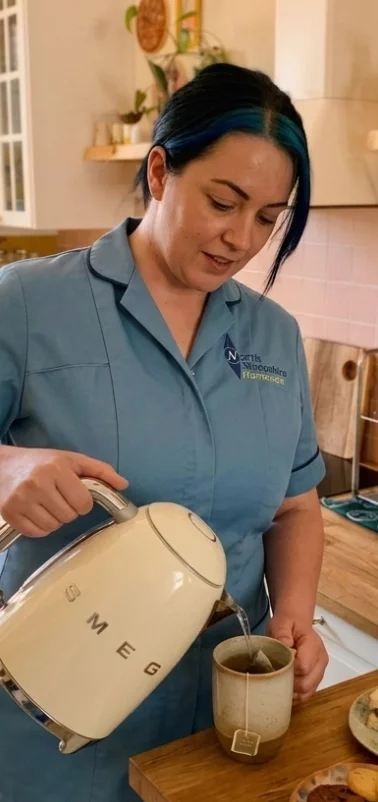
What we do: We prepare food that is nutritious, appealing, and adapted to current appetite and tolerance. For periods when eating is very difficult, we focus on small, frequent, high-calorie snacks rather than conventional meals. We adapt to taste changes — foods that taste wrong during chemotherapy may be the same foods the person previously loved, and we are not precious about what works on any given day. For clients with swallowing difficulties caused by head and neck cancer treatment, we implement SALT guidance on food texture and fluid consistency precisely. We monitor food and fluid intake and communicate nutritional concerns to the clinical team promptly.
Post-Surgical Recovery
Post-surgical care at home covers a range of specific needs depending on the surgery involved.
Wound and site care — we support clients with post-surgical wound management within our scope, working alongside the district nursing team who provide clinical wound care. We monitor for signs of infection — increasing redness, warmth, swelling, or discharge — and communicate concerns promptly.
Stoma care — bowel, colostomy, ileostomy, and urostomy stomas following cancer surgery require specific daily management of the pouch, the site, and the surrounding skin. We provide full stoma care support with a matter-of-fact, dignified approach that treats a necessary bodily function as exactly that. We monitor stoma output and appearance and flag clinical concerns to the nursing team.
Mobility and rehabilitation — deconditioning following cancer surgery, combined with post-operative pain and fatigue, makes the early weeks at home a significant falls risk. We support safe mobility, implement physiotherapy recommendations for progressive activity, and ensure the environment is safe for the person's current functional level.
Drain management — where surgical drains are still in situ on discharge, we support clients in managing these within our scope, with the district nursing team responsible for clinical drain care.
Immunosuppression and Infection Risk
Chemotherapy significantly suppresses the immune system, creating periods during the treatment cycle when the risk of serious infection is genuinely elevated. A fever that would warrant a paracetamol in a healthy person can be a medical emergency in a severely neutropenic cancer patient.
What we do: We are trained to recognise the signs of infection in immunosuppressed cancer patients and to understand the urgency of escalation. A temperature above 37.5°C in someone who is neutropenic following chemotherapy warrants immediate medical attention — not watchful waiting, not paracetamol and reassurance. We know this and we act accordingly. We communicate the chemotherapy cycle timing and neutropenic risk windows to the care team so that every carer visiting during a high-risk period is aware of the elevated need for vigilance.
Lymphoedema Management
Lymphoedema — chronic swelling caused by damage to the lymphatic system following surgery or radiotherapy — affects a significant proportion of cancer survivors, particularly those treated for breast, gynaecological, urological, and head and neck cancers.
Lymphoedema management at home involves meticulous skin care to prevent infection of fragile swollen tissue, compression garment support, and adherence to the specific self-management programme developed by the lymphoedema specialist.
What we do: We support lymphoedema management as part of the daily personal care routine — checking skin integrity, helping with compression garments where dexterity is limited, and monitoring for signs of cellulitis, which in a person with lymphoedema is a medical emergency requiring urgent antibiotic treatment.
Peripheral Neuropathy
Peripheral neuropathy caused by chemotherapy drugs — particularly taxanes and platinums — produces numbness, tingling, weakness, and pain in the hands and feet that can persist for months or years after treatment ends. It affects fine motor control, balance, and the ability to manage daily tasks independently.
What we do: We adapt personal care and daily living support to the specific functional limitations of peripheral neuropathy — helping with fastenings and buttons, supporting safe mobility in a person with reduced sensation in the feet, and monitoring for falls risk. We communicate any significant change in neuropathy severity to the clinical team.
Psychological and Emotional Impact
The psychological consequences of a cancer diagnosis, cancer treatment, and living with cancer are profound and frequently underaddressed. Depression and anxiety affect a significant proportion of cancer patients and survivors. Fear of recurrence — the persistent background anxiety that cancer will return — is reported by the majority of cancer survivors and can significantly affect quality of life long after the disease phase has passed.
30% of cancer patients in Scotland reported not receiving emotional or psychological support from healthcare professionals during their treatment. 36% of people in Wales said they had not been offered information about how to access financial help or benefits.
What we do: We are not therapists and we do not attempt to provide psychological treatment. What we provide is the consistent, warm, genuinely attentive human presence that the research consistently identifies as one of the most important factors in psychological wellbeing during and after cancer. Carers who notice that someone is more withdrawn than usual, who ask how today actually is rather than assuming the answer, who sit with distress rather than immediately resolving it — these carers are providing something real and valuable alongside the practical tasks.
We also ensure that families are aware of the support services available — Macmillan's support line, cancer-specific counselling, Maggie's Centres — and we flag to the clinical team when we observe persistent low mood that warrants formal psychological support.
Palliative and End-of-Life Cancer Care at Home
We have a dedicated page on our website covering palliative and end-of-life care in detail. We want to say something specific about cancer here, because cancer end-of-life care has particular features that general palliative guidance does not always capture.
The Syringe Driver
The transition from oral pain and symptom medication to subcutaneous syringe driver delivery is a significant milestone in end-of-life cancer care. It typically occurs when the person can no longer reliably swallow oral medication — and it requires coordination between the GP who prescribes the medication, the district nursing team who sets up and manages the device, and the home care team who provide the daily practical and emotional care around it.
We work alongside the district nursing team in this coordination. We do not adjust, add to, or intervene with syringe driver medication — this is a district nursing task. We are the consistent daily presence who ensures the person is comfortable, who observes and reports changes in symptom control, and who ensures that the people around the person are supported through what is often the most difficult period of the cancer journey.
Anticipatory Prescribing
Most end-of-life cancer care plans include anticipatory prescriptions — medications prescribed in advance for the symptoms most likely to occur in the final days: pain, breathlessness, agitation, and secretion build-up. These medications are held in the home, ready to be administered by district nurses when needed.
Our carers understand the purpose of anticipatory prescriptions, the system for accessing them, and the urgency of contacting the district nursing team when symptoms indicate they are needed. We do not administer anticipatory prescribing ourselves — this is a district nursing responsibility — but we are the people who observe the symptoms that indicate it is time.
Where Someone Dies
-
For people who have expressed a wish to die at home, the period immediately before death requires a quality of care that is calm, attentive, and deeply humane. We support clients and families through this period with the full presence it requires — sitting with people, managing comfort, supporting family members who are present, and ensuring that the environment around the person is as peaceful and personal as it can be.
We support families in the immediate aftermath as well. The practical and administrative demands of bereavement arrive quickly, and a family that is also exhausted from the preceding weeks of care needs guidance and support in navigating what comes next.
Supporting Family Carers of People With Cancer
Family carers of people with cancer are frequently managing a role that intersects the practical, the emotional, and the medical in ways they were never trained for and never expected to face.
The cancer care burden on informal carers is significant and often invisible. The person who drives to every chemotherapy appointment, who manages the medication, who watches for the warning signs, who provides the daily reassurance that the clinical team cannot provide between appointments — this person needs support that is as real and consistent as the support their relative receives.
We provide sitting services, regular scheduled visits, and overnight presence that give family carers genuine rest. We communicate with family members honestly and proactively. And we treat the wellbeing of the whole family as part of our responsibility, not as something peripheral to the care plan.
Financial Support for Cancer Patients
Cancer and its treatment can have significant financial consequences — reduced ability to work, increased travel and medication costs, and the practical expenses of managing daily life when illness limits independence. Many people with cancer are entitled to financial support that they are not aware of or have not claimed.
Attendance Allowance — for people over State Pension age with cancer, Attendance Allowance is often available at the higher rate and can be fast-tracked in terminal illness cases. It is non-means-tested and does not depend on whether care is currently in place.
NHS Continuing Healthcare — for people with advanced cancer whose needs are primarily health needs, NHS Continuing Healthcare may fund care entirely, regardless of assets. This is significantly underused and is worth raising with the GP or clinical team.
Macmillan Cancer Support — provides grants for a wide range of practical needs arising from cancer, including home care costs, travel, heating, and household adaptations. Macmillan's grants service is available via their helpline: 0808 808 00 00.
Terminal illness fast-tracking — the benefits system has specific fast-track provisions for people with a terminal illness prognosis of less than 12 months. These provisions apply to Attendance Allowance, Personal Independence Payment, and Universal Credit, and are worth applying for without delay.
Age UK Shropshire Telford & Wrekin provides free benefits advice for older adults: 01743 233123. We actively encourage every family navigating cancer care costs to make this call before assuming that care must be fully self-funded.
Working With the Cancer Clinical Team in North Shropshire
Cancer care in North Shropshire is coordinated across primary care, acute services at Royal Shrewsbury Hospital, and specialist oncology services. The clinical team around a person with cancer typically includes an oncologist, a clinical nurse specialist, a Macmillan nurse, the GP, district nurses, and — as the disease progresses — a palliative care team often linked to Severn Hospice.
Our role is to be the consistent daily presence that connects the work of this team to the reality of the person's daily life at home. We implement clinical recommendations in the domestic environment. We communicate observations to the relevant team members. We flag concerns promptly rather than waiting for the next scheduled appointment.
We also understand the pressures the cancer clinical team is under. NHS cancer waiting times have been among the worst on record in recent years. As of January 2025, half of people having cancer treatment were worried about NHS pressures affecting their survival. A home care team that documents well, communicates clearly, and ensures that the person arrives at every clinical appointment in the best possible condition — properly nourished, properly medicated, properly rested — contributes to the clinical outcomes of treatment as well as to the daily quality of life at home.
Arrange a Free Home Assessment
Whether you or a family member has just received a cancer diagnosis and is thinking ahead, is currently in active treatment, is recovering from surgery, is living with advanced cancer, or is approaching end of life — we are here and we are glad to help.
A free home assessment costs nothing and commits you to nothing. We visit, we listen, and we give you an honest picture of what we can provide and how quickly we can begin.
📞 01948 411222 — 24 hours, 365 days
✉️ mail@nshomecare.co.uk
North Shropshire Homecare
The Coach House, 15/17 Green End, Whitchurch, SY13 1AD
Providing specialist cancer care and recovery care at home across Whitchurch, Wem, Prees, Whixall, Tilstock and the surrounding villages of North Shropshire.
-
The information on this page has been checked for clinical accuracy and aligns with current best practices for care at home for Cancer.
Next review July 2027.