
Multiple Sclerosis Care at Home in North Shropshire
Have this page read to you


Multiple sclerosis is one of the most unpredictable conditions a person can live with. Not because it is necessarily the most physically severe — though for some people it becomes so — but because of its variability. A person with MS may have a good morning and a difficult afternoon. A week of relative stability followed by a relapse that changes everything. A condition that looks manageable from the outside and is exhausting from the inside, in ways that are invisible to almost everyone except the person living it.
The number of people living with MS in England has risen sharply. A 2026 UCL and Imperial College London study — the most current data available — estimates 190,000 people are living with MS in England today. MS has more than doubled in recorded prevalence from 2000 to 2020, increasing by 6% per year, largely due to improved diagnosis and people with MS living longer. More than 7,100 people are diagnosed with MS each year — around 135 people every week.
71% of people with MS are women, making MS 2.5 times more common in women than men. MS is typically diagnosed between the ages of 20 and 50, meaning many people live with the condition for decades — working, raising families, building careers — before support needs become significant. But when they do become significant, the nature of MS means that the support required is specific, knowledgeable, and flexible in ways that generic homecare cannot always provide.
At North Shropshire Homecare we provide specialist home care for people with MS across Whitchurch, Wem, Prees, Whixall, and the surrounding villages. This page explains what that care looks like, in the detail that matters.
Understanding MS — The Types That Shape the Care
MS is not a single condition with a predictable trajectory. It presents in distinct patterns, each of which has different implications for daily life and for the care that supports it.
-
Around 85% of people with MS are initially diagnosed with RRMS. It is characterised by clearly defined episodes of worsening neurological function — relapses — followed by periods of partial or complete recovery. A relapse can last days to months. Between relapses, the condition is stable, though residual symptoms from previous relapses may remain.
For home care, RRMS presents a specific challenge: the person's needs are not constant. During a relapse, support needs can increase dramatically and rapidly. Between relapses, some people manage very independently. Care that cannot flex in response to this variability — that applies a fixed care plan regardless of whether the person is mid-relapse or in a period of relative stability — is not actually appropriate for RRMS.
-
Over time, many people with RRMS transition to SPMS, typically after 10–20 years. In SPMS, disability accumulates more steadily, with fewer or no distinct relapses. Function declines progressively rather than episodically. The care needs in SPMS tend to be more consistent and gradually increasing, requiring a care plan that is reviewed and adjusted regularly as the condition progresses.
-
Around 10–15% of people with MS have PPMS from the outset. There are no relapses or remissions — the condition progresses from the beginning, gradually and steadily, without the episodic pattern of RRMS. PPMS is generally diagnosed later in life and progresses more quickly than relapsing forms. Care planning for PPMS looks ahead — not just to the current level of need but to what is likely to be needed in six months and two years.
What All Types Share
Regardless of MS type, certain challenges are common — fatigue, spasticity, bladder and bowel dysfunction, cognitive changes, pain, and heat sensitivity — and all of them require specific knowledge to support well. We address each in detail below.

The Symptoms That Matter Most for Daily Care
Fatigue — The Most Common and Most Misunderstood Symptom
Around 80% of people with MS experience fatigue. MS fatigue is not tiredness. It is not resolved by sleep. It is a profound neurological exhaustion that can arrive without warning, that bears no reliable relationship to how much effort a person has expended, and that can make the simplest tasks — washing, dressing, preparing a meal — feel impossible.
MS fatigue has a neurological cause: the damaged nerve pathways in MS mean that the brain has to work significantly harder to achieve the same result. The effort of processing a normal morning's activity consumes resources that in someone without MS would last all day.
For carers who do not understand this, the temptation is to interpret fatigue as reluctance, low mood, or deconditioning — to encourage the person to push through it, or to interpret a person's statement that they cannot do something as meaning they do not want to. This is wrong and it is harmful.
What we do: We build visit timing and structure around the person's fatigue pattern. Many people with MS have periods of the day when energy is better — often mid-morning, before accumulated effort has depleted reserves — and periods when it is significantly worse. We use the better periods for personal care and activity, and we protect the difficult periods from unnecessary demands. We never push a person with MS to do more than their energy allows on a given day. We document fatigue patterns and communicate them across the care team so that every carer approaches each visit with accurate expectations.
Heat Sensitivity and Uhthoff's Phenomenon
Around 80% of people with MS are affected by Uhthoff's phenomenon — the temporary worsening of neurological symptoms when body temperature rises. This happens because heat slows nerve conduction in the already-damaged myelin sheaths of MS. An increase in body temperature of as little as 0.5°C can trigger a measurable deterioration in neurological function.
In practical terms, this means that a warm bath, a hot summer afternoon, physical exertion, a fever, or even a hot drink can cause a temporary but significant increase in symptoms — blurred vision, increased weakness, worsening spasticity, profound fatigue. These are not relapses. They are Uhthoff's phenomenon, and they resolve when the person cools down. But in the moment, they can be alarming for both the person and their carer if not understood.
What we do: We are trained to distinguish between Uhthoff's phenomenon and a genuine relapse. We manage bath and shower temperature carefully — lukewarm rather than hot, in a well-ventilated bathroom. We are aware of the ambient temperature of the home and whether it is likely to be a difficult day in warm weather. We know the cooling strategies — cool drinks, cooling vests, cool flannels — that reduce symptom burden during a heat-affected period. We do not rush through personal care tasks in ways that generate excessive exertion and body heat. We document any episode consistent with Uhthoff's phenomenon so that the pattern is visible to the clinical team.
Spasticity
Muscle stiffness and spasms are common in MS, affecting the legs most frequently but potentially involving any muscle group. Spasticity can be painful, can significantly limit range of motion, and can complicate personal care and transfers if not managed with appropriate technique.
Spasticity in MS is frequently worse in the morning, improves with gentle movement, and worsens with fatigue, heat, infection, or pain. The relationship between spasticity and movement means that the order and pace of care tasks matters — a rushed approach to dressing before spasticity has eased with morning movement will be more difficult and more uncomfortable than a patient, unhurried one.
What we do: We understand spasticity as a variable rather than a fixed feature of each person's day. We know that the positioning during sleep, the warmth of the room on waking, and the pace of the first movements of the morning all affect spasticity levels. We work with rather than against spasticity — smooth, slow, deliberate movements that do not trigger protective spasm. Where a physiotherapy stretching programme is in place, we support its implementation within the daily routine.
Bladder and Bowel Dysfunction
Bladder dysfunction affects approximately 80% of people with MS at some point. This includes urinary urgency, frequency, incontinence, and urinary retention — and can vary significantly between individuals and across disease stages.
Bowel dysfunction — constipation, urgency, or incontinence — is also common, and affects quality of life profoundly.
What we do: We support continence management discreetly, with complete matter-of-factness and without embarrassment. This includes timed toileting strategies where appropriate, catheter care where prescribed, management of continence aids, and monitoring for signs of urinary tract infection — which in MS, as in other neurological conditions, can cause a significant and rapid worsening of existing symptoms that may be mistaken for a relapse. Prompt recognition and escalation of suspected UTI is part of our standard practice for MS clients.
Where a continence nurse is involved in the care plan, we implement their guidance precisely and communicate observations that may warrant a review.
Pain
Pain is significantly more common in MS than was historically recognised. Central neuropathic pain — caused by the damaged nerve pathways of MS itself — presents as burning, stabbing, or electrical sensations that are often difficult to describe and difficult to treat. Musculoskeletal pain from spasticity, poor posture, and altered movement patterns is also common.
What we do: We document pain observations specifically — not "client appeared uncomfortable" but what kind of pain, where, when, and in what context. This information is clinically useful in a way that vague observations are not. We position clients comfortably during personal care and transfers, with attention to the musculoskeletal sources of pain. We do not apply pressure or movement that we know to be uncomfortable. We communicate pain changes to the family and clinical team promptly.
Cognitive Changes
Up to 65% of people with MS experience some degree of cognitive impairment — affecting memory, attention, processing speed, and executive function. Progressive subtypes show more severe cognitive impairment and fatigue than relapsing-remitting MS.
Cognitive changes in MS are often invisible to people who do not know what to look for. A person may appear engaged and responsive while struggling significantly with processing speed or short-term memory. Cognitive fatigue — the specific exhaustion that comes from cognitive effort in MS — is distinct from physical fatigue and equally real.
What we do: We adapt communication to allow adequate processing time. We do not interpret a slow response as confusion, disengagement, or cognitive incapacity. We simplify decisions where appropriate — not because the person lacks capacity, but because reducing the cognitive load of routine tasks conserves mental energy for the things that matter most to them. We are consistent in our approach across the care team, because consistency reduces the cognitive effort required to navigate each new interaction.
Balance, Mobility, and Falls
Balance problems, coordination difficulties, and leg weakness are among the most common functional consequences of MS. They create a specific falls risk that is compounded by fatigue — a person who moves safely when rested may be significantly less stable at the end of a tiring day.
What we do: Falls prevention is embedded in every aspect of care for our MS clients. Environmental assessment, appropriate footwear, unhurried pacing of mobility tasks, correct use of mobility aids, and awareness of the fatigue-related increase in falls risk toward the end of the day. Every fall or near-miss is documented in detail. We flag environmental concerns to the occupational therapist and clinical team.
Visual Disturbances
Optic neuritis — inflammation of the optic nerve — is a common feature of MS relapses, causing blurred vision, loss of colour vision, or pain on eye movement. Visual disturbances can also occur as part of Uhthoff's phenomenon in heat.
What we do: We are aware that visual symptoms are a recognised feature of MS and that a client reporting visual changes during a care visit requires appropriate clinical follow-up. We distinguish between a Uhthoff-related transient visual change (which resolves with cooling) and a new or worsening visual symptom that may indicate relapse activity. We document visual complaints specifically and communicate them to the MS nurse or GP where appropriate.


Relapse Support — Being There When It Matters Most
A relapse in RRMS can be sudden, frightening, and profoundly disabling within a very short period. A person who was managing independently on Monday may be unable to walk safely by Thursday. The care requirement changes dramatically, and the family's capacity to respond is often already stretched.
For MS clients who experience relapses, we are the rapid-response resource in the community. When a relapse begins, we can increase visit frequency, adjust the care plan, provide the additional personal care and support that the person suddenly needs, and communicate with the MS nurse and GP to ensure that the clinical team is aware and the appropriate treatment — typically a course of high-dose corticosteroids — is initiated promptly.
We also support the recovery phase. A relapse that has been treated medically still leaves a person exhausted, deconditioned, and often emotionally depleted. The weeks after a relapse require a particular kind of care — paced, patient, oriented toward recovery rather than rushing back to baseline.
What We Provide — The Practical Care
Personal Care
Personal care for someone with MS must be adapted to the variability of the condition and cannot be applied as a fixed routine regardless of how the person is on any given day.
Morning personal care needs to account for spasticity levels, fatigue status, and whether the person has already experienced significant Uhthoff symptoms. We assess the morning's specific picture before approaching personal care — a brief, calm check-in before beginning tasks tells us more about how to approach the next hour than any fixed protocol.
Bathing and showering requires specific temperature management. Lukewarm water, adequate ventilation, cooling breaks where needed, and awareness of the energy expenditure involved in a shower for someone with MS fatigue. We support the use of shower seats, grab rails, and other adaptive equipment, and we maintain communication with the OT team about any change in bathroom safety needs.
Dressing is adapted to fatigue and dexterity. For clients with hand tremor or reduced fine motor control, clothing choices and fastening methods matter. We work with the client's preferences and their OT's guidance, and we allow the time that MS requires rather than the time that efficiency would prefer.
Meal Preparation and Nutrition
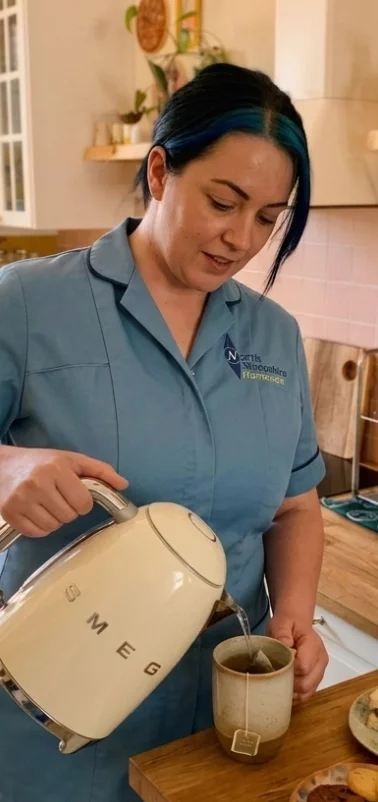
For MS clients, nutrition is more than a daily task. Adequate hydration supports bladder function and reduces UTI risk. Specific dietary patterns are associated with symptom management. Fatigue can make cooking impossible at certain points of the day, meaning that when a carer is present is often the only realistic window for a proper hot meal.
We prepare proper food, adapted to any specific dietary guidance, and we are alert to the nutritional implications of reduced appetite during relapses and the dehydration risk that comes with bladder dysfunction management.
Medication Support
MS disease-modifying therapies (DMTs) vary widely in their administration and timing requirements, from daily oral tablets through to injections, infusions, and implants. For clients managing injectable DMTs who find self-injection difficult due to dexterity or fatigue, we can support the administration process where trained and where this falls within the care plan.
Symptom management medications — for spasticity, pain, fatigue, bladder urgency, and mood — are managed with the same precision and eMAR documentation we apply to all medication administration. Timing and consistency matter. We provide both.
Companionship and Emotional Support
MS is diagnosed, most commonly, in the third and fourth decade of life. It arrives in the middle of careers, relationships, and family life, and it does not leave. The emotional weight of living with an unpredictable, incurable, progressive neurological condition — particularly during a relapse, or at the point when disability has become more significant — is real and deserves genuine acknowledgment rather than generic positivity.
Our carers are trained to be present with difficulty rather than resolving it with reassurance. To listen properly. To understand that a day when a client is frustrated, grieving, or angry about what MS has taken from them is not a day to be cheerfully redirected. To sit with the reality of it, while keeping the visit grounded and the person cared for.
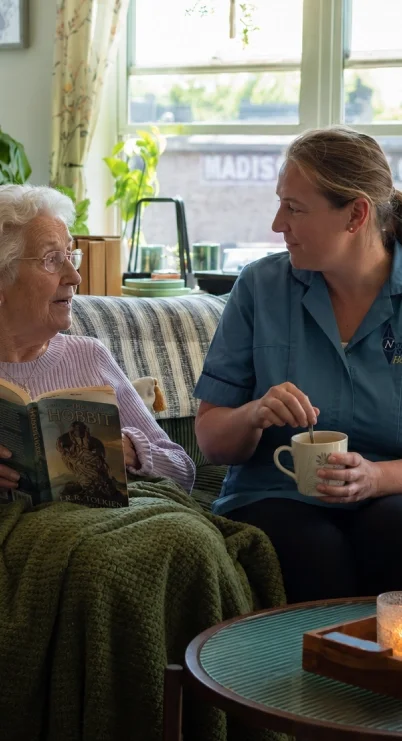
We also keep the person connected to the things that still matter to them — hobbies, interests, outings, conversations about the things they care about — because identity and purpose are not erased by MS, and care that treats the condition as the whole person is doing the person a disservice.
Respite for Family Carers
Living alongside someone with MS, and caring for them through relapses and progressive phases, is demanding in ways that do not fit neatly into a work roster or a timetable. The unpredictability is exhausting. Not knowing whether tomorrow will be a good day or a relapse day. Being the person who is always there, and therefore never fully off duty.
If you are a partner, parent, or family member providing care for someone with MS in North Shropshire — you need rest, not as a luxury but as a clinical necessity. We provide sitting services, regular scheduled visits, and overnight presence where needed, so that family carers have guaranteed time away from the caring role with confidence that their relative is with someone trained, competent, and genuinely engaged.
Working With the MS Clinical Team
MS management is inherently multidisciplinary, and the specialist team around a person with MS typically includes a neurologist, an MS specialist nurse, a physiotherapist, an occupational therapist, a continence nurse, and the GP. Each of these clinicians makes recommendations that have to be implemented in the home, consistently, by the people who are actually there every day.
That is us.
We implement physiotherapy programmes, OT recommendations, and SALT guidance. We communicate clinical observations — changes in symptom pattern, new symptoms, UTI concerns, relapse activity — to the relevant team members promptly and specifically. We attend reviews where appropriate and invited.
Up to 80% of people with MS live in areas where MS nurses have caseloads in excess of the sustainable limit of 315 patients. The NHS specialist team is stretched. A care team that is clinically aware, that documents well, and that communicates clearly with the specialist team is not just providing daily support — it is extending the reach of overstretched specialist services into the daily life of the person who needs them.
Why Home Is Usually the Right Place for People With MS
MS affects people across the full lifespan — from young adults in their twenties to people in their sixties and seventies. For the majority of that lifespan, home is where life is, where relationships are, where identity is grounded.
The right home care for MS is not custodial. It is enabling. It fills the gaps that MS creates — the morning when fatigue makes self-care impossible, the day of a relapse when someone needs to be there — without replacing the independence and self-direction that the person retains and values.
For many people with MS in North Shropshire, professional home care is what makes the difference between managing and not managing, between staying at home and a premature transition to residential care. We understand the weight of that and we take it seriously.
Arrange a Free Assessment at Home
If you or someone you love is living with MS in North Shropshire — whether recently diagnosed and beginning to think about future support, currently in relapse and needing immediate help, or further along in the condition and looking for more consistent daily assistance — we would be glad to talk.
A free home assessment costs nothing and commits you to nothing. We visit, we listen, and we give you an honest picture of what we can provide and how quickly we can begin.
📞 01948 411222 — 24 hours, 365 days
✉️ mail@nshomecare.co.uk
North Shropshire Homecare
The Coach House, 15/17 Green End, Whitchurch, SY13 1AD
Providing specialist Multiple Sclerosis care at home across Whitchurch, Wem, Prees, Whixall, Higher Heath, Tilstock, Ash, and the surrounding villages of North Shropshire. CQC Rated Good. Independently Owned. Locally Staffed.

-
The information on this page has been checked for clinical accuracy and aligns with current best practices for care at home for Multiple Sclerosis.
Next review July 2027.

Testimonials.
Discover why we are regarded as the "Gold Standard" for homecare in North Shropshire through the honest, unfiltered eyes of our clients and their loved ones. To provide you with total peace of mind, we also feature independent insights from our latest CQC (Care Quality Commission) inspection. These combined voices offer a complete picture of our commitment to safety, dignity, and clinical excellence. We are incredibly proud to share the feedback that not only validates our work but acts as the fuel that keeps our team moving forward every day.