
COPD and Respiratory Care at Home in North Shropshire
Have this page read to you
Breathing is the most fundamental thing the body does. When it becomes difficult — when a walk to the kitchen produces breathlessness, when getting dressed requires a rest, when a chest infection means a week that cannot be faced without help — the impact on independence, confidence, and quality of life is profound and immediate.
Chronic Obstructive Pulmonary Disease is the most prevalent serious respiratory condition in the UK. Around 1.7 million people have a diagnosed COPD and up to 600,000 more are estimated to be living with the condition undiagnosed — not because they are not symptomatic but because the diagnosis has not been made, often because breathlessness has been attributed to age or deconditioning rather than investigated properly. NICE estimates that approximately two thirds of COPD cases in the UK remain undiagnosed.
COPD exacerbations — acute worsening of symptoms, typically triggered by respiratory infections — are the second most common cause of emergency hospital admission in England. Emergency admissions for COPD rose 9% in the year ending 2024, to a rate of 208 per 100,000 population — representing 121,129 admissions. This is not a stable picture. It is a condition whose burden on both individuals and the NHS is increasing.
The Asthma + Lung UK Life with a Lung Condition 2025 survey found that only 8.8% of people with COPD are receiving all five fundamentals of basic COPD care — down from 9.4% the previous year. Over a quarter of respondents used emergency or unplanned care in the past year. When asked what might have prevented hospital visits, most pointed to better access to appointments in primary care. 71.7% of respondents live with at least one other long-term condition.
These numbers describe the gap between what people with COPD need and what the system currently provides. Home care fills part of that gap — not as a substitute for clinical management, but as the consistent daily presence that supports medication adherence, monitors for early exacerbation, prevents the isolation and deconditioning that worsen the condition, and provides the practical support that breathlessness makes difficult.
At North Shropshire Homecare we provide specialist respiratory care for people with COPD and other serious respiratory conditions across Whitchurch, Wem, Prees, Whixall, and the surrounding villages.
Understanding COPD
COPD is a chronic inflammatory lung disease characterised by persistent airflow limitation that is not fully reversible. It encompasses chronic bronchitis — chronic inflammation of the airways producing persistent cough and mucus production — and emphysema — destruction of the alveoli (air sacs) that reduces the surface area available for gas exchange.
COPD is almost always caused by long-term exposure to inhaled irritants, of which cigarette smoking is overwhelmingly the most significant. Occupational exposures to dust and chemicals, and in some parts of the world indoor air pollution from biomass fuel, also contribute. The condition develops over years and typically presents in people aged 40 and over. The earlier in life the smoking began, the longer it continued, and the greater the total exposure, the more severe the COPD that results.
COPD does not get better. The airflow limitation is not reversible. But its progression can be slowed — significantly — with the right treatment and the right daily management. Stopping smoking, optimal use of inhaled therapies, pulmonary rehabilitation, and management of exacerbations are all evidence-based interventions that preserve lung function, reduce hospitalisation, and maintain quality of life for longer than the natural progression of the disease without intervention.
The GOLD Framework — Understanding Severity
COPD severity is typically classified using the GOLD (Global Initiative for Chronic Obstructive Lung Disease) framework, based on spirometry and symptom burden:

-
GOLD 1 — Mild: Airflow limitation present but symptoms may be minimal. Many people at this stage are undiagnosed.
-
GOLD 2 — Moderate: Worsening airflow limitation, breathlessness on exertion, typically when walking uphill or hurrying on level ground. Activity begins to be limited.
-
GOLD 3 — Severe: Significant breathlessness on minimal exertion. Activities of daily living begin to require effort or assistance. Quality of life is significantly affected.
-
GOLD 4 — Very Severe: Severe airflow limitation. Breathlessness at rest or on minimal activity. Frequent exacerbations. Quality of life is profoundly affected. Respiratory failure may be present.
Most people who require home care for COPD are in the GOLD 3 or GOLD 4 range — though support can begin earlier where breathlessness is already limiting independence.
Most people who require home care for COPD are in the GOLD 3 or GOLD 4 range — though support can begin earlier where breathlessness is already limiting independence.
Other Serious Respiratory Conditions
While COPD is the most prevalent respiratory condition requiring home care, our respiratory care at home covers the full range of serious lung conditions:
-
Bronchiectasis — a chronic condition characterised by permanent widening and damage to the airways, causing recurrent infections, persistent cough, and large volumes of sputum production. Airway clearance — the regular use of physiotherapy techniques and devices to loosen and expectorate sputum — is a central care requirement.
-
Pulmonary fibrosis — progressive scarring of the lung tissue that reduces its ability to expand and exchange oxygen. Breathlessness, dry cough, and fatigue are the hallmarks. IPF (idiopathic pulmonary fibrosis) is particularly aggressive, with median survival from diagnosis of two to five years without treatment.
-
Asthma — particularly poorly controlled or severe asthma in older adults where exacerbations require careful daily management and monitoring.
-
Pulmonary hypertension — high blood pressure in the pulmonary arteries, causing breathlessness, fatigue, and reduced exercise tolerance. May be associated with COPD, pulmonary fibrosis, or other conditions.
-
Lung cancer — respiratory symptoms including breathlessness, haemoptysis, and recurrent chest infections alongside the general care needs of a cancer diagnosis.
COPD and North Shropshire — The Local Context
There are two specific features of North Shropshire that make COPD particularly relevant to our operating area.
Rural isolation amplifies the impact. A person with GOLD 3 or 4 COPD in a city has bus routes, nearby shops, and neighbours within walking distance. In Prees, Whixall, or Higher Heath, the same level of breathlessness may mean that leaving the house is genuinely impossible without a car, and that even indoor independence is significantly reduced. The rural context transforms moderate COPD from a manageable condition into one with profound isolation consequences.
Deprivation and occupational exposure. COPD is strongly linked to socioeconomic deprivation and to occupational exposures — dust, agricultural chemicals, industrial pollutants — that have historically been features of employment in rural North Shropshire. Research has documented that people living in more deprived areas are far more likely to have COPD than those in wealthier communities. The agricultural character of our operating area means that occupational COPD — in farmers, agricultural workers, and those who worked with grain dust or livestock — is a specific part of the local picture.
Winter risk. Cold air is a significant exacerbation trigger for COPD. The Shropshire winter — with rural properties that may be harder to heat, with outdoor exposure during the cold morning journey to a car, with the higher risk of viral respiratory infections in cold weather — carries a specific respiratory risk for our clients. Research has explicitly highlighted that COPD patients should keep warm and seek early treatment if symptoms worsen in winter. 16.6% of Asthma + Lung UK survey respondents said they struggle to afford to keep their house warm — a concern that is directly relevant in rural North Shropshire.
The Symptoms That Shape Daily Care
Breathlessness
Breathlessness is the defining symptom of COPD and the one that most directly limits daily life. The modified Medical Research Council (mMRC) dyspnoea scale describes its severity in functional terms that map directly to care needs:
mMRC Grade 0 — breathless only with strenuous exercise.
mMRC Grade 1 — breathless when hurrying on level ground or walking up a slight hill.
mMRC Grade 2 — walks slower than contemporaries on level ground due to breathlessness or has to stop for breath when walking at own pace.
mMRC Grade 3 — stops for breath after walking 100 metres or after a few minutes on level ground.
mMRC Grade 4 — too breathless to leave the house, or breathless when dressing or undressing.
Most people who contact us for COPD home care are at mMRC Grade 3 or 4 — breathlessness is affecting personal care, meal preparation, and basic household tasks. Understanding where on this scale a person sits on a given day shapes every aspect of how the care visit is conducted.
What we do: We pace all care tasks to the person's current breathlessness level. We do not rush personal care, meal preparation, or any other activity that requires physical effort. We allow rests during exertion without making the person feel that the visit is running over time. We position the person optimally for reduced breathlessness — typically sitting upright, leaning slightly forward, with hands resting on knees — during periods of breathlessness. We observe and document MRC grade at each visit and communicate any change to the GP and respiratory team.
Cough and Sputum Production
Chronic cough and sputum production are features of chronic bronchitis and bronchiectasis. Daily sputum clearance is an important clinical task — retained secretions increase infection risk, worsen airflow obstruction, and in people with compromised respiratory function contribute to the respiratory fatigue that limits daily activity.
What we do: We support airway clearance for clients where a physiotherapy-directed airway clearance routine has been prescribed — either active cycle of breathing technique (ACBT) or use of airway clearance devices such as an Acapella or Flutter. We understand that airway clearance requires time and privacy, and we build this into the visit structure. We monitor sputum colour — clear or white is expected; yellow or green suggests bacterial infection requiring prompt treatment. We communicate changes in sputum character to the GP immediately.
Fatigue
COPD fatigue reflects the extraordinary effort of breathing with compromised lung function — the respiratory muscles working at a much higher percentage of their maximum capacity for every breath. The oxygen cost of breathing in severe COPD is significantly higher than in a healthy person. This systemic effort produces fatigue that affects every aspect of daily function.
What we do: We structure care visits to front-load the most physically demanding tasks at the time of day when energy is best — typically mid-morning after the slower start and before mid-afternoon fatigue. We build in rest periods. We monitor fatigue patterns and communicate significant changes to the clinical team.
Exacerbations — The Most Clinically Critical Event
An exacerbation of COPD is an acute worsening of respiratory symptoms beyond normal day-to-day variation, requiring a change in medication. Exacerbations accelerate the decline of lung function, are the primary cause of hospitalisation in COPD, and are associated with mortality — particularly in people with severe or very severe disease.
The most common triggers for exacerbations are respiratory viral infections — rhinovirus (the common cold), influenza, and COVID-19 — followed by bacterial infections and environmental triggers including cold air and air pollution. Approximately 26% of people with COPD use emergency or unplanned care in a given year.
Early recognition of an exacerbation — the increase in breathlessness, the change in sputum colour and volume, the increased cough — and prompt treatment significantly reduces the severity of the episode, the likelihood of hospitalisation, and the long-term impact on lung function.
What we do: We are trained in the early signs of COPD exacerbation and we act on them. An increase in breathlessness that is not explained by activity, a change in sputum from clear to yellow or green, an increase in cough frequency or severity — any of these, documented and communicated to the GP within hours rather than days, can initiate the rescue pack treatment (prednisolone and antibiotics) that prevents a managed exacerbation from becoming a hospital admission.
For clients with a COPD rescue pack prescribed at home, we ensure that the person knows it is there, knows when to use it, and has our support in initiating it at the right time. We communicate to the GP when a rescue pack has been used, because this is a clinically significant event that requires follow-up.
We also support exacerbation prevention: flu vaccination status, COVID-19 vaccination status, cold air precautions in winter, and the avoidance of known environmental triggers are all part of the management approach we integrate into daily care.
Inhaler Management — The Most Important and Most Frequently Wrong Medication Task
Inhaled therapies are the cornerstone of COPD pharmacological management. Long-acting bronchodilators (LABAs and LAMAs), inhaled corticosteroids (ICS), and combination devices form the treatment framework recommended by GOLD 2025 and NICE guidelines.
Inhalers only work if they are used correctly. And research has consistently found that the majority of people with COPD use their inhalers incorrectly — wrong technique, wrong timing, inadequate breath hold, insufficient coordination. The clinical consequence is that the person is receiving less medication than prescribed, their symptom control is worse than it should be, and the clinical team may escalate treatment when the actual problem is technique.
For older adults with COPD, the challenges are compounded. Arthritis in the hands makes some inhaler devices difficult or impossible to manage. Cognitive changes can affect the reliability of the inhaler routine. The transition from older aerosol inhalers to newer dry powder inhalers (DPIs) — which require a hard, fast inhalation technique rather than the slow, steady breath used with MDIs — has caught many people out. A person who has used a blue Salbutamol MDI for thirty years and is now prescribed a DPI may be using entirely the wrong technique for the new device without anyone having explained that the technique is different.
What we do: We assess inhaler technique at every visit for clients where inhaled therapy is part of the care plan. We understand the specific technique required for every common inhaler device type — MDIs with and without spacers, Turbohaler, Accuhaler, Ellipta, Handihaler, Breezhaler, Spiromax, and others. We ensure that the correct technique is used at every dose. We flag to the GP and respiratory nurse when a device appears to be beyond a client's physical capacity — when arthritic hands cannot generate the click of a Turbohaler, or when cognitive changes make a complex inhaler routine unreliable — so that device substitution can be considered. We document inhaler use through our eMAR system.
Oxygen Therapy at Home
Approximately 90,000 people in the UK are on long-term oxygen therapy (LTOT). LTOT is prescribed for patients with severe hypoxaemia — low blood oxygen — typically those with COPD at GOLD 4, pulmonary fibrosis, or other conditions causing chronic respiratory failure. The evidence is clear: used for at least 15 hours a day, LTOT improves survival in appropriately selected patients.
Oxygen therapy at home requires specific management that our carers are trained to provide:
Flow rate compliance. LTOT is prescribed at a specific flow rate in litres per minute. Higher is not better — for many COPD patients, high-flow oxygen suppresses the hypoxic respiratory drive and can cause respiratory depression. We do not adjust oxygen flow rates. We ensure that the prescribed flow rate is used and document this.
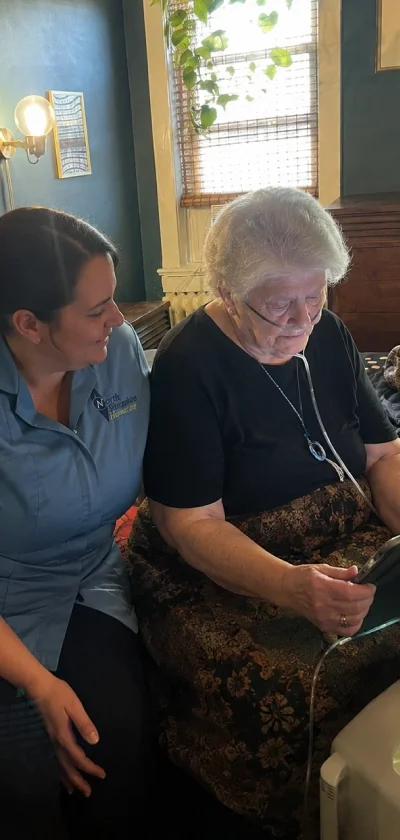
Delivery system management. Oxygen concentrators, liquid oxygen systems, and portable cylinders each have specific maintenance and safety requirements. We ensure that concentrators are plugged in and functioning, that tubing and nasal cannulae are clean and correctly positioned, and that portable cylinders are available and sufficient for any planned outing.
Home safety. Oxygen enriches the atmosphere and significantly increases fire risk. We ensure that oxygen safety rules are followed — no smoking, no open flames, appropriate distances from heat sources — and that the home environment is safe for an oxygen-using client.
Activity and portable oxygen. For clients with ambulatory oxygen prescribed for use during activity, we support its use during walks and outings, and document the distances and activities achievable with and without supplemental oxygen.
Non-Invasive Ventilation for Respiratory Failure
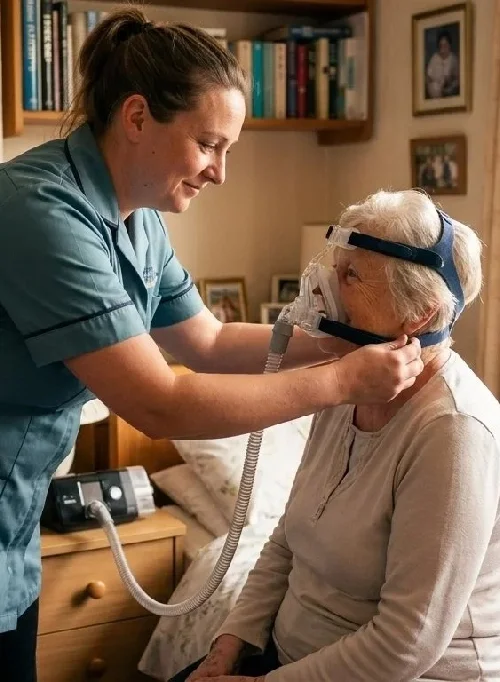
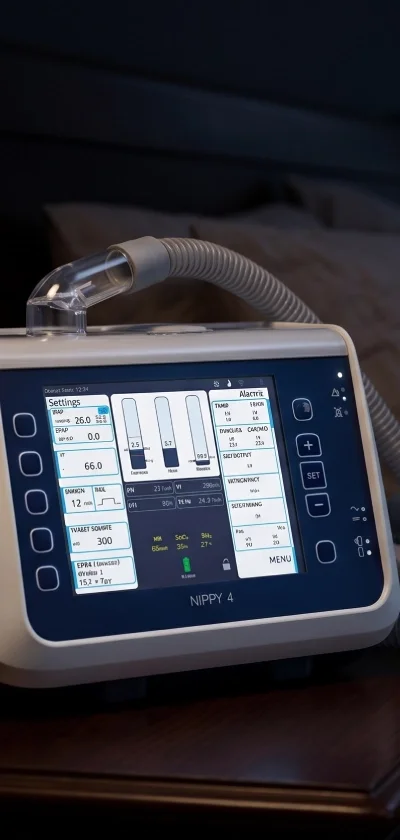
For patients with COPD who develop hypercapnic respiratory failure — where carbon dioxide accumulates in the blood because the damaged lungs cannot expel it efficiently — Non-Invasive Ventilation (NIV) is an evidence-based intervention that supports the breathing muscles and corrects the gas exchange failure.
NIV in COPD may be used:
During acute exacerbations — hospital-initiated NIV for acute hypercapnic failure during an exacerbation, with some patients continuing NIV at home after the acute episode.
Long-term home NIV — for patients with chronic hypercapnic respiratory failure, home NIV used overnight or for extended daytime periods to rest the respiratory muscles and correct chronic CO2 retention.
Our carers are experienced in NIV management. We have written in detail about NIV care on our Complex Care page, and we reference it here because for COPD patients on home NIV, the daily NIV management is as important as any other care task — the mask, the settings, the seal, the pressure area prevention, and the alert response protocols are all specific competencies that our carers receive client-specific training in before the first visit.
If you are a person with COPD who has been told that NIV may be appropriate but has not yet been referred for assessment, speak to your GP or respiratory team. The threshold for NIV referral has been progressively lowered by evidence as the benefits of earlier intervention have been established.
Pulmonary Rehabilitation — The Evidence-Based Intervention Most People Never Complete
Pulmonary rehabilitation is the single most effective intervention available for people with COPD at GOLD 2 and above. The evidence is unambiguous — PR improves exercise capacity, reduces breathlessness, reduces hospitalisation rates, and improves quality of life more reliably than any single pharmacological treatment.
PR typically involves a supervised programme of exercise and education delivered over six to eight weeks in a group setting. The challenge — in North Shropshire specifically — is access. Rural travel distances, transport limitations, and the breathlessness itself can make attending a PR programme practically impossible for people without a car or without someone to drive them.
We cannot deliver pulmonary rehabilitation — this is a specialist physiotherapy-led programme. But we can:
Support attendance at PR programmes — accompanying clients to sessions, providing the practical support that makes attendance possible rather than theoretical.
Reinforce PR principles in daily care — supporting the exercise habits developed during PR, encouraging paced activity rather than sedentary behaviour, and facilitating the active daily life that PR develops rather than the passive dependence that breathlessness can encourage.
Advocate for PR referral — for clients who have not been referred for pulmonary rehabilitation, we communicate this to the GP and respiratory team. A Midlands NHS England region COPD patient who has not been offered PR has not received the standard of care that NICE guidelines recommend.
What We Provide — The Practical Care
Personal Care
Personal care for people with COPD requires specific adaptation to breathlessness, fatigue, and the oxygen requirements that exertion places on compromised respiratory function.
Bathing and showering — warm, humid air can actually ease breathlessness in some COPD patients, but the physical effort of a shower can be significant for someone at GOLD 3 or 4. We use shower seats, maintain a comfortable temperature, ensure adequate ventilation, and build rest periods into the showering process. We monitor for oxygen desaturation during personal care — the breathlessness that develops during washing or dressing is a clinically relevant observation.
Dressing — the upper body dressing tasks that require arm raising above shoulder height are particularly breathlessness-inducing for people with COPD, because the accessory breathing muscles that assist in elevated arm positions are also the muscles used to support breathing. We adapt dressing technique and clothing choices to minimise overhead arm raising, and we sequence tasks to allow recovery between exertion points.
Pacing — the fundamental principle underlying all personal care for COPD clients is pacing. We never complete a personal care visit at a speed that matches our availability rather than the person's respiratory capacity.
Meal Preparation
Cooking is a specific challenge for people with COPD — it involves standing, physical effort, heat and steam exposure (which can trigger breathlessness), and the cognitive load of managing multiple tasks simultaneously. Many people with moderate to severe COPD gradually stop cooking and shift to convenience foods, with significant nutritional consequences.
COPD is associated with malnutrition — both because of the energy cost of breathing with compromised respiratory muscles (which is significantly higher than normal) and because breathlessness suppresses appetite. Maintaining adequate nutrition is clinically important in COPD: malnutrition worsens respiratory muscle function, reduces immune competence, and increases exacerbation risk and severity.
We prepare nutritious, appropriate meals — adapted to any other dietary requirements — and monitor food intake as a clinical observation rather than a domestic task. We communicate nutritional concerns to the GP and dietitian.
We are also alert to the specific exacerbation triggers in the kitchen environment: strong cooking smells, aerosol products, cleaning chemicals, and wood smoke from kitchen fires can all worsen COPD symptoms. We are careful about what we use in the home environment of a client with severe respiratory disease.
Medication Management
COPD medication management combines inhaler technique (addressed above) with the broader medication regimen that most people with COPD carry — bronchodilators, mucolytics, sometimes theophylline, potentially antidepressants (depression affects 21.6% of people with lung conditions in the Asthma + Lung UK survey), and increasingly biologics in selected patients.
We manage all medication through our eMAR system with real-time documentation. We pay specific attention to rescue pack awareness — ensuring the person knows where it is, that it has not expired, and that they understand when to use it.
Companionship and Mental Health Support
Depression and anxiety are significantly more prevalent in people with COPD than in the general population, and their presence profoundly worsens outcomes — reducing medication adherence, increasing exacerbation risk, and compounding the social isolation that breathlessness already produces.
21.6% of Asthma + Lung UK survey respondents with COPD reported a comorbid mental health condition. The combination of a progressively disabling condition, breathlessness that limits social activity, and the rural isolation of North Shropshire creates specific vulnerability.
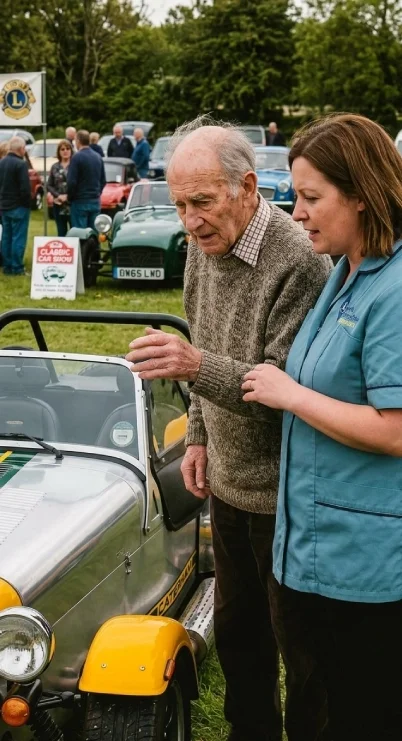
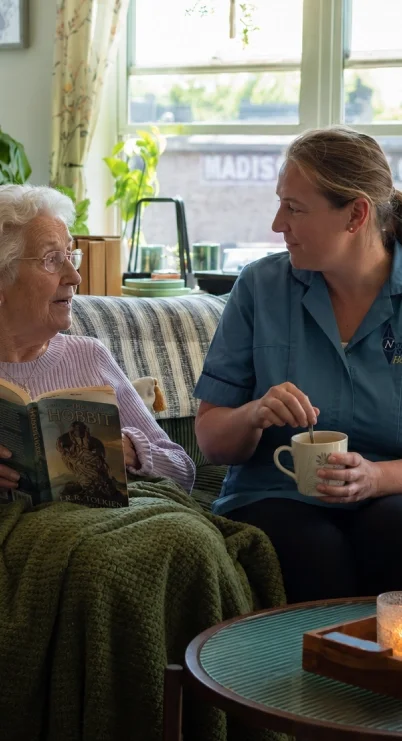
We observe and document mood changes for our COPD clients and communicate these to the GP. We provide genuine human engagement at every visit — not a rushing through tasks but a proper conversation, appropriate to the energy available. We facilitate outings and social connection within the person's respiratory capacity. And we support access to the smoking cessation services and COPD support groups that can provide additional social connection and peer support.
Falls Prevention
Falls risk is elevated in people with COPD — partly because breathlessness limits safe mobilisation, partly because the hypoxaemia of COPD can affect balance and cognitive function, and partly because many of the medications used in COPD management (particularly corticosteroids causing proximal myopathy with prolonged use) reduce muscle strength.
We implement falls prevention within every aspect of care for our COPD clients — environmental assessment, safe mobilisation support, medication side effect awareness, and the careful management of exertion to prevent the sudden severe breathlessness that can cause a person to stop suddenly and lose balance.
Working With the Respiratory Team in North Shropshire
Respiratory medicine services for North Shropshire are primarily provided through Royal Shrewsbury Hospital's respiratory department, with community respiratory nurse support and pulmonary rehabilitation services operating across the county.
We work alongside the respiratory team as the consistent daily presence that implements clinical recommendations in the home, observes and communicates clinical changes, and supports the person in maintaining the treatment plan that the clinical team has developed.
We are specifically alert to the early signs of exacerbation that require prompt clinical communication. We know that for a COPD patient at GOLD 4, a respiratory infection that is managed promptly at home — with a rescue pack initiated at the right time — is a very different event from the same infection managed too late, when hospital admission may be the only option.
Arrange a Free Home Assessment
If you or a family member is living with COPD or another serious respiratory condition in North Shropshire and would benefit from home care support — whether to support daily living, to prevent exacerbations, or to manage the consequences of severe breathlessness — we would be glad to talk.
A free home assessment costs nothing and commits you to nothing. We visit, we listen, and we give you an honest picture of what we can provide.
📞 01948 411222 — 24 hours, 365 days
✉️ mail@nshomecare.co.uk
North Shropshire Homecare
The Coach House, 15/17 Green End, Whitchurch, SY13 1AD
Providing specialist COPD and respiratory care at home across Whitchurch, Wem, Prees, Whixall, Higher Heath, Tilstock, Ash, and the surrounding villages of North Shropshire. CQC Rated Good. Independently Owned. Locally Staffed.
-
The information on this page has been checked for clinical accuracy and aligns with current best practices for COPD and Respiratory Care at home.
REVIEWED BY: Alice Allen CQC Registered Manager
Next review July 2027.