
Cerebral Palsy Care at Home in North Shropshire
Have this page read to you
Cerebral palsy is not a condition that people grow out of. It is a condition that people grow up with — and, increasingly, grow old with.
Cerebral palsy is caused by a non-progressive injury to the developing brain before, during, or shortly after birth. The brain injury itself does not worsen over time. But its consequences — for motor function, communication, cognition, and the musculoskeletal system — change significantly across the lifespan. And as the generation of people born with Cerebral palsy in the 1960s, 1970s, and 1980s reaches middle and older age, the support needs that have always been present are changing in ways that the care system has been slow to recognise.
The prevalence of cerebral palsy in the UK is estimated at 2 to 3.5 per 1000 live births — one of the most common childhood neurological conditions in the developed world. Most adults with cerebral palsy now have a life expectancy comparable to their non-disabled peers. This is a genuine achievement of modern medicine and of the quality of support that has enabled people with cerebral palsy to live full lives. It also means that there are more adults with cerebral palsy in the UK than ever before, many of them now in their forties, fifties, and sixties, encountering changes in their bodies and their care needs that neither they nor the services around them were well prepared for.
Research published in BJGP Open — the first national survey of ageing with cerebral palsy in the UK — found that adults with cerebral palsy report increasing problems with mobility, pain, and fatigue as they age, with older participants reporting significantly higher levels of pain and more mobility problems than younger ones. Healthcare usage among this group was, strikingly, low — suggesting that adults ageing with cerebral palsy are not reliably receiving the support their needs warrant.
A systematic review of evidence on ageing with cerebral palsy has been direct about this: there is a lack of specialised care for adults ageing with cerebral palsy and a lack of research that seeks to understand their ageing needs. The gap is real. We want to be part of filling it.
Understanding Cerebral Palsy — The Types and Their Implications for Care
Cerebral palsy is not a single condition. It describes a group of disorders affecting movement, posture, and motor function, caused by different forms of early brain injury. The type and location of the injury determine the pattern of motor impairment, and the pattern of motor impairment determines what care needs to look like.
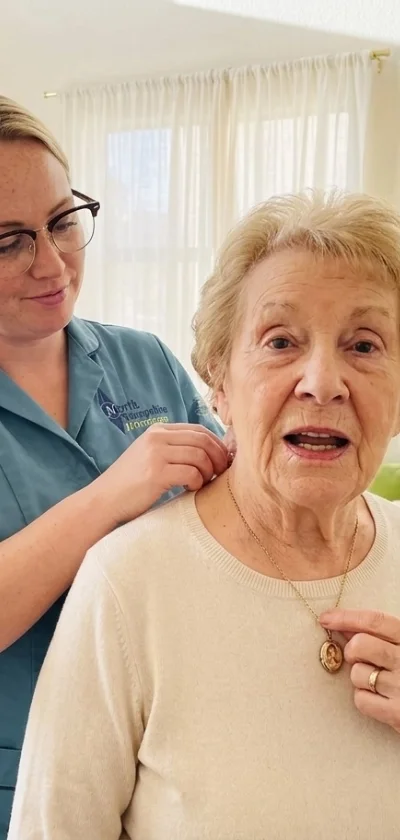

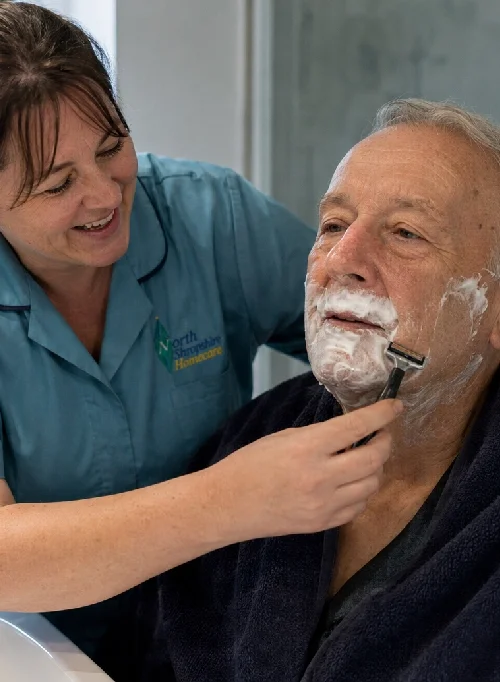
-
Spastic CP affects around 85% of people with CP and is characterised by increased muscle tone — spasticity — that causes stiffness, resistance to movement, and reduced range of motion in affected limbs. The distribution of spasticity varies:
Spastic diplegia — primarily affects the legs, with the arms less severely involved. Many people with spastic diplegia walk independently, though often with a characteristic gait pattern. With age, the effort required for ambulation increases, joint problems develop, and walking distances that were manageable at 30 become very difficult at 50.
Spastic hemiplegia — affects one side of the body — one arm and one leg — with the arm typically more affected than the leg. The affected side has increased tone, reduced fine motor control, and often a characteristic posture. Most people with hemiplegia walk independently. The affected hand may have very limited functional use.
Spastic quadriplegia — affects all four limbs as well as the trunk and often the muscles of the face and throat. This is typically the most physically demanding form of CP in terms of care requirements. Many people with spastic quadriplegia use wheelchairs and require significant support with personal care, positioning, and communication.
-
Dyskinetic CP — including athetoid, choreoathetoid, and dystonic forms — is characterised by involuntary movements that the person cannot control. These movements may be slow and writhing (athetosis), rapid and jerky (chorea), or sustained muscle contractions producing twisting postures (dystonia). They typically affect the whole body and can severely affect hand function, speech, and the ability to maintain safe, comfortable positions.
For people with dyskinetic CP, the involuntary movements that have always been present may increase in severity with age. Activities that required significant effort in earlier life may become increasingly difficult as the combined effects of the involuntary movements and musculoskeletal changes accumulate.
-
Ataxic CP affects balance and coordination, producing an unsteady gait, difficulty with precise voluntary movements, and tremor. It is less common than spastic or dyskinetic CP. With age, the balance difficulties that have always been present become increasingly significant as the falls risk associated with any balance impairment rises.
-
Many people with CP have features of more than one type — most commonly spastic and dyskinetic elements combined. The care implications reflect both.
What Changes as Adults With CP Age
This is the dimension of CP that is most inadequately addressed in adult healthcare and care systems, and that most directly shapes what home care for adults with CP needs to provide.
The brain injury of CP does not worsen over time. But the body's response to a lifetime of living with it does change — and for many adults with CP, the changes that begin to accumulate in their forties and fifties represent a significant and poorly anticipated shift in their functional capacity and care needs.
Premature Musculoskeletal Ageing
Adults with CP experience musculoskeletal changes that typically occur earlier than in the non-disabled population. The combination of abnormal muscle tone, lifelong compensation patterns in gait and posture, and the increased mechanical load on joints that is produced by spasticity and dystonia causes a pattern of early joint degeneration, pain, and functional decline.
Pain — particularly in the hips, knees, spine, and shoulders — is reported by the majority of adults with CP aged 40 and over and is one of the most significant quality-of-life concerns in this population. The pain of musculoskeletal degeneration in CP is frequently undertreated, partly because it is attributed to the CP itself rather than to treatable secondary conditions, and partly because pain assessment in people with communication difficulties is genuinely challenging.
Fatigue
Fatigue is one of the most consistently reported and most functionally disabling changes for adults with CP. It reflects the increased neurological and physical effort that living with CP requires — the constant work of managing abnormal tone, maintaining posture, and producing voluntary movement that the non-disabled person performs without conscious effort. As the body ages and its reserves diminish, this background effort becomes increasingly costly.
For many adults with CP, activities that were effortful but manageable in their thirties — transferring independently, walking a distance, managing personal care — become significantly more demanding or impossible by their fifties. The care package that was adequate at 35 may need to expand substantially at 55.
Respiratory Changes
Postural and musculoskeletal changes with age can compromise respiratory function in people with CP, particularly those with scoliosis or other spinal deformities. Reduced chest expansion, altered breathing mechanics, and the increased effort of breathing with a compromised musculoskeletal framework contribute to respiratory difficulties that may not have been significant in earlier life.
Swallowing and Nutritional Changes
Dysphagia — difficulty swallowing — affects a significant proportion of people with CP, particularly those with dyskinetic or quadriplegic presentations. With age, swallowing function can deteriorate even in people who previously managed oral eating without significant difficulty. Changes in muscle tone, fatigue, and posture all affect the swallowing mechanism.
The nutritional consequences of inadequate caloric intake in adults with CP are clinically significant. Many people with CP have higher caloric requirements than their non-disabled peers due to the energy cost of managing tone and involuntary movement. Others — particularly those with quadriplegia — have lower caloric requirements due to reduced activity. Assessment of nutritional needs is individual and requires specific clinical input from a dietitian with CP experience.
Communication Changes
Communication that was difficult but manageable in earlier years may become harder as fatigue increases, as the physical effort of speech production rises, and as the physical deterioration of the articulators (lips, tongue, jaw) associated with dyskinesia or spasticity progresses. For people who use augmentative and alternative communication (AAC), the physical demands of operating communication devices may also increase with age.
The Expert in Their Own Care
There is something important that must be said before describing how we provide care for adults with CP.
Adults who have lived with CP for decades — who have managed their own care needs, navigated the healthcare system, advocated for themselves and developed a detailed understanding of their own body and what it requires — are experts. They are not passive recipients of care. They know what works, what does not, what their particular presentation requires, and how their condition differs from the textbook description.
Access to personal assistance has been identified as the single most important factor for independent living for adults with CP. The personal assistance that makes independence possible is only genuinely useful when the person providing it follows the instructions of the person receiving it.
We approach CP care with this understanding at the centre. We do not arrive with a generic CP care approach and impose it. We listen. We learn the specific routines that work for this individual. We implement them consistently. We ask questions and follow the answers.
The carer's job in CP home care is not to manage the person. It is to extend their capability — to be the hands, the strength, or the support that enables the person to live the life they have built, in the way they have built it.
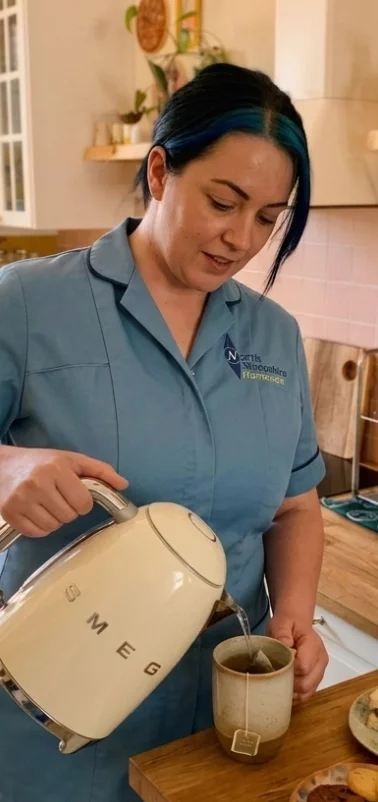
What We Provide — The Practical Care
Personal Care
Personal care for adults with CP requires both technical knowledge of the condition's physical demands and genuine respect for the individual's established personal care routine.
For people with spastic CP — particularly those with quadriplegia or significant spasticity in the limbs — personal care involves management of increased tone throughout. Dressing requires specific techniques that work with rather than against spasticity. Washing and bathing require positioning that maintains the person safely and comfortably while managing reflex tone. Oral hygiene may require adapted equipment and positioning that accommodates the oral motor difficulties common in CP.
For people with dyskinetic CP, the involuntary movements that characterise the condition require carers who are comfortable working around unpredictable movement rather than trying to prevent it. Restraining involuntary movement increases anxiety and typically increases the movement itself. We work with the person's movement rather than against it.
We follow the person's established routine. Adults with CP have typically spent decades developing the personal care approach that works for them, often in collaboration with previous carers, occupational therapists, and physiotherapists. We do not substitute our own approach for theirs. We learn their method and apply it consistently.
We accommodate morning and evening differences. Tone in CP frequently varies across the day — often higher in the morning on waking, and changing with temperature, fatigue, and emotional state. The care approach at the morning visit may need to differ from the evening visit, and we build this variability into our understanding of each client.
Moving, Handling, and Positioning
Moving and handling for adults with CP is among the most technically demanding in home care, and the most critical to get right. The consequences of incorrect moving and handling technique in CP are not simply discomfort — they include joint injury, subluxation, pressure damage, spasm that persists for hours, and the profound psychological impact of being moved in a way that is unsafe or undignified.
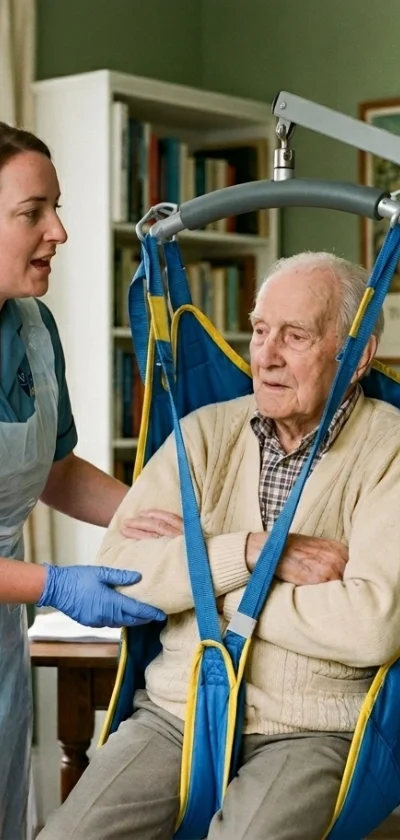
Hoist transfers for people with CP who require full assistance require specific sling selection and positioning that accounts for the particular posture and tone of the individual. The sling that is correct for one person with spastic quadriplegia may be incorrect for another. We follow the OT and physiotherapy team's guidance on sling selection precisely and do not substitute alternative equipment without clinical agreement.
Positioning is a critical care task for adults with CP who spend time in wheelchairs or in bed. Correct positioning maintains musculoskeletal alignment, prevents contracture, manages pain, and preserves respiratory function. Incorrect positioning — even for a few hours — can produce pain, muscle spasm, and in the longer term, contribute to musculoskeletal deterioration. We implement the positioning programme developed by the physiotherapist and OT and document positioning at every visit.
Wheelchair management — checking tyre pressure, managing cushion positioning, ensuring correct postural support, and supporting the person in accessing the controls or propulsion method they use — is a specific competency for CP care that we build into our approach for each client.
Spasticity Management
Managing spasticity in daily care requires understanding of both the triggers that increase tone and the approaches that reduce it. Warmth reduces spasticity for many people with CP — making a warm bath or shower therapeutically significant as well as practically necessary. Cold increases spasticity. Anxiety and pain increase spasticity. Rushed or unexpected physical contact increases spasticity.
We approach all physical contact with CP clients — particularly transfers, personal care, and repositioning — with the slow, smooth, well-telegraphed movements that minimise spasm. We warm the environment before personal care. We communicate what we are about to do before we do it. We monitor for changes in spasticity that may indicate pain, infection, or emotional distress that needs addressing.
For clients on antispasticity medication — baclofen, tizanidine, or intrathecal baclofen pump systems — medication management is a priority. Consistent medication timing significantly affects daily tone management. For clients with intrathecal baclofen pumps, we are alert to the signs of pump malfunction or underdose — a sudden significant increase in spasticity that represents a medical emergency requiring urgent clinical review.
Communication Support
Communication difficulties in CP range from mild dysarthria — slightly unclear speech — to complete dependence on augmentative and alternative communication systems. Our approach to communication is the same regardless of where on this spectrum a person falls: we listen with patience, we do not complete sentences, we do not interpret for the person, and we use whatever communication system the person uses as our primary means of two-way exchange.
For people using AAC devices — speech-generating devices operated by touch, switch, eye gaze, or other access methods — we support device management within our scope: ensuring the device is charged, correctly positioned, and accessible. We do not change device settings, add vocabulary, or modify the system without the person's explicit instruction.
For people whose speech is dysarthric, we acknowledge when we have not understood and ask for repetition or clarification rather than proceeding on the basis of a guessed meaning. Proceeding incorrectly because we did not want to admit incomprehension is a care failure.
Nutrition and Meal Preparation
For adults with CP and dysphagia, we implement SALT guidance on food texture and fluid consistency precisely. We position the person correctly for eating — typically upright, with appropriate head support — and allow the time that safe eating with oral motor difficulties requires. We monitor for the signs of aspiration — coughing during or after eating, wet voice quality following swallowing, recurrent chest infections — and communicate these promptly to the clinical team.
For adults with CP who eat independently or with minimal assistance, we prepare food in the form and format that they can manage most safely and enjoyably — considering grip requirements, the height and surface of eating, and the specific utensil adaptations that have been identified through OT assessment.
We attend to the caloric dimension of nutrition in CP — aware that energy requirements vary significantly between individuals and that nutritional adequacy cannot be assumed from a person appearing to eat regular meals. We communicate nutritional concerns to the clinical team.
Falls Prevention
Adults with CP have significantly elevated falls risk that increases with age, as the musculoskeletal and balance changes of ageing compound the motor impairments of CP. Research has specifically documented elevated fall incidence among adults with CP across all subtypes and ambulatory levels.
Falls prevention for our CP clients is environmental, postural, and assistive:
Environmental — assessing and maintaining a home environment that is safe for the individual's specific gait, mobility aid use, and visual and perceptual profile. CP can produce perceptual and visual processing difficulties alongside the motor impairments, and these affect safe navigation in ways that a generic falls assessment does not capture.
Postural — ensuring correct wheelchair positioning and seating that prevents the loss of postural stability that increases transfer and ambulatory falls risk.
Assistive — ensuring that the correct mobility aids are in use, correctly maintained, and appropriately sized. An incorrectly adjusted walking frame or a wheelchair with low tyre pressure is a falls risk that is entirely preventable.
Emotional and Psychological Support
Adults with CP navigate a social world that was not designed for them and a healthcare system that frequently does not know them well. The experience of lifelong disability — including the specific experiences of having care provided by other people, of having one's capability misjudged, of being spoken about rather than to, of having decisions made on one's behalf — produces a set of psychological experiences that are specific to this population and that care providers need to understand.
Depression and anxiety are more prevalent among adults with CP than among the non-disabled population. The increasing pain, fatigue, and functional loss of ageing with CP can intensify these experiences significantly. We observe and document mood changes, communicate these to the clinical team, and approach the emotional dimension of our relationship with CP clients with the same seriousness as the physical.
We also maintain the specific vigilance required when providing intimate care to adults with CP — ensuring that dignity is fully preserved, that consent is genuinely sought and given, and that the power differential inherent in a care relationship is managed with explicit awareness rather than ignored.
Working With the CP Clinical Team
Most adults with CP in North Shropshire will have had paediatric specialist input that transitions — sometimes abruptly — to adult services that may be less familiar with the condition. Research has noted that healthcare usage among adults with CP is low relative to their needs, partly because the transition from specialist paediatric services to adult care often leaves people without a clear clinical lead for their CP-specific needs.
We support our CP clients in navigating this — identifying the appropriate adult specialist services (neurology, orthopaedics, neurodisability services, continence nurses, SALT), supporting the person in engaging with these services, and ensuring that the clinical recommendations made at specialist appointments are implemented in daily care at home.
We communicate with the GP, the OT, the physiotherapist, and any other clinicians involved in the care plan. We document changes in function, pain, spasticity, swallowing, and communication that are relevant to clinical management, and we ensure these observations reach the people who need them.
A Note on Autonomy
One thing that sets CP care apart from care for many other conditions on this website is this: the majority of adults with CP have always had to articulate their own care needs, advocate for their own support, and manage the experience of having other people involved in their most personal daily activities.
This creates a particular set of expectations — and a particular set of experiences — that carers need to understand. Adults with CP know what good care looks like and what poor care looks like. They have experience of both. They may have had carers who presumed incompetence, who spoke over them, who moved them without warning, who treated them as a set of physical needs rather than a person with a full life.
We do not do any of these things. The person is the expert in their own care. Our job is to provide what they need, in the way they need it, in support of the life they are living.
Arrange a Free Home Assessment
If you are an adult living with cerebral palsy in North Shropshire and are looking for home care support — whether you have existing care that is no longer meeting your changing needs, or you are exploring home care for the first time — we would be glad to talk.
A free home assessment costs nothing and commits you to nothing. We visit, we listen, and we give you an honest account of what we can provide.
📞 01948 411222 — 24 hours, 365 days
✉️ mail@nshomecare.co.uk
North Shropshire Homecare
The Coach House, 15/17 Green End, Whitchurch, SY13 1AD
Providing specialist cerebral palsy care at home across Whitchurch, Wem, Prees, Whixall, Higher Heath, Tilstock, Ash, and the surrounding villages of North Shropshire. CQC Rated Good. Independently Owned. Locally Staffed.



-
The information on this page has been checked for clinical accuracy and aligns with current best practices for care at home for Cerebral Palsy.
REVIEWED BY: Alice Allen CQC Registered Manager
Next review July 2027.
Tailored to you.
Before we start caring for you, we will make a bespoke care plan suited just to your needs. We believe in person-centred care and we will keep you involved with this process so you have full control of your care. We will arrange to do an assessment with you and anyone else you want involved in your care plan to make sure you are satisfied with how your care will be carried out.