
Fields of Gold: Celebrating the Shropshire Harvest from the Comfort of Home
Fields of Gold
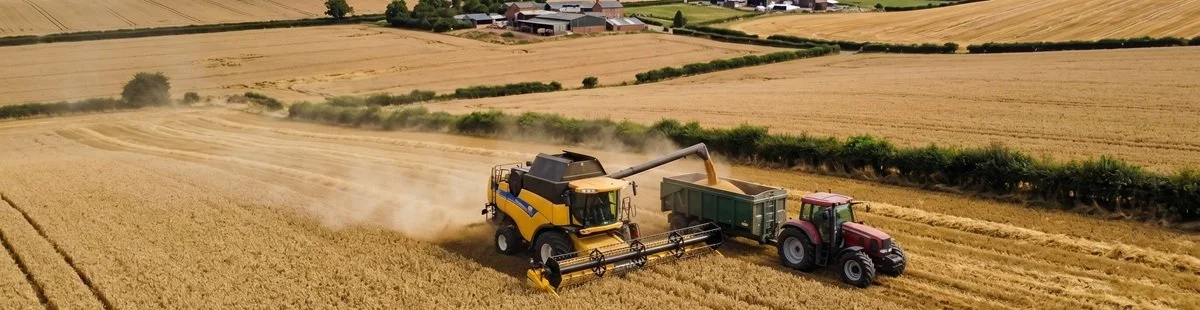
There is a specific quality to light in North Shropshire in the third week of August that doesn't happen at any other point in the year. It comes low and gold across the stubble fields around Prees and Higher Heath, catching the dust thrown up by the combines, turning an entirely ordinary evening into something that looks, briefly, like a painting. If you've grown up here, or lived here long enough, you don't really see it anymore. It's just August. It's just the harvest.
Unless you can't be out in it. Then, we've come to understand, you see it more clearly than anyone.
A Body That Still Keeps the Calendar
We look after a number of people across our villages who spent the greater part of their working lives tied to the agricultural year — not as a job in the way most people mean the word, but as the actual structure of their existence. The spring drilling. The long, anxious wait through a wet June. The particular tension of watching a weather forecast in the first week of August, knowing that three dry days could mean everything and one wrong call could mean a season's income gone.
What we've noticed, again and again, is that this rhythm doesn't switch off just because a person has stopped being physically able to work the land. The body keeps the calendar long after the job has gone. A man who hasn't sat in a tractor cab for fifteen years will still glance at the sky every morning in August, still know without being told that the wheat two fields over is a week off cutting, still feel something tighten in his chest at the first sound of a combine starting up somewhere in the distance — the same tightening he felt for fifty years, except now it isn't anticipation. It's something closer to grief.
Nobody warns you about this part of getting older. The losses people expect are the physical ones — the knees, the hips, the things a GP can name. Nobody quite prepares you for the specific ache of a season arriving in full, glorious motion just outside your window, while you are on the wrong side of the glass from it, no longer able to be part of the thing that shaped every August of your life.
We think that ache deserves to be taken seriously. Not managed. Taken seriously.
Staying Part of the Story
There is a version of care that would file this under "companionship" and move on. We don't think that's good enough, because it flattens something that actually matters into a task on a rota.
What we try to do instead, for the clients this speaks to, is much smaller and much more specific. Sometimes it's genuinely simple — driving out to a safe spot on a lane near Whixall or Ash where a client can watch a combine working a field from the car, in comfort, at their own pace, with nobody rushing them back. What happens in those visits isn't really about the view. It's that the person in the passenger seat, who hasn't been asked a proper question about wheat yields or straw quality in years, suddenly gets to be the expert again. They know things nobody else in the room knows. For twenty minutes, they are not a person being cared for. They are a farmer, watching a harvest, exactly as they have every August of their life.
That matters more than it sounds like it should. Identity doesn't dissolve because a body stops being able to do the thing that built it. It just needs somewhere to still be expressed.
For clients who can no longer manage the trip out, we bring what we can across the threshold instead. A handful of newly cut wheat, straight from a hedge-edge where nobody minds it being taken. A fistful of hay, still warm and smelling exactly the way it always has. The specific, unmistakable dry-sweet scent of it can do something that a direct question often can't — it goes in sideways, past whatever word-finding difficulty or fog of the day might be sitting between a person and their own memories, and it brings a story out whole and vivid, the way it was actually lived rather than the way it's remembered on a bad day. A punnet of Shropshire damsons in September does the same thing. So does the particular scratch of straw against a palm.
We didn't invent this. It's just paying proper attention to what actually reaches people, rather than assuming conversation is the only door into someone's memory.
What This Actually Is
We want to be honest about what we're describing here,
This isn't really about harvest. It's about the fact that every person we look after has an entire working life behind them that the rest of the world has largely stopped asking about, and that life doesn't stop mattering to them just because it's finished. For some of our clients that life was farming. For others it was teaching, or nursing, or forty years at a factory bench, or raising five children more or less alone. Whatever it was, it's still in there — the skill, the identity, the pride — and good care means finding the specific, unglamorous ways to let that back into the room occasionally, rather than treating a person only as the sum of their current needs.
August in North Shropshire just happens to make this particularly visible, because the harvest is loud and golden and impossible to ignore, and because so many of the people we care for gave their working lives to exactly this season.
If you have a relative who's finding this month a little harder than they'd say out loud — watching the fields from a window, going quieter than usual, that specific kind of restlessness that doesn't have an obvious cause — it might be worth wondering whether this is part of it. We're glad to talk about what might help, whether that's a drive out to watch the combines, an afternoon with a bit of straw on the kitchen table, or simply someone who knows to ask the right questions about this year's yield.
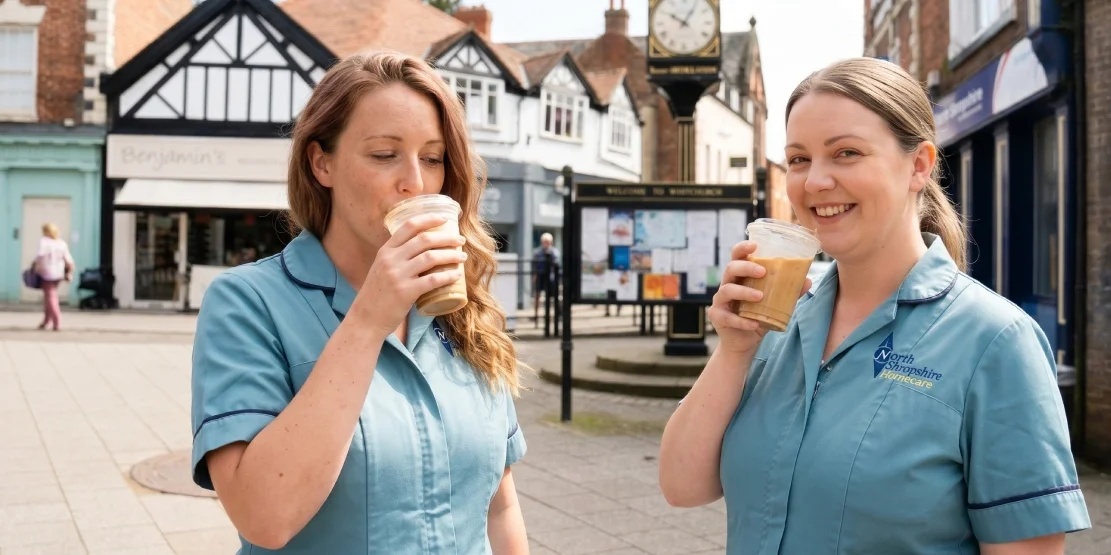
Pop in and see us at The Coach House on Green End, Whitchurch, or call us on 01948 411222.
North Shropshire Homecare
Providing personal care, meal preparation, and companionship across Prees, Higher Heath, Whixall, Ash, and the surrounding villages of North Shropshire.