
Behind the Blue Mask: Understanding the PPE That Keeps Our Community Safe
When we visit our clients in Whitchurch or Prees, you will often see our team donning various layers of Personal Protective Equipment (PPE). To the naked eye, it might just look like a collection of plastic and fabric, but there is actually a deep level of science and logic behind every item we choose.
Understanding PPE isn’t just for clinicians; it is about providing peace of mind to families. When you know why we are wearing a specific mask or a certain colour of glove, it helps demystify the care process. Here is a look behind the scenes at the kit that keeps North Shropshire Homecare safe and professional.
More Than Just a Mask
In a care setting, the "one size fits all" rule definitely doesn't apply. Masks are categorized by how they filter air and which direction they are protecting—whether that is protecting the patient from the carer, or vice versa.
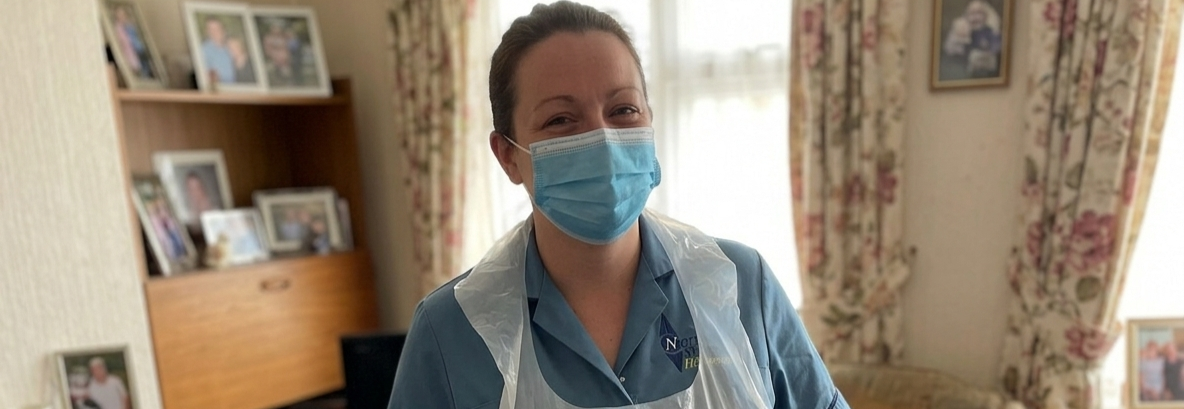
Type I & II (Surgical Masks): These are the loose-fitting, blue-and-white masks you see most often. Their main goal is "Source Control." They catch large respiratory droplets from the wearer’s coughs or sneezes.
Type IIR: The "R" stands for Resistant. These have an extra layer to protect the carer against any splashes of fluids.
Clear Masks: You might see us using these when supporting someone with hearing loss or dementia. Seeing a friendly smile or being able to lip-read is vital for reducing anxiety and maintaining a human connection.
Carer Tip: We always announce ourselves clearly before putting on a mask if a client is new to us, so they can see our face and hear our voice clearly first.
The Unsung Hero: The Plastic Apron
The apron is the silent guardian of infection control. While it might look simple, it serves as a targeted, waterproof barrier for "wet" tasks like bathing or meal preparation. In the UK, we often use a colour-coding system to prevent cross-contamination:
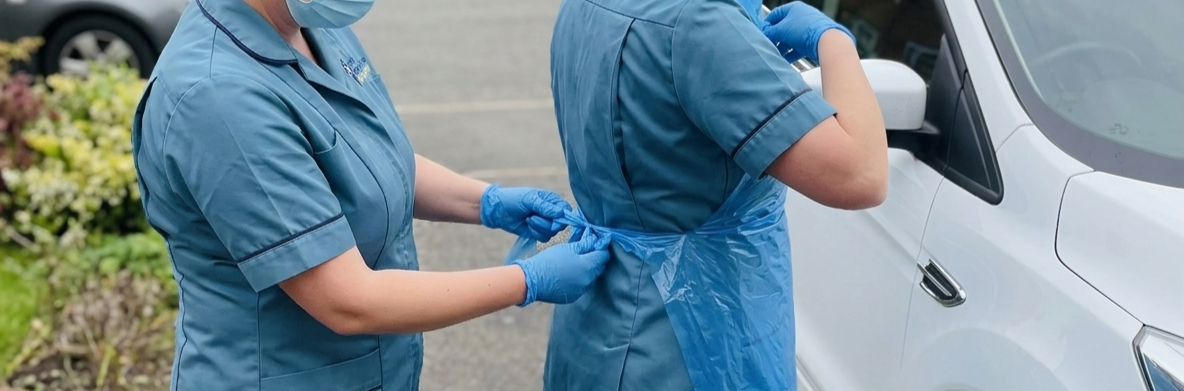
White: The standard for general clinical tasks and personal care.
Blue: Generally reserved for food service or housekeeping tasks.
Red or Yellow: These are usually kept for high-risk situations where enhanced precautions are needed.
Why Are the Gloves Different Colours?
It isn't just an aesthetic choice; glove colours are a functional tool used to communicate safety and material at a glance.
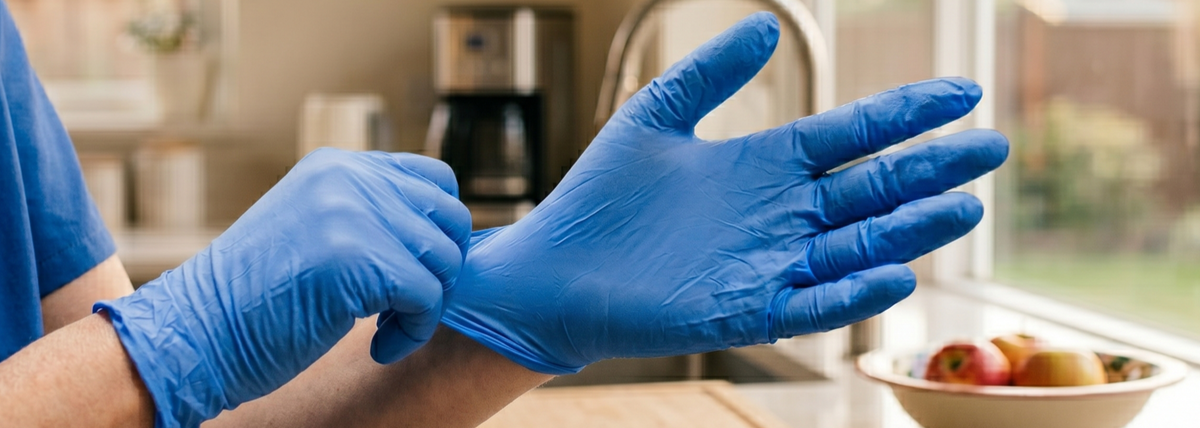
Colour Typical Material Primary Use in Care White/Off-White Latex Traditionally used for sterile tasks (though less common now due to allergies).
Blue Nitrile The "Gold Standard" for medical use. They are latex-free and very durable.
Clear Vinyl Usually used for low-risk tasks like light housework or food prep.
Purple Heavy-duty Nitrile Often used when handling hazardous medications.
Insight on Visual Cues:
Did you know that surgeons and high-level carers often prefer blue or green over white? It’s because blue is the "complementary" colour to red. After a long period of focusing on a task, looking at blue gloves helps "reset" the eyes and reduces eye strain. It’s a small detail that helps our team stay sharp and focused during their visits.
Balancing Safety with a Human Touch
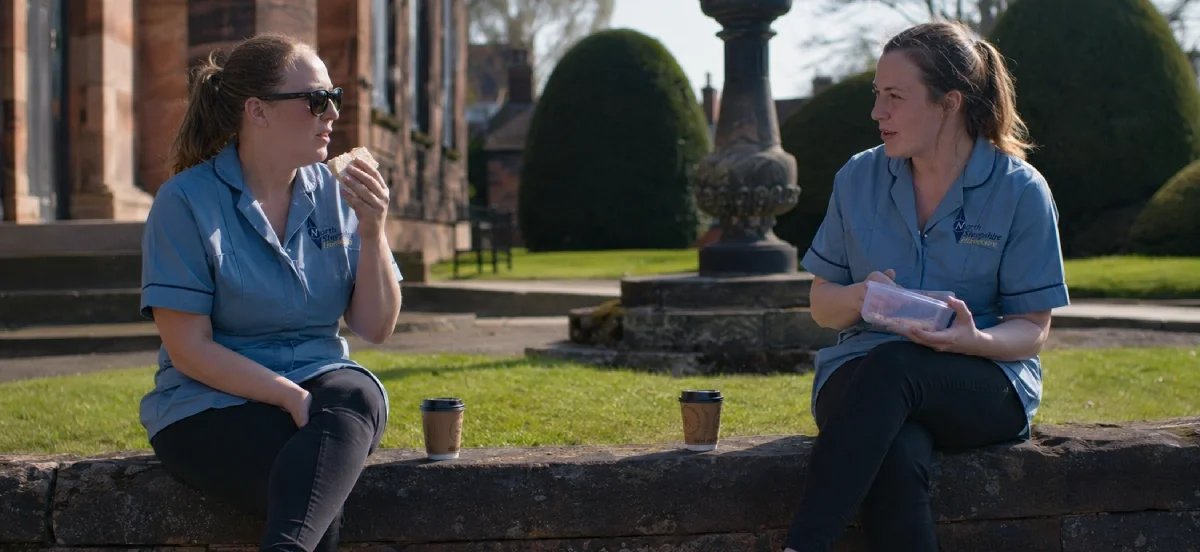
While the PPE is essential, we never want it to feel like a barrier between us and the people we care for. Whether we are popping into a home in Higher Heath for a security call or providing complex care in Wem, our goal is to remain the same friendly, local face you’ve come to trust.
We wear the gear to ensure that the only thing we are bringing into your home is high-quality support and a bit of good old Shropshire cheer.
If you have any questions about the safety protocols we use or how we can help a loved one stay independent at home, please don't hesitate to give us a ring at the Coach House.
15/17 Green End, Whitchurch
Tel: 01948 411222