
Beyond Dementia: Connecting Through Local History and Shared Memories
When a loved one is living with advanced dementia, the nature of your relationship inevitably shifts. Families often tell us they feel "stuck" during visits, struggling to find things to talk about when the short-term memory has faded. It can feel as though a cloud has settled between you, but at North Shropshire Homecare, we believe there are always ways to find the silver lining.
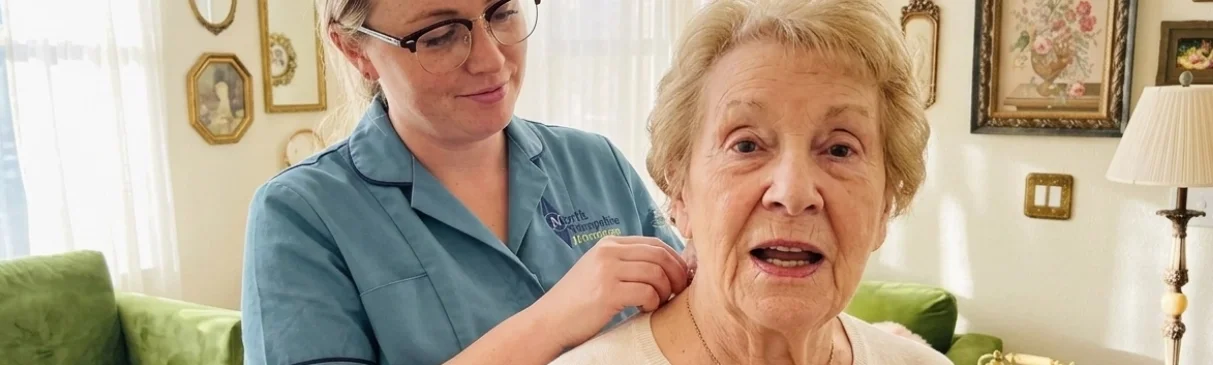
Our approach to Dementia Support isn't just about safety and routine; it is about finding those precious moments of clarity where the "real" person shines through. Often, the key to unlocking those moments lies right outside the front door in our shared local heritage.
The Power of Local Roots
Long-term memories are often the most resilient. While a loved one might forget what they had for breakfast, they can often vividly describe the hustle and bustle of the Whitchurch High Street from fifty years ago.
Next time you visit, try bringing along a few old photographs of the area. Images of the old cattle market, the changing face of Green End, or even stories of the Tilstock airfields during the war can act as powerful anchors. They can act as keys to a vault of lived experience.
Grounding Dementia support in Whitchurch and our surrounding villages means acknowledging that our clients aren't just "patients"—they are the people who built, worked in, and shaped this community. Reminiscing about local events, like the historical celebrations at Wem Town Hall, allows them to speak from a place of authority and confidence.
Try "Side-by-Side" Connection
One of the most common mistakes we make when visiting someone with memory loss is sitting directly opposite them and asking direct questions: "Do you remember what we did yesterday?" or "Who is this in the photo?"
To someone with dementia, this can feel like an interrogation, causing their "fight or flight" response to kick in and making the clouds of confusion even thicker.
Here is an insight from our care team: Use the "Parallel Activity" technique.
Instead of a face-to-face interview, try engaging in a task side-by-side. This could be something as simple as:
Folding a basket of clean laundry together.
Potting some spring bulbs for the garden.
Slowly turning the pages of a local history book while sitting together on the sofa.
When you are both looking at a task rather than at each other, the pressure to "perform" or "remember" vanishes. You’ll often find that when the hands are busy, the subconscious opens up. A story about a childhood pet or a memory of a Whitchurch shopkeeper might just tumble out naturally, sparked by the rhythm of the work rather than the stress of a question.
For more information and resources visit the NHS guide to dementia.
Dignity in Every Detail
We understand that caring for someone with dementia is an emotional journey for the whole family. Whether we are providing Complex Care or just popping in for Companionship, we focus on the person, not the diagnosis. We see the person who remembers the old Shropshire lanes, the person who loves the smell of fresh lavender, and the person who still has so much to share.
If you are finding it difficult to connect with a relative, or if you feel you need more specialized Dementia Support to keep your loved one safe and happy at home, please do reach out.