
Rediscovering the Joy of Dining with Assisted Eating Devices
More Than a Meal
For many the kitchen table is the heart of the home. It is where stories are shared over a roast and where the local gossip is dissected over a cup of tea. However, when a physical disability or the tremors associated with Parkinson’s make holding a fork a challenge, mealtime can shift from a social highlight to a source of frustration.
At North Shropshire Homecare, our Meal Preparation and Complex Care services are about more than just putting food on a plate. We want to ensure that every client maintains the dignity and independence of feeding themselves for as long as possible. Sometimes, the right "partner" at the table isn't a person, but a clever piece of kit designed to make eating effortless again.
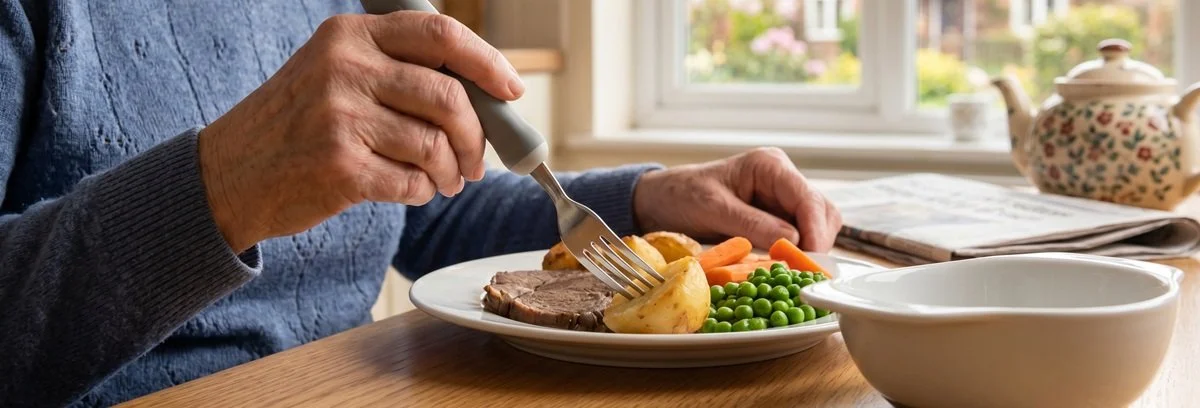
Manual Aids: Small Tweaks, Big Differences
You don't always need high-tech gadgets to see a massive improvement in independence. Often, it is the simplest manual adjustments that provide the most relief. If you’ve noticed a loved one struggling with their grip, a quick trip to a local mobility shop or a chat with a chemist in Whitchurch can reveal a world of manual aids:
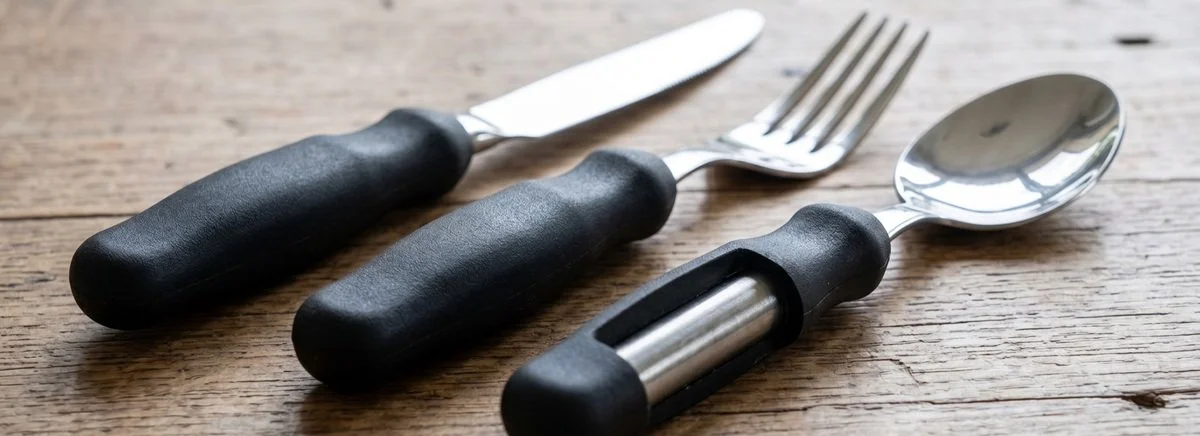
Weighted Cutlery: For those with mild tremors, the extra weight in the handle acts as a natural stabiliser, keeping the spoon or fork steady from plate to mouth.
Built-up Handles: If arthritis makes it painful to close the hand tightly, foam or contoured grips on cutlery allow for a much looser, more comfortable hold.
Plate Guards and "Scoop" Bowls: These clip-on edges provide a vertical surface to push food against, making it much easier to load a spoon using only one hand.
The Electronic Revolution: High-Tech Independence
For neighbors living with more significant physical disabilities or advanced tremors, electronic assisted eating devices are nothing short of life-changing. These devices use active stabilisation technology—similar to what you find in high-end camera lenses—to cancel out involuntary movements.
Stabilising Handles: These electronic handles can be fitted with various attachments. They sense tremors and instantly move the utensil in the opposite direction, keeping the food perfectly level.
Robotic Feeders: For those with very limited upper-body mobility, robotic arms can be programmed to scoop food and bring it to the user's mouth at their own pace.
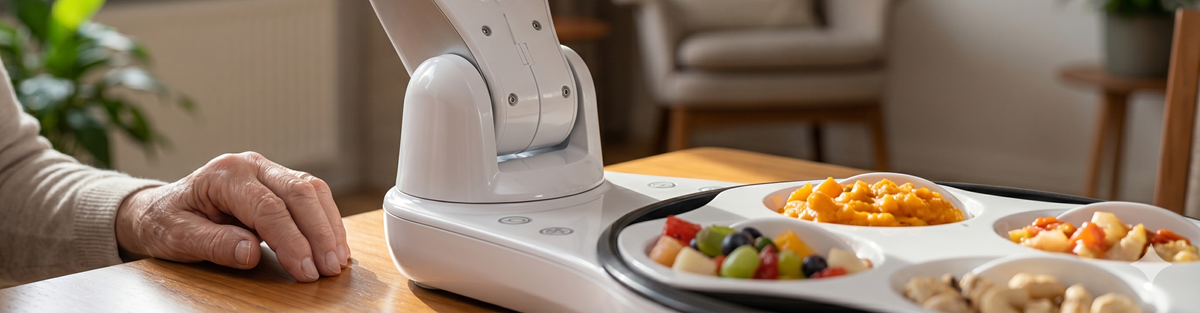
The Insight: The "Pace of Grace": One of the hidden benefits of these electronic devices is that they allow the user to control the tempo of their meal. When being fed by another person, there is often a subconscious pressure to eat faster to "not be a burden." An electronic aid returns that "pace of grace," allowing a person to chew, swallow, and join the conversation in their own time. This psychological boost is often just as important as the nutritional benefit.
How We Support Your Independence
Introducing an assisted eating device can sometimes feel daunting but our team is experienced in helping clients integrate these tools into their daily lives. During our Personal Care and mealtime visits, we can help set up the equipment, ensure it is clean and charged, and provide the encouragement needed to get used to a new way of dining.

We believe that independence is the cornerstone of dignity. Whether it is a weighted spoon or a state-of-the-art stabilising handle, we are here to help you or your loved one stay "the boss" of the dinner table.
If you are curious about which devices might be right for your family, or if you'd like to discuss how our Complex Care team can support a loved one with physical disabilities, please stop by The Coach House on Green End. You can also give us a call on 01948 411222. Let's make sure the next meal is a moment of joy, not a chore.