
Comparing Home Care Agencies in Whitchurch and Wem
Questions Worth Asking Every Provider
If you are looking for home care in Whitchurch, Wem or the surrounding villages of North Shropshire, you will find a number of providers operating in the area (AStar, Visiting Angels North Shropshire, Cross Care, etc)— some local, some regional, some national agencies with a local presence. Choosing between them is not straightforward, and the marketing language most agencies use is similar enough to make genuine comparison difficult.
This post is our attempt to make that comparison easier. We cannot tell you what other agencies will say — you will need to ask them directly. What we can do is tell you exactly what we say, explain why each question matters, and give you a clear framework for evaluating the answers you receive.
We have tried to write this as honestly as possible. Some of these questions will show us in a flattering light. One or two will show the limits of what we offer. We think you deserve both.
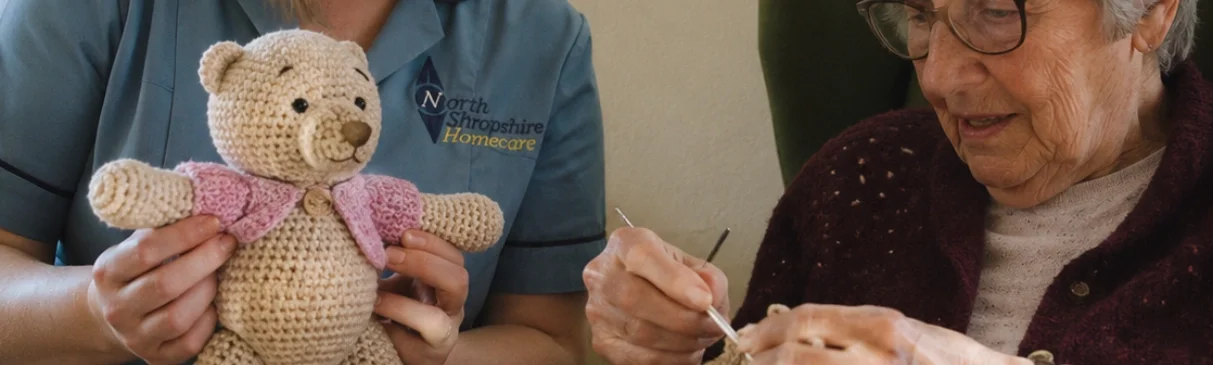
Are you locally owned — or part of a larger group or franchise?
Why this question matters:
The home care sector has seen significant consolidation in recent years. Many agencies that present as local — with local phone numbers, local office addresses, and local branding — are in practice owned by regional groups, national chains, or private equity firms with headquarters in London or Birmingham. The local branding is preserved because it builds trust. The decision-making, the financial priorities, and the profits travel elsewhere.
This matters for a straightforward reason: an agency owned by distant investors has a different set of priorities from one owned by the people running it. Growth and return on investment are structural requirements of private equity ownership. Quality and local investment are choices. When those two things are in tension — and in care, they frequently are — the structural requirement wins.
Ask any agency you speak to: who owns this company? Is it part of a franchise or a larger group? Where do the profits go?
Our answer:
North Shropshire Homecare is independently owned. It was founded in 2011 and remains family-run. We are not part of a franchise, a national chain, or a private equity portfolio. The earnings of this company stay in North Shropshire — paying local wages to local people who spend them in local businesses. We do not fund a holding company's dividend. We do not service external investors. We answer to the families we serve and to no one else.
What is your CQC rating — and can I read the full report?
Why this question matters:
Every care provider operating in England must be registered with the Care Quality Commission and is subject to independent inspection. Inspection reports are public documents. They contain specific observations about the quality of care, the management of the organisation, the safety of clients, and the wellbeing of staff — written by inspectors who visited the service unannounced and spoke to clients, families, and carers independently.
A rating of Good or Outstanding indicates that the service met or exceeded the standards expected. A rating of Requires Improvement or Inadequate is a serious signal that something is wrong — and while circumstances can change following an inspection, the reasons for a poor rating deserve a direct explanation.
What to watch for: an agency that summarises or selectively quotes their CQC report rather than directing you to the full document. The full report takes five minutes to find on the CQC website. Any agency confident in their inspection will point you there without hesitation.
Our answer:
We are CQC registered and rated Good. Our full inspection report is publicly available on the CQC website and linked directly from our website. We do not summarise it. We link to the whole document, including the specific observations about how staff interact with clients, how the service is led, and how safety is managed. We encourage you to read it if you have time.
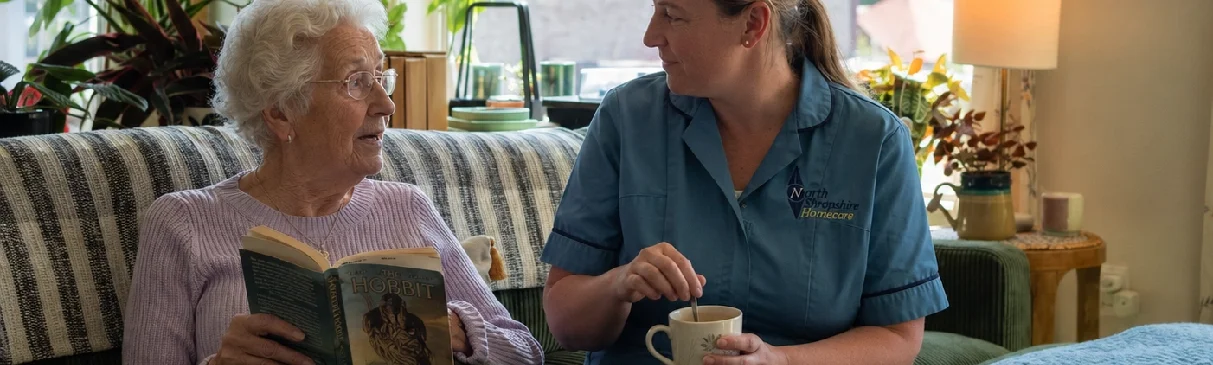
Where do your carers live — and how far are they travelling to reach clients?
Why this question matters:
In a rural area like North Shropshire, the distance a carer travels to reach a client has direct consequences for punctuality, reliability, winter access, and the quality of the visit itself. A carer who has driven forty-five minutes to reach a farmhouse outside Prees is a different resource from one who left home ten minutes ago.
There is also a subtler dimension. Carers who live in a community such as Wem have a different relationship with that community than those who commute into it. They share its history, its landmarks, its network of families and relationships. For older clients — particularly those living with dementia who find familiar faces and shared references grounding — this matters more than it might seem.
Ask specifically: do your carers live locally, or do they commute from Shrewsbury, Telford, or further afield? What is the typical journey time to my relative's address?
Our answer:
Every carer on our team lives within the area we serve. This is a condition of employment, not a coincidence. Our carers live in Whitchurch, Wem, Prees, Whixall, Higher Heath, and the surrounding villages. Many walk to their calls. This means they arrive on time regardless of the weather. It means they know the lanes, the properties, and the access challenges that come with rural North Shropshire in January. It means they have genuine community knowledge — they went to school at Sir John Talbot's or Thomas Adams, they shop at the Friday Market, they know the families. That shared context is not something you can create by hiring from a distance.
Will my relative see the same carers regularly — and how do you manage cover?
Why this question matters:
Consistency of carer is one of the most clinically significant factors in home care quality. It is not a comfort preference — it is a genuine safety issue, particularly for clients with dementia, complex needs, or anxiety around unfamiliar people. A client who sees a different face at every visit cannot build the relationship of trust that makes personal care dignified, that makes a carer's observations meaningful, and that makes the visit feel like support rather than intrusion.
Ask: do you use a fixed team for each client, or a rotating pool? What happens when a regular carer is on annual leave or sick? How much notice will we get when a substitute carer is coming?
Our answer:
Each NSHC client aims to have a small named team noted on their care plan — typically two or three carers for small packages and seven or eight for very large packages — who cover all of their visits between them. We do not operate a rota pool. Cover for sickness and holiday is drawn from the same small team wherever possible. Where a genuinely unfamiliar carer is unavoidable, we aim to introduce them in advance — not on the doorstep at 8am. For our dementia clients in particular, consistency is treated as non-negotiable. We structure our rotas around it, which means our rotas are more complicated to manage. We think that is the right trade-off.
How do you train carers — and are they fully trained before their first solo visit?
Why this question matters:
The phrase "fully trained" covers a wide spectrum in the care sector. At the minimum end it means an online induction covering basic care principles. At the better end it means hands-on practical training, supervised practice, documented competency assessment, and — for clients with complex needs — client-specific training delivered by the relevant NHS clinical team.
The critical question is not whether carers are trained but when. A carer who is trained during their first few weeks while already working unsupervised is a carer whose earliest clients are, in effect, part of their training. Ask specifically: is induction training completed before or after a carer's first unsupervised client visit?
Our answer:
Our induction training starts place at The Coach House — our office on Green End in Whitchurch — completing courses such as Moving & Handling of People, First Aid and Safe Medication Administration & Management. After this, depending on the new member of the teams previous experience, they will then complete 2 - 4 weeks shadow training with a senior carer before they are unsupervised. This part of the training allows them to learn our clients specific likes, dislikes, needs and wishes. For clients with complex needs, the training goes further: client-specific instruction delivered by the NHS clinical team responsible for that person's care before the first solo visit, every time. We fund up to Level 5 Diplomas for carers who wish to develop further. We pay for DBS checks. We do not send anyone into a situation they have not been prepared for — this is not an aspiration, it is how we have operated since 2011.
What happens if I am unhappy with a carer — and how do I raise a concern?
Why this question matters:
The relationship between a client and a carer is intimate and sometimes very daily. Not every personality combination works. Occasionally something happens during a visit that causes concern. A good agency makes it easy to raise either of these things without the family feeling that they are causing trouble or risking the care package.
Ask: what is your complaints process? How quickly would you respond? Would raising a concern affect the service we receive? Have any complaints been upheld against you by the CQC?
Our answer:
If you are unhappy with a carer for any reason — a personality mismatch, a concern about something observed during a visit, anything at all — call us. We will listen, take it seriously, and act on it. A personality mismatch is not a complaint and we do not treat it as one. We make the change quietly and without awkwardness. A genuine concern about care quality is investigated properly and you will receive a clear response. We have a formal complaints procedure and we will explain it fully if asked. You can also contact the CQC directly at any time — we tell our clients this ourselves because they have the right to know, not because we want them to bypass us.

Do you penalise carers for taking sick days?
Why this question matters:
This is a question almost nobody thinks to ask, and it has a direct bearing on your relative's safety.
Some care agencies reduce a carer's hourly rate or effective monthly pay if they take sick days. The mechanism varies but the effect is the same: carers who are unwell come to work rather than face a financial penalty. For the immunocompromised, elderly, and clinically vulnerable people they are visiting, this creates a genuine infection risk. The question of why a carer seems unwell but keeps coming to work often has its answer here.
Ask any agency: what is your policy on carer sickness? Is there any financial penalty for taking sick days?
Our answer:
We do not penalise carers for sickness. Ever. We pay a £50 monthly bonus for full attendance — a reward for reliability, not a punishment framed as its inverse. If a carer is unwell, we want them to take their sick days, rest, and recover. We do not want them in a client's home passing an infection to a vulnerable person because they cannot afford to stay home. Whatever happens to a carer who is with us, they are never financially punished for something they cannot control.
What is your out-of-hours provision — and who actually answers the phone?
Why this question matters:
Things happen outside office hours. A client falls at 10pm. A carer does not arrive for a morning visit. A family member becomes worried after an unanswered call. The out-of-hours number is the test of what an agency is actually like when the marketing stops and the reality begins.
Ask to be given the out-of-hours number before you sign anything. Then call it at 7pm on a weekday and see what happens. Does a real person answer? Can they access the client's care plan? Can they actually do something — arrange cover, contact a carer, reach a family member? Or does it go to voicemail, a national call centre, or a message asking you to call back in the morning?
Our answer:
Our number is 01948 411222. It is the same number for everything. It is answered by a real person twenty-four hours a day, three hundred and sixty-five days a year, including Christmas Day. That person knows the care packages, can access the relevant information, and can act — arranging cover, contacting a carer, reaching a family member, or calling emergency services if the situation requires it. We do not use a national answering service. We do not route out-of-hours calls to a message bank. If you call at 3am, someone who can help will answer. We think this is the minimum any care provider in a rural area should offer. Call us tonight and test it if you like.
Can I speak to a family who currently uses your service?
Why this question matters:
Every agency has a testimonials page. The quotes on it have been selected for their warmth and positivity. They are not fabricated — but they are curated, which is different from a full picture.
The most useful reference a care agency can give you is direct access to a current client or family member who has agreed to speak to prospective new clients. A conversation that is not mediated by the agency — where you can ask anything and hear an unscripted answer — is worth more than fifty carefully selected quotes or thirty reviews from employees.
Ask any agency you are considering: can you put me in touch with a client family who would be willing to speak to me? A confident provider will say yes. One that hesitates has told you something useful.
Our answer:
Yes. We will always do our best to facilitate a conversation between a prospective client's family and an existing family who has agreed to speak to new enquiries. We also have a verified independent review profile on Homecare.co.uk — rated 9.8 out of 10 from reviews we cannot edit, filter, or select — and a full CQC inspection report that includes direct quotes from clients and family members spoken to independently by inspectors. We would rather you spoke to people who have experienced our care than relied on anything we say about ourselves. Anyone can say they are good. The evidence for it should come from somewhere else.
We hope this helps you ask better questions — of us, and of anyone else you speak to.
North Shropshire Homecare has been providing home care in Whitchurch, Wem, Prees, Whixall, Higher Heath, and the surrounding villages of North Shropshire since 2011. CQC rated Good. Independently owned. Locally staffed.
📞 01948 411222 — 24 hours, 365 days ✉️ mail@nshomecare.co.uk 🌐 northshropshirehomecare.co.uk
The Coach House, 15/17 Green End, Whitchurch, SY13 1AD