
By Alice Allen, Registered Manager
Part of our Training Tuesday educational series providing practical home care guidance for family carers, care workers, and anyone supporting a relative at home across Whitchurch, Wem, Prees, rural North Shropshire, and beyond.
Previous Weeks
Week Zero: The Language of Care (Words We Use and Words We Avoid)
Week one: How to Use a Slide Sheet (and How Not To)
Week two: How to Use a Hoist and Sling (and How Not To)
Week Three: How to Identify Pressure Sores (and What to Avoid)
week Four: Why Washing Your Hands Properly Actually Matters
Week Five: How to Use a Sara Stedy (With Video and What to Avoid)
Week Six: Dressing and Undressing Assistance
Week Seven: How to Find the right shoes from care work
Week Eight: How to Support Someone Through a Panic or Anxiety Episode
Week Nine: Basic First Aid for a Fall — What to Check Before Helping Someone Up
Week Ten: How to Write Good Notes and a Proper Handover
Week Eleven: What Urine Can Tell You
Week Twelve: Recognising a UTI in Someone With Dementia
Week Thirteen: Continence Care With Dignity
Week Fourteen: How to Help Someone Up, Down, and Positioned Safely in a Chair
Week Fifteenth: Can You Use a Slide Sheet Alone?
Week sixteen: Safe Moving and Handling: Essential Do’s and Don’ts
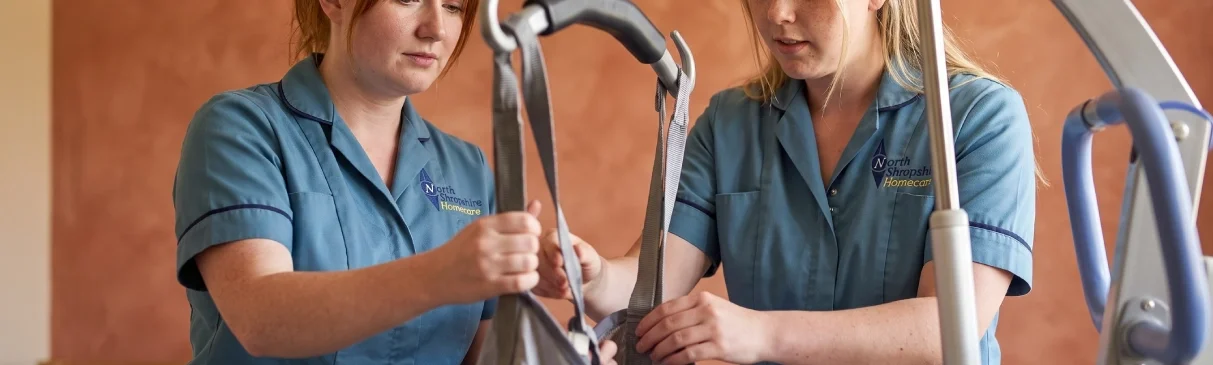
Proper moving and handling practices protect both care workers from debilitating musculoskeletal injuries and service users from trauma, skin tears, and loss of dignity.
The Do's
DO check the Care Plan first: Always review individual, up-to-date documentation to understand the person’s precise mobility levels, required equipment, and cognitive ability.
DO adopt a stable base and neutral posture: Keep your feet shoulder-width apart to create a wide base of support, bend at the knees (not the waist), and keep your back straight.
DO keep the load close: Hold the person or load as close to your body's center of gravity as possible to minimise strain on your spinal column.
DO communicate continuously: Inform the service user at every single phase of the move, explaining what will happen next and checking for comfort ("Ready, steady, move").
DO use mechanical aids: Fully utilise slide sheets, turn-tables, transfer boards, and hoists correctly as outlined in your training.
The DO NOTS of Moving and Handling
DON'T twist your spine: Never pivot or rotate your upper body while holding a weight or supporting a transfer; always move your feet to change direction.
DON'T rush or use jerking motions: Avoid sudden, fast, or forceful pulls, which can startle the individual and shock your muscles and spinal discs.
DON'T lift under the arms: Never hook your hands under a person's axillae (armpits) to lift them; this risks severe damage to the shoulder joint, rotator cuff, ribs, and soft tissue.
DON'T guess or improvise: Never attempt a manual transfer alone if the care plan specifies a two-person assist or mechanical device.
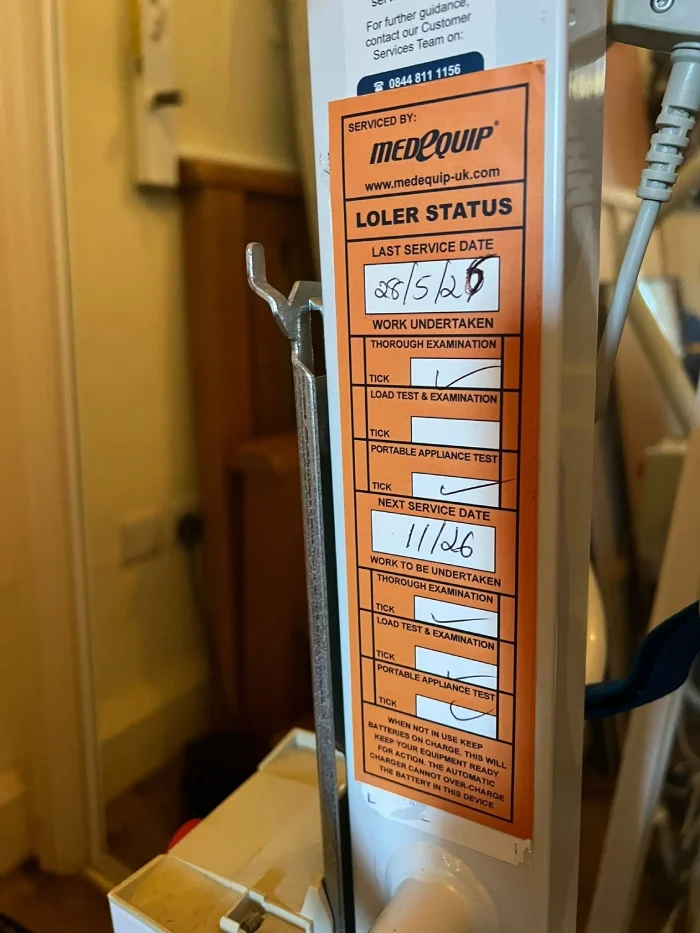
DON'T ignore pain or environmental hazards: Never proceed if equipment looks damaged, floor spaces are cluttered, or either you or the service user feels unsafe.
Condition-Specific Moving and Handling Considerations
A generic approach to moving and handling fails because different medical conditions alter tissue integrity, joint stability, and communication abilities.
Dementia and Cognitive Impairments:
Consideration: Individuals may experience heightened anxiety, resist care, or misunderstand what is happening, which can lead to sudden, uncoordinated movements.
Practice: Use calm, reassuring tones, non-verbal hand gestures, and slow transitions. Never force a transfer if the person is distressed; pause, step back, and re-approach when they are calm.
Consideration: Sudden freezing episodes, rigidity, and postural instability make routine transfers highly unpredictable.
Practice: Avoid rushing or pulling them forward (which worsens forward-flexion tendencies). Use rhythmic counting, verbal cues, or visual floor markers to help them break through a freeze naturally.
Stroke (Hemiplegia / Hemiparesis):
Consideration: One side of the body is paralysed or weak, rendering limbs vulnerable to subluxation (separation) at the shoulder joint.
Practice: Never pull or lift by the affected (weak) arm. Support the compromised limbs securely during transfers and always lead the transfer toward the stronger side unless specific clinical guidance states otherwise.
Consideration: Fragile, brittle bones carry an extremely high risk of compression fractures or skin tears from minor pressure or incorrect gripping.
Practice: Eliminate all friction by strictly utilising slick slide sheets and mechanical hoists. Never grip tightly or squeeze limbs with force; use open-palmed, broad-surface support.
Rheumatoid Arthritis and Joint Contractures:
Consideration: Chronic joint inflammation, stiffness, and permanent shortening of muscles or tendons make standard sling placements or limb positioning agonising.
Practice: Check for pain thresholds continuously. Use specialised conformal slings that accommodate contractures without forcing joints past their natural, pain-free range of motion.
How Moving and Handling Has Evolved Over the Past Decade
Over the past ten years, moving and handling in health and social care has experienced a paradigm shift, moving away from old-school physical endurance toward modern ergonomics, digital integration, and importantly human rights.
1. The Death of "Hearsay" Lifting and the Rise of Ergonomic Engineering
Ten years ago, it was still common for care staff to perform light manual pivots or "step-and-turn" assists under the assumption that if a service user could bear some weight, mechanical aids were unnecessary. Today, health and safety regulators and sector best practices enforce a strict avoidance-first hierarchy. The default standard relies heavily on modern battery-operated profiling beds, active/passive hoists, and friction-reducing slide systems to protect both parties.
2. Integration of Dignity and Human Rights
The modern framework is deeply anchored in human rights and legislative changes (such as emphasising personal wellbeing and autonomy). Moving and handling is no longer viewed merely as a mechanical task, but as an intimate moment of personal care. Training now focuses heavily on maintaining psychological safety, minimising awkward exposure, and encouraging the service user to direct their own movement wherever capacity allows.
3. Digital Care Planning and Real-Time Risk Profiling
A decade ago, moving and handling profiles lived in dusty paper files tucked away in office folders, meaning updates regarding a person's changing mobility or pain thresholds could easily be missed on shift changes. Today, cloud-based care management software updates care plans instantly. Carers review dynamic, condition-specific moving instructions on handheld mobile devices at the point of care, ensuring every transfer matches the individual's exact physical state on that day.
📞 01948 411222 ✉️ mail@nshomecare.co.uk
North Shropshire Homecare, The Coach House, 15/17 Green End, Whitchurch, SY13 1AD